by COWBERRY

10 minute read
Foxtail millet (kangni): names, nutrition, benefits and how to cook it

Foxtail millet is kangni — Setaria italica — a small gluten-free grain that cooks like rice, carries one measured GI of 89, and has no composition values in IFCT 2017 or USDA. This page settles the kangni, navane and korralu naming question, gives the nutrition in group figures, and shows how to cook and store it.
What is foxtail millet (kangni)?
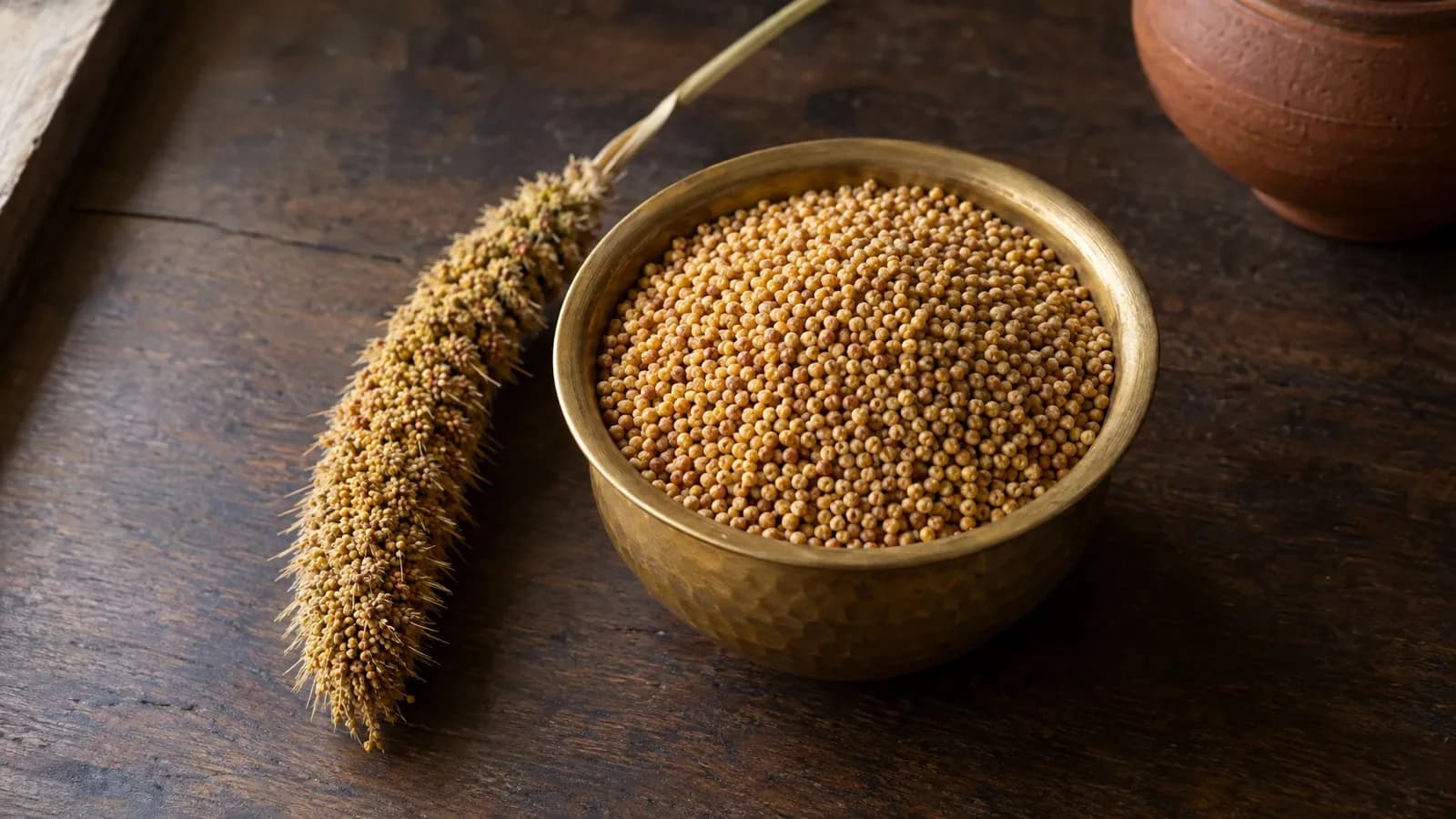
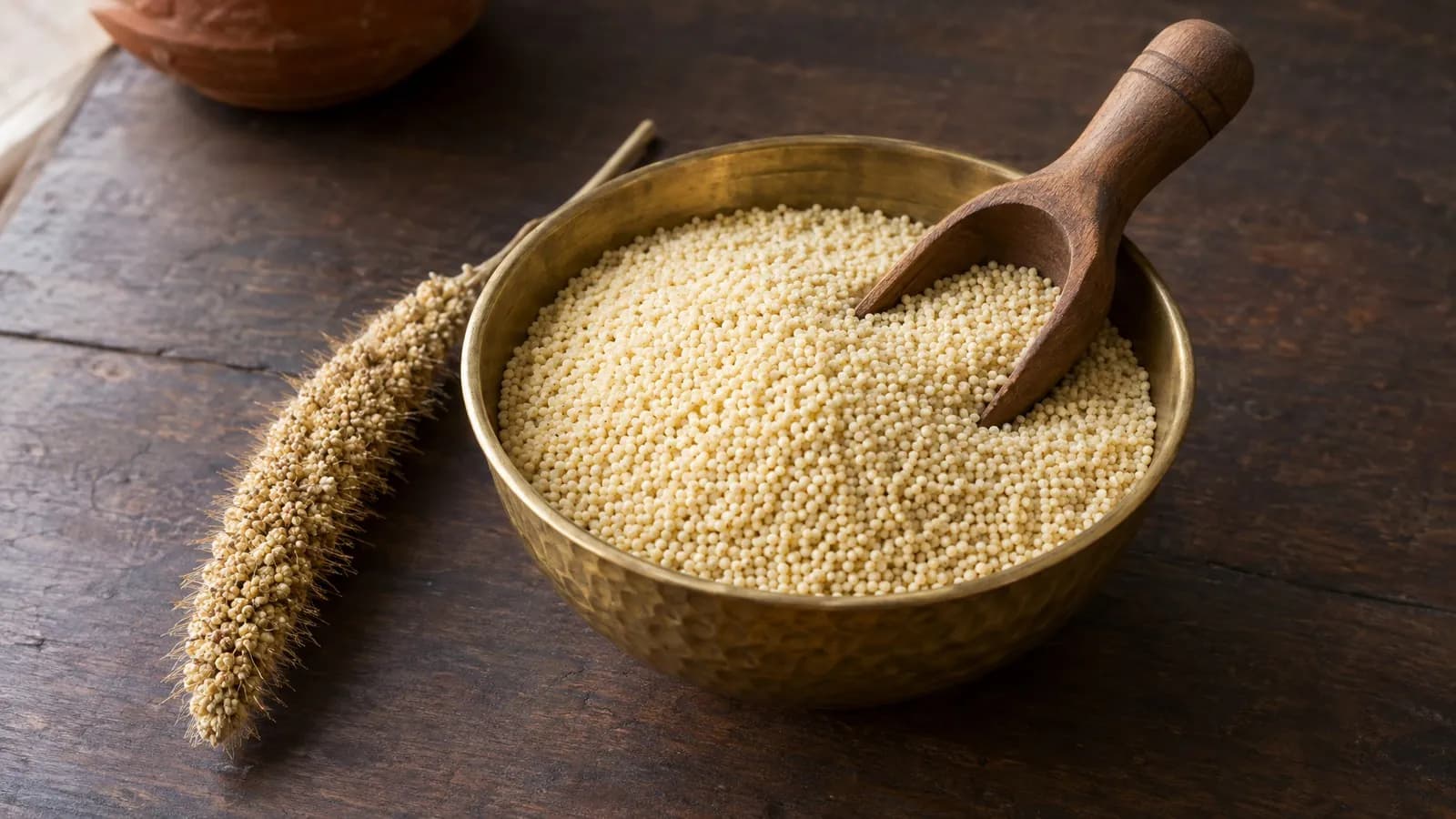
Foxtail millet is Setaria italica (L.) P. Beauvois, the grain the ICAR-IIMR bulletin also calls Italian millet, and the bulletin regards it as a native of China. On the crop side, it grows from sea level up to 2000 m, cannot stand waterlogging, and is fairly tolerant of drought, since early maturity lets the crop dodge some dry spells. Quick growth also makes it a short-term catch crop, and the bulletin records that the plant is adapted to a wide range of elevations, soils and temperatures.
In world terms, the bulletin puts foxtail millet second in total millet production, with about six million tonnes of food going to millions of people, and its grain feeds humans as well as poultry and cage birds. ICAR-IIMR lists foxtail millet as one of eight millet species commonly grown under rain-fed conditions in India, the small millets growing in most southern and central states, especially where annual rainfall stays below 350 mm. It is one of the types of millets Indian kitchens know, and every regional name it carries is on the foxtail millet in Kannada page.
Foxtail millet names in Indian languages
Kangni is the Hindi and Punjabi word for this grain; the navane millet on a Karnataka shelf is the same seed, as are korra or korralu in Telugu, tenai in Tamil and thina in Malayalam. The west shares kang, the east has kaon in Bengali and kanghu in Odia, and Sanskrit records kanguni. The English name is foxtail millet and the botanical name Setaria italica; Gujarati keeps to a single kang, while Odia has three recorded words. Since IFCT 2017 carries no local-names entry for foxtail millet, the table below draws every name from the two ICAR-IIMR lists, each with a source note. Neither list records a name for Assamese or Urdu. The one-by-one walkthrough, name against source, is on foxtail millet in Kannada.
| Language | Name (romanised) |
|---|---|
| English | Foxtail millet |
| Hindi | Kakum, Kangni |
| Marathi | Kang, Rala |
| Gujarati | Kang |
| Punjabi | Kangni |
| Bengali | Kaon |
| Odia | Kanghu, Kangam, Kora |
| Assamese | — |
| Kannada | Navane |
| Telugu | Korra, Korralu |
| Tamil | Tenai |
| Malayalam | Thina |
| Urdu | — |
| Sanskrit | Kanguni |
| Botanical name | — |
Source: no source found. — means no name recorded in the source.
English ‘Foxtail millet’: ICAR-Indian Institute of Millets Research: millets information and vernacular names. Hindi ‘Kakum’: ICAR-Indian Institute of Millets Research: millets information and vernacular names. Hindi ‘Kangni’: Nutritional and health benefits of millets, ICAR-Indian Institute of Millets Research (PDF). Marathi ‘Kang, Rala’: ICAR-Indian Institute of Millets Research: millets information and vernacular names. Gujarati ‘Kang’: ICAR-Indian Institute of Millets Research: millets information and vernacular names. Punjabi ‘Kangni’: ICAR-Indian Institute of Millets Research: millets information and vernacular names. Bengali ‘Kaon’: ICAR-Indian Institute of Millets Research: millets information and vernacular names. Odia ‘Kanghu, Kangam, Kora’: ICAR-Indian Institute of Millets Research: millets information and vernacular names. Kannada ‘Navane’: ICAR-Indian Institute of Millets Research: millets information and vernacular names. Telugu ‘Korra, Korralu’: Nutritional and health benefits of millets, ICAR-Indian Institute of Millets Research (PDF). Tamil ‘Tenai’: ICAR-Indian Institute of Millets Research: millets information and vernacular names. Malayalam ‘Thina’: Nutritional and health benefits of millets, ICAR-Indian Institute of Millets Research (PDF). Sanskrit ‘Kanguni’: Nutritional and health benefits of millets, ICAR-Indian Institute of Millets Research (PDF).
Foxtail millet nutrition and glycemic index
Start with the honest part: no composition table for foxtail millet sits in IFCT 2017 or USDA FoodData Central. ICMR-NIN's IFCT 2017 carries no entry for Setaria italica — its A017 code belongs to varagu, kodo millet — and USDA FoodData Central's “Millet, raw” listing is proso millet, a third grain. Neither table lists per-100 g values for kangni itself, and none should be borrowed from another grain.
What exists is a glycemic index, which in the University of Sydney's definition ranks carbohydrates from 1 to 100 by the extent to which they raise blood sugar after eating. The University of Sydney GI database records 89 for foxtail millet: a single India-tested entry, unpolished grain, plain cooked (Malavika et al., Indian J Med Res 2020), from a 2020 study by the Madras Diabetes Research Foundation that tested the cooked grain in 12 healthy volunteers. The university's cut-offs are 55 or below for low GI and 70 or above for high, which lands the 89 in the high band.
For composition, the usable numbers are group figures, and both should be read as averages for millets, not as kangni's own values. As a group, millets average 330 kcal, 9.9 g protein, 2.7 g fat, 65 g carbohydrate and 7 g dietary fibre per 100 g raw in the ICMR-NIN Dietary Guidelines. A 2023 review of minor millets records the same spread in percentages: protein 7 to 13, carbohydrate 60 to 70, fat 1.5 to 5 and fibre 2 to 7; the micronutrient list names iron, calcium, phosphorus and magnesium, and the bioactives include polyphenols and antioxidants.
The diabetes-side context comes from a 2021 systematic review and meta-analysis: its millet average lands at 52.7, against 71.7 for milled rice and 74.2 for refined wheat, and it sorts foxtail millet into the low mean GI group. That review and the single 89 test pull in different directions, and the detail of that tension, with the study behind each number, is on kangni benefits.
For portions, the ICMR-NIN Dietary Guidelines ask that 20 to 30 per cent of an adult's cereals, weighed raw, come from millets — on the guidelines' 250 g cereal allowance that is 50 to 75 g a day. In the kitchen a katori is about 40 g of raw millet, so that share is roughly one and a quarter to two katoris.
Kangni benefits
The full kangni benefits list, ten of them with a source behind each, is on its own page: kangni benefits. In short, foxtail millet is a gluten-free grain; the ICAR-IIMR bulletin counts protein, micronutrients and phytochemicals among the millets' strong points; the 2021 reviews tie millets to a lower mean meal GI and to better iron status in the groups they studied; and the crop itself asks little, with a low carbon footprint, drought tolerance and quick maturity. The takeaway from that page: kangni earns its place as an everyday staple, not as a medicine, and each claim there carries the study it came from.
Side effects and who should limit foxtail millet
The documented worry is what the market sells. In the 2020 Chennai study, most minor millet samples across 48 brands in 100 stores were highly polished, and the labels made claims with no scientific backing; the 89 was measured on unpolished grain, while most samples on those shelves were polished. Its authors add a sober note: swapping millets for white rice may be of limited benefit once the glycaemic property is considered.
On the plate, the everyday caution is fibre. A sudden move from low-fibre meals to millet at every meal can leave the stomach unsettled while the gut adjusts, so bring it in one meal at a time with extra water. And with no composition table in IFCT 2017 or USDA, anyone on a counted diet has no kangni-specific figures to work from. On a prescribed medical diet, ask your doctor or dietitian before foxtail millet becomes the main grain.
How to cook foxtail millet
Cook kangni the way you cook rice: rinse the grain, give it a soak, then boil or pressure cook it in salted water until the grains are soft and the water is gone, checking for doneness the way you would with rice. No published water ratio exists for plain-cooked kangni, so follow your usual rice habit and taste a grain near the end. The small grains soften evenly with a soak, and half an hour is the figure the recipe below uses.
For a one-pot meal, foxtail millet khichdi is the recipe: a 30-minute soak, then 4.5 cups of hot water to 1 cup of millet and half a cup of split moong dal; bring it to the first whistle on high, hold it 8 minutes on low, and let the pressure drop naturally for about 10 — four bowls in about an hour.
Plain cooked kangni goes with dal, sambar or any sabzi, and it stands in for rice at lunch or dinner; mixed into a rotation with rice and other grains, it widens the week without asking for a new skill.
How to store foxtail millet
Dry grain keeps simply: a closed jar or steel container, somewhere cool and dry, in amounts you will finish within a few months. Whole grain stored this way lasts for many months, and a cool, dry spot matters because moisture is what invites spoilage, so keep the jar away from the shelf above the stove. Foxtail flour, milled at home or bought, has no published keeping time, so store it like any whole-grain flour: airtight, cool and dry, and smell it before use.
Cooked kangni follows the leftover rule for any cooked grain: cool it, get it into the fridge within an hour or two, and eat it within two days (UK Food Standards Agency).
Foxtail millet recipes and comparisons
Foxtail millet khichdi is the one published recipe for this grain, and the place to start. For the shelf questions: how kangni stands against quinoa, korralu name confusion included, is on foxtail millet vs quinoa; the samai comparison is on little millet vs foxtail millet, and the sanwa one on barnyard millet vs foxtail millet. For the diabetes view across grains, see millets for diabetes. Beyond the khichdi, plain cooking is the whole repertoire: the grain needs no more recipes than rice does, and nearly every recipe that suits rice suits it.
FAQs
What is foxtail millet?
Foxtail millet is Setaria italica, a small millet; in Hindi and Punjabi it is kangni, in Kannada navane, in Telugu korralu and in Tamil tenai. ICAR-IIMR lists it among the eight millet species India cultivates under rain-fed conditions; in the kitchen it behaves like rice, boiled or pressure cooked plain or folded into khichdi. Its one recorded GI is 89, and with no composition table in IFCT 2017 or USDA, its nutrition here is stated in group figures.
What is kangni?
Kangni is the Hindi and Punjabi name for foxtail millet (Setaria italica), the grain the ICAR-IIMR bulletin also calls Italian millet. The same seed is navane in Kannada, korra in Telugu and tenai in Tamil, one of the small millets, sold whole and cooked the way rice is. So the pack may say kangni or navane; either way it is the same grain.
How to cook kangni millet?
The everyday way is the rice way: rinse, soak for a while, then boil or pressure cook in salted water until the grains turn soft, and drain or let the water cook away. For a full one-pot method, follow the foxtail millet khichdi recipe linked above: a 30-minute soak and about half an hour in the pressure cooker, four bowls.
Is quinoa and korralu same?
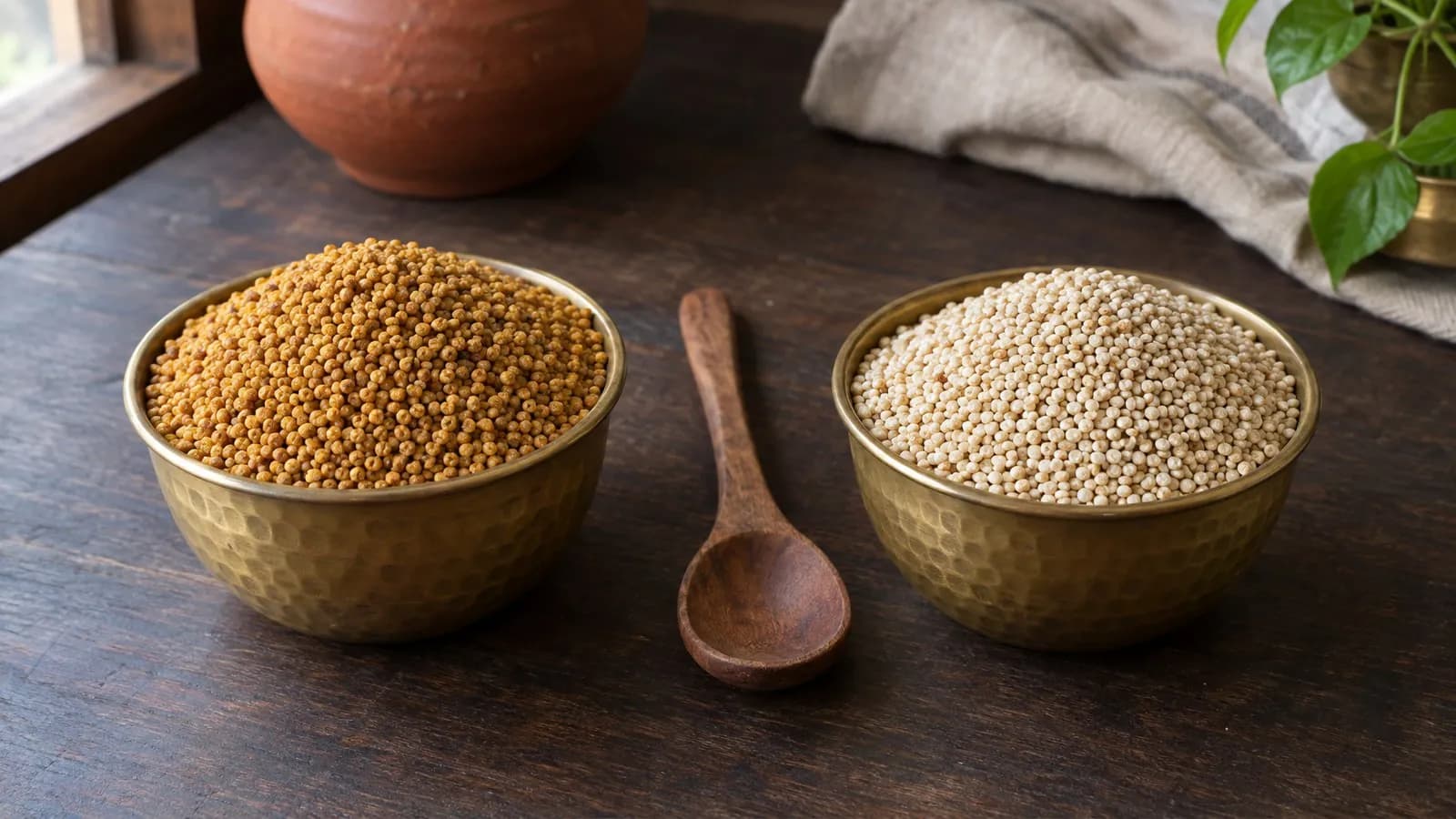
No. Korralu is the Telugu name for foxtail millet; quinoa is a different plant, Chenopodium quinoa, with its own nutrition entry in IFCT 2017. Side by side in a jar the two grains could pass for each other, which is where the mix-up starts. The full comparison, numbers included, is on foxtail millet vs quinoa.
Is kangni good for diabetes?
The evidence points two ways. The single India-tested GI for foxtail millet is 89, in the high band, while a 2021 meta-analysis sorts foxtail into the low mean GI group. The study behind the 89 also found most market samples polished and their labels misleading. Watch portions, and clear any change with your doctor or dietitian first.
Does foxtail millet have protein?
Yes. The ICAR-IIMR bulletin lists protein, micronutrients and phytochemicals among what millets supply well, and a 2023 review records 7 to 13 per cent protein in minor millet grains. No per-100 g protein figure for foxtail millet itself is listed in IFCT 2017 or USDA, so the group range is what this page quotes.
Can foxtail millet be eaten in fast?
Foxtail millet is an everyday staple grain, and no published source records a fasting rule for it. Vrat customs differ from home to home; if your fast allows only certain grains, go by the rules your family already follows for those days.
References
- Indian Food Composition Tables (IFCT) 2017, ICMR-National Institute of Nutrition
- Dietary Guidelines for Indians, ICMR-National Institute of Nutrition
- University of Sydney glycemic index database (GI search)
- University of Sydney: about the glycemic index
- USDA FoodData Central
- ICAR-Indian Institute of Millets Research: millets information and vernacular names
- Nutritional and health benefits of millets, ICAR-Indian Institute of Millets Research (PDF)
- Anitha S et al. A systematic review and meta-analysis of the potential of millets for managing and reducing the risk of developing diabetes mellitus. Front Nutr, 2021
- Kaur B, Singh A, Suri S, et al. Minor millets: a review on nutritional composition, starch extraction/modification, product formulation, and health benefits. J Sci Food Agric, 2023
- Malavika M, Shobana S, Vijayalakshmi P, et al. Assessment of quality of minor millets available in the south Indian market & glycaemic index of cooked unpolished little & foxtail millet. Indian J Med Res, 2020
- UK Food Standards Agency: How to chill, freeze and defrost food safely
Keep reading
Foxtail millet vs quinoa: nutrition, taste and which to choose
Foxtail millet in Kannada, Hindi, Tamil and other Indian names
10 benefits of kangni (foxtail millet) and its side effects