by COWBERRY

7 minute read
Cloves water benefits (and how to make laung ka pani)

Cloves water benefits are easier to state honestly than most lists online would have it: the laboratory findings behind cloves, a per-glass breakdown of two soaked buds, and a simple overnight method. Clove water, or laung ka pani, is just water in which whole cloves have soaked, and this page gives the timings, the numbers and the limits. The spice itself is covered on the cloves hub.
What cloves water is
Laung ka pani is whole cloves soaked in water, usually overnight, with the buds lifted out before drinking. The usual glass is two whole buds in about one glass of water, soaked for 6 to 8 hours, and the drink is the water, taken at room temperature or lightly warmed the next morning. That is the entire preparation, and everything else written about clove water is either a benefit claim or a caution, both of which the next sections take one at a time. The quick-heat cousin of the same spice is laung tea, simmered for 3 to 4 minutes on cloves tea.
Cloves water benefits: what the clove reviews support
The honest source list for cloves water is the same as for the spice. The 2014 clove review, in the Asian Pacific Journal of Tropical Biomedicine, finds clove's antioxidant and antimicrobial activity higher than many fruits, vegetables and other spices show, and records cloves as used for centuries as a food preservative, alongside many medicinal roles. A 2020 review in Biomolecules reports documented antibacterial, antifungal and antiviral activity for eugenol, and pain-relieving reports for that compound. Those are mostly laboratory and animal findings on clove extracts and oil; neither abstract describes cloves soaked in drinking water, and neither reports a trial of clove water in people.
What that leaves for the glass is the modest version: clove water is a way to take cloves in kitchen amounts, and the evidence does not reach beyond kitchen amounts. A 2014 review covering culinary herbs and spices explains that spices are normally eaten in tiny quantities with other foods, which makes their true health benefit hard to pin down. So the sourced cloves water benefits are the clove taste in the water and the bud's laboratory-record chemistry, and nothing beyond that. The full clove list, with each claim's limit spelled out, is on cloves benefits.
Cloves water benefits by the glass: the numbers
One glass of laung ka pani starts from two whole cloves, which weigh about 0.2 g. Using the IFCT 2017 composition for cloves per 100 g, the two buds carry roughly 0.4 kcal, 1.1 mg of calcium, 0.07 g of fibre, 0.04 g of carbohydrate and 0.02 mg of iron. These are garnish-sized numbers, and showing them is the point: clove water is a flavoured drink, not a nutrient source, and the water in the glass adds nothing beyond what the buds give. Anyone who wants the full per-100 g table behind these numbers can read cloves nutrition facts 100g.
How to make laung ka pani
The method is the overnight soak, and the timings below are the kitchen version used across the clove pages: 6 to 8 hours, or overnight.
- Put two whole cloves in a clean glass.
- Pour in one glass of water, about 200 ml, and cover the glass with a small plate or lid.
- Leave it at room temperature for 6 to 8 hours, or overnight while you sleep.
- In the morning, lift the two buds out with a spoon; they stay whole and hard, so there is nothing to strain.
- Drink the water at room temperature or lightly warmed, the same morning; do not keep a second day's soak in the same water.
The buds can be thrown away after the soak; chewing them afterwards is not part of the method. If the taste is too strong, that is the clove, and one bud instead of two makes a milder glass.
When to drink laung water, and how much
The two clove reviews give no daily amount of cloves, in water or out of it. One glass a day, two buds, is a kitchen habit, not a dose: two buds weigh about 0.2 g, and a second glass, four buds, still comes to only about 0.4 g against the single gram that ten whole buds together weigh. The common habit is to drink the glass first thing in the morning on an empty stomach, which is tradition rather than anything the clove reviews report, and it can just as well be sipped after a meal. If you take medicines for any illness, talk to your doctor before making daily clove water part of the routine.
Laung water side effects: the honest line
In kitchen amounts, the two clove reviews' abstracts name no side effects from clove water. The caution that exists in the reviews attaches to concentrated forms, not to two buds in a glass. The 2020 review looks at clove extracts and the oil for toxicological activity alongside its other effects, drawing on laboratory and animal work, and lists no amounts that are safe for people. Keep the water to the method above, and keep clove oil for its own careful uses, one drop at a time, as the why cloves for toothache page explains. If a daily clove habit is meant to help with a condition, that is a question for a doctor, not for a bigger glass. The other warm way to take the same buds is masala chai.
Which cloves to use, and how the water compares to tea
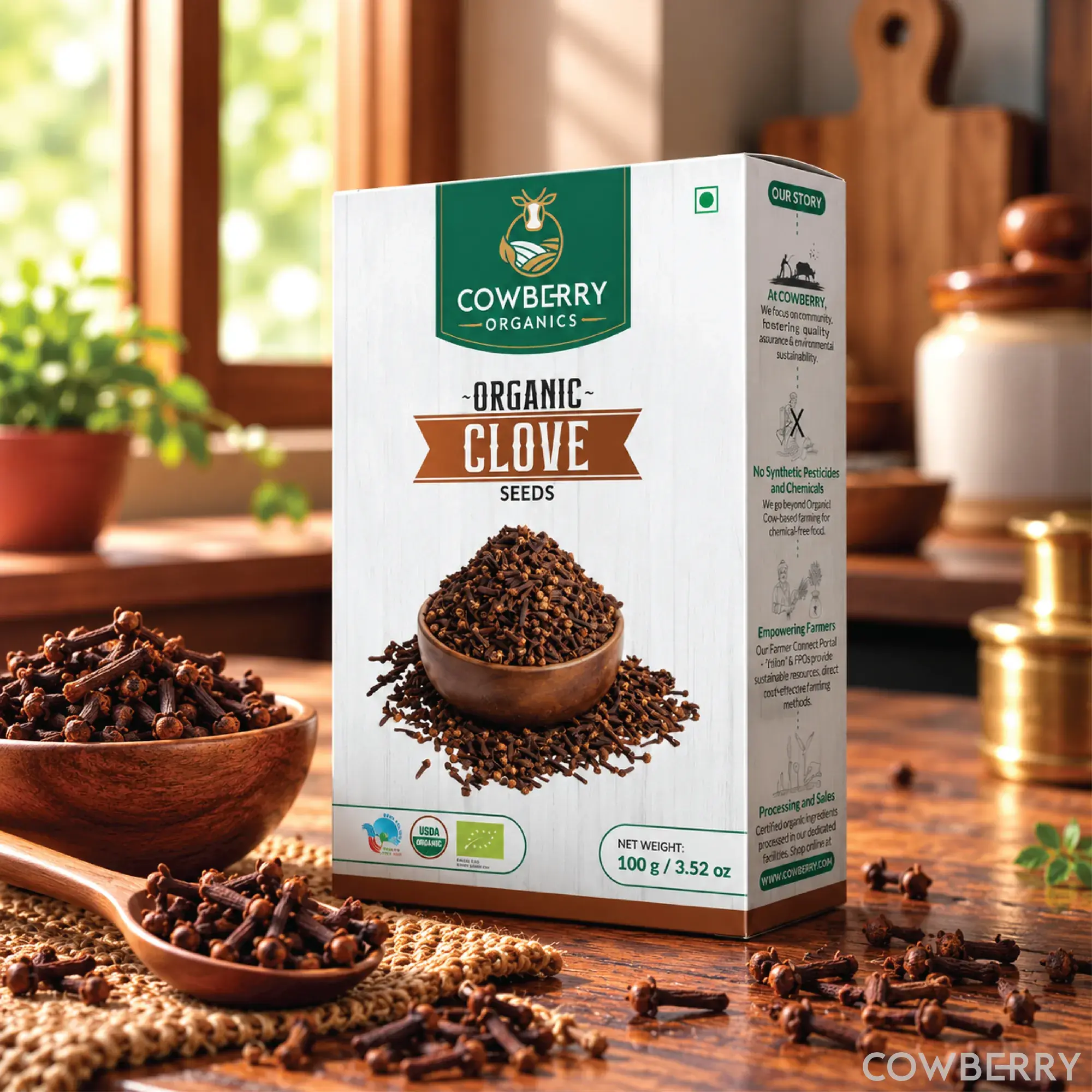
Whole buds are the right form for laung ka pani, and fresher buds usually give the water more of their taste. Buy a small jar, keep it shut against heat and steam, and trust the smell test: a potent bud usually smells sharp and woody as soon as the jar opens. COWBERRY's whole cloves are the same Kerala-grown organic buds behind the hub's buying notes.
Between the two drinks, the difference is time and heat: clove water soaks the buds cold for 6 to 8 hours, while cloves tea simmers two crushed buds for 3 to 4 minutes and serves the cup warm, with tea leaves. Both start and end at the same two buds, and neither has a human trial described in the clove reviews; pick the one that fits the day. Chewing a bud instead is the after-meal habit on cloves how to use, and the whole cluster, names to storage, is on the cloves hub.
FAQs
What is cloves water?
Water in which whole cloves have soaked, usually overnight. The kitchen method is two whole buds in about one glass of water, left covered at room temperature for 6 to 8 hours, with the buds lifted out before drinking. It is a flavoured drink in clove's kitchen amounts, not a supplement.
Can we drink laung water?
Yes, as an ordinary kitchen drink. Two buds in a glass come to about 0.2 g of cloves, about 0.4 kcal and garnish-sized nutrients, and the clove reviews' abstracts name no side effects from food amounts of the spice. The buds themselves stay hard and are lifted out before drinking.
Can cloves be soaked overnight?
Yes, overnight is the usual way. Two whole buds in a covered glass of water for 6 to 8 hours at room temperature is the method, drunk the same morning at room temperature or lightly warmed. Do not reuse the same water for a second day's soak.
Does laung help in cough?
Nothing in the clove research answers this. Neither clove review abstract mentions a study of cough, and neither makes clove water or any clove form a cough medicine. For a cough that lasts, see a doctor.
Does laung cause acidity?
The clove research has no answer for this one either. The two published clove reviews, from 2014 and 2020, are largely laboratory and animal reports, and neither abstract reports acidity from the spice's food amounts, and in clove water that means two buds a glass. If acidity bothers you regularly, ask your doctor.
Is laung good for health?
Two buds in a glass of water are an ordinary kitchen drink; any medicinal effect is untested in people in the clove reviews. The clove reviews' antioxidant and antimicrobial reports come from laboratory studies, and 100 g of cloves lists 567 mg of calcium, 9.41 mg of iron and 34.52 g of fibre. In the two buds a glass of laung ka pani uses, that shrinks to garnish size.
References
- Indian Food Composition Tables (IFCT) 2017, ICMR-National Institute of Nutrition
- Cortes-Rojas DF, de Souza CR, Oliveira WP. Clove (Syzygium aromaticum): a precious spice. Asian Pac J Trop Biomed, 2014
- Batiha GE, Alkazmi LM, Wasef LG et al. Syzygium aromaticum L. (Myrtaceae): Traditional Uses, Bioactive Chemical Constituents, Pharmacological and Toxicological Activities. Biomolecules, 2020
- Opara EI, Chohan M. Culinary herbs and spices: their bioactive properties, the contribution of polyphenols and the challenges in deducing their true health benefits. Int J Mol Sci, 2014
Shop this article
Keep reading
Coriander water benefits: what dhania water actually does
Peanuts in Hindi (moongfali): groundnut names in Indian languages
Coriander vs cilantro: are they the same herb?