by COWBERRY

5 minute read
Cloves how to use: how many per dish, how to eat and store them

Cloves how to use? Whole buds, added early and used sparingly: 2 to 6 buds carry a dal or curry, 2 or 3 season a pot of rice, and 1 or 2 crushed buds flavour a cup of chai. Everything on this page works with one small jar of the spice covered on the cloves guide.
How many cloves to use in food
Cloves flavour by the bud, not the spoonful. Ten whole cloves weigh about 1 g, and one teaspoon of ground clove is about 2 g, the measures used across the clove pages. For one dal or curry for four people, 2 to 6 whole buds; for a pot of rice for the same table, 2 or 3; for a cup of chai or warm milk, 1 or 2 crushed buds; for a full biryani or pulao, 4 to 6 buds with the other whole spices. If you use ground clove, half a teaspoon is plenty for one dish. These counts are not a diet rule: at these amounts cloves add aroma and very little else, and IFCT 2017 carries the full per-100 g composition for anyone who wants it. How the same numbers work on a diabetic plate is on can diabetic eat cloves, and the full table is on cloves nutrition facts 100g.
How to use whole cloves in a tempering
The tempering, the tadka that starts most dals and curries, is where whole cloves do their best work.
- Heat the pan on medium and add one teaspoon of oil or ghee.
- When the oil is warm, drop in 2 to 6 whole buds along with your other whole spices.
- Let them sizzle and turn fragrant, 20 to 30 seconds; the aroma opens into the fat, and the fat carries it through the whole dish.
- Add the onion, garlic or ginger next and cook as your recipe says. The buds stay in the dish, so scoop them out before serving.
How to use cloves in rice, dal and chai
- Rice: drop 2 or 3 whole buds into the pot with the water and salt before it boils; they release their aroma while the rice steams. Pick the buds out before serving, since they stay whole and hard.
- Dals and curries: add the buds with the first hot oil, as above, or drop them into a simmering dal for the last 15 minutes.
- Chai: lightly crush 1 or 2 buds under a spoon, add them with the tea leaves and simmer 3 to 4 minutes, then strain. The fuller method is on cloves tea.
Cloves also fit sweet cooking, rice puddings and baked goods among them, where 2 or 3 buds warm a whole pot.
How to eat cloves raw
A bud or two chewed slowly after a meal is a common home habit. A 2014 review of the spice records its use for centuries as a food preservative and for many medicinal purposes; a chewed bud is an after-meal habit, not a remedy. Chew one bud for a minute or two and let the pieces sit in the mouth; the taste is usually sharp and warming, so start with one. Keep it to a bud or two. The other traditional use, holding a clove against an aching tooth, gets its own page on why cloves for toothache, and the names, nutrition and benefits of the spice are on the cloves guide.
How to store cloves spice
Store whole cloves in an airtight container in a cool, dry place, away from direct sunlight and away from the steam over the stove. Air and moisture are what fade a spice, so close the jar the moment you have taken what you need, and do not spoon over a steaming pan. Whole buds usually hold their aroma longer than ground clove, so buy whole and grind only as much as you will cook with soon. The jar test is the smell: buds that smell sharp and woody the moment the jar opens are still potent. When the jar runs empty, whole cloves sun-dried in Kerala and packed at peak freshness restock it.
FAQs
How to eat raw cloves?
One or two buds chewed slowly after a meal is a common home habit; a 2014 review of the spice records its use for centuries as a food preservative and for many medicinal purposes. Chew one bud for a minute or two and let the pieces sit in the mouth; the taste is usually sharp, so start with one. Keep it to a bud or two.
Does cloves expire?
Dry whole cloves do not spoil the way fresh food does; what fades is the aroma and taste. The honest test is the smell: a potent bud smells sharp and woody the moment the jar opens. Faint, dusty-smelling buds have faded and will under-flavour a dish.
What can i substitute for cloves?
In a dal or curry, leave the bud out and let the cardamom and cinnamon already in the tempering carry the aroma. In chai, a small piece of cinnamon gives a similar warm note, and in a biryani the rest of the whole spices do the work.
Which cloves are best?
Whole buds beat ground, because they usually hold their aroma longer and you can crush only what you need. Among whole buds, choose cloves that smell sharp the moment the jar opens, and a pack that says how they were grown and dried.
Is eating laung good for health?
In the amounts Indian cooking uses, laung is a flavour, not a medicine. The evidence for cloves is laboratory work: a 2014 review credits the spice and its compound eugenol with antioxidant and antimicrobial activity and records its use for centuries for medicinal purposes. In people, spices eaten in small culinary doses have benefits that are hard to establish, so eat laung for taste.
How many cloves to use in food?
Two to six whole buds for a dal or curry for four people, two or three in a pot of rice, and one or two crushed buds in a cup of chai. With ground clove, half a teaspoon is plenty for one dish. Ten whole buds weigh about 1 g, so the whole buds in one dish weigh well under a gram.
References
- Indian Food Composition Tables (IFCT) 2017, ICMR-National Institute of Nutrition
- Cortes-Rojas DF, de Souza CR, Oliveira WP. Clove (Syzygium aromaticum): a precious spice. Asian Pac J Trop Biomed, 2014
- Opara EI, Chohan M. Culinary herbs and spices: their bioactive properties, the contribution of polyphenols and the challenges in deducing their true health benefits. Int J Mol Sci, 2014
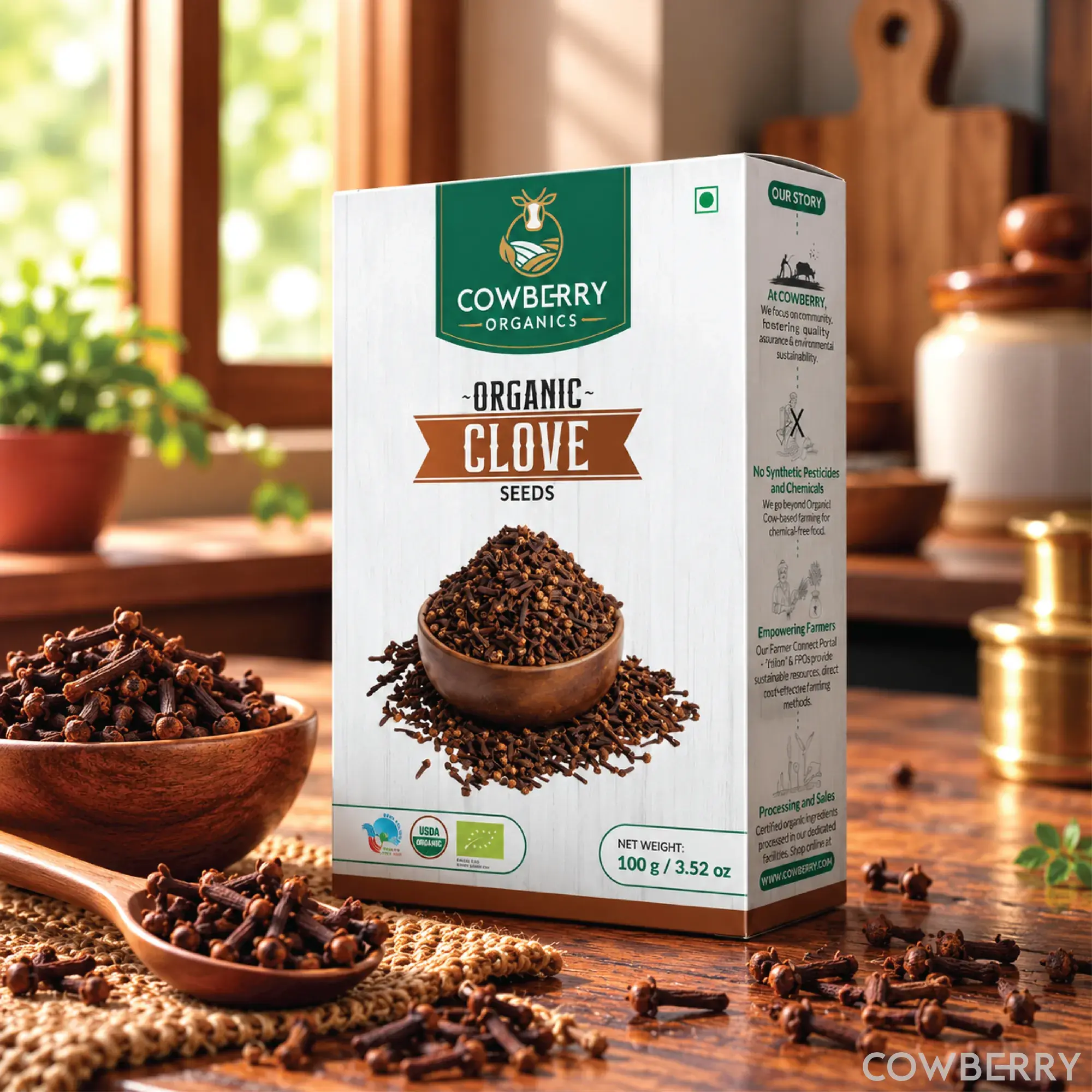
Shop this article
Keep reading
Coriander water benefits: what dhania water actually does
Peanuts in Hindi (moongfali): groundnut names in Indian languages
Coriander vs cilantro: are they the same herb?