by COWBERRY

9 minute read
Can diabetic eat cloves? Carbs, GI and what research shows

Can diabetic eat cloves? Yes, as the spice they have always been: a few buds in a dal, a curry or chai. No human study shows cloves lower blood sugar, and no tested glycemic index exists, so the answer rests on amounts, which are tiny: a day of clove in cooking adds a fraction of a gram of carbohydrate. The spice itself is covered on the cloves guide.
Short answer: can diabetic eat cloves?
Yes, in food amounts, with one condition: cloves stay what they have always been, a spice, not a medicine. They bring almost no carbohydrate to a meal, and that is the whole of their diabetes story in the kitchen. The rest of the story is what they are not. No human trial has shown that cloves or laung lower blood sugar. The research on clove is preclinical: a 2014 review of the spice and a 2020 review of its constituents and activities report laboratory and animal work on its compounds, and neither describes a trial that measured blood sugar in people with diabetes.
That gap matters, because queries like "laung for diabetes patients" usually expect the opposite. A 2014 review of culinary herbs and spices puts the general problem plainly: spices are normally eaten in small quantities and in combination with other foods, so it is unclear what their true health benefit is. The honest line for cloves and diabetes is therefore simple: eat them for flavour, in normal kitchen amounts, and leave the blood-sugar work to the plate, the medicine and the doctor.
What the numbers say: carbs, fibre and the GI that does not exist
For diabetes, three numbers matter, and only two of them exist. IFCT 2017 gives the composition of dried cloves per 100 g: 18.73 g of carbohydrate, 34.52 g of fibre, 5.86 g of protein, 8.41 g of fat and 187 kcal.
Laung ka glycemic index: no value is published
Searches for "laung ka glycemic index" have no one-number answer, because no GI value has been published for cloves. A GI test feeds ten or more people a portion carrying 50 g of available carbohydrate and follows their blood glucose over the next two hours (University of Sydney). Reaching that with cloves would take about 267 g of buds, far more than anyone cooks with. At a gram or two a day the carbohydrate is far too little to move a reading.
Carbohydrate in a real amount
Ten whole cloves weigh about 1 g, the measure this page uses; that gram carries about 0.2 g of carbohydrate. Even a heavy hand, 2 g of cloves spread across a day's dal, curry and chai, adds about 0.4 g of carbohydrate. For comparison, a single roti holds far more carbohydrate than that, so cloves are not where a diabetic plate finds its carbohydrate.
Fibre and calcium at spice amounts
The per-100 g figures look generous: 34.52 g of fibre and 567 mg of calcium per 100 g. At a gram a day the fibre works out to about 0.35 g and the calcium to about 5.7 mg, real but garnish-sized. ICMR-NIN's Dietary Guidelines note that an adequate intake of fibre-rich foods such as pulses, whole grains, vegetables and fruits helps maintain blood glucose levels, and that fibre is where a diabetic diet should look, not the spice jar. The full numbers are on cloves nutrition facts 100g.
| Nutrient | Cloves, dried |
|---|---|
| Energy (kcal) | 187 |
| Protein (g) | 5.9 |
| Fat (g) | 8.4 |
| Carbohydrates (g) | 19 |
| Dietary fibre (g) | 35 |
| Iron (mg) | 9.4 |
| Calcium (mg) | 567 |
| Magnesium (mg) | 334 |
| Potassium (mg) | 1434 |
| Sodium (mg) | 183 |
| Zinc (mg) | 1.1 |
| Folate (mcg) | 33 |
Per 100 g raw, edible portion. Composition: IFCT 2017 (ICMR-NIN). — means not reported. These are average values for the food; the label on a pack gives the values for that product.
How much and how: cloves in a diabetic kitchen
There is no researched daily amount of cloves for a person with diabetes, because no trial has ever set one, and this page will not invent one. The amount that makes sense is the kitchen amount: 2 to 6 whole buds tempering a dal or curry, 2 or 3 in the rice pot, 1 or 2 in a cup of chai. Per-dish counts and storage are on cloves how to use.
A cloves for diabetes recipe: laung chai without sugar
Heat one cup of water in a small pan. Add 2 lightly crushed cloves and half a teaspoon of tea leaves, and simmer 3 to 4 minutes. Strain into a cup and skip the sugar: the clove carries the aroma, and a sugar-free cup is the only clove drink with any diabetes logic. If you take sugar in chai, halve it first and let the clove do the rest; whether to drop sugar altogether is a question for your dietitian. The fuller laung tea method is on cloves tea.
Where cloves fit on the plate
Cloves belong in the tempering, not in the plan. They season the dal, rajma or sabzi that carries the meal's fibre, and they do their job without changing what the dish does to blood glucose. A dal tempered with cloves, onion and tomato is still the dal; the cloves only make it worth eating more slowly.
Better and worse ways to eat cloves
Better
- Whole buds dropped into hot oil or ghee at the start of a dal, rajma or curry, so the aroma opens into the dish.
- Two or three cloves into the rice pot with a bay leaf before it comes to a boil, the way a pulao starts.
- Crushed clove in a cup of chai in place of part of the sugar.
- Clove in the masala of a vegetable sabzi, where the vegetables provide the bulk.
Worse
- Clove oil or clove capsules sold "for diabetes": no human trial backs them, and they are not a stand-in for medicine.
- Clove-heavy sweets such as laung lata or clove-flavoured kheer: the sugar and ghee in them outweigh any spice.
- Chewing a handful of dry buds every day as a routine: the 2020 review's toxicological findings come from laboratory and animal work, and nothing in it supports a daily handful.
- Adding cloves on top of a sugary dessert and expecting the spice to count for less.
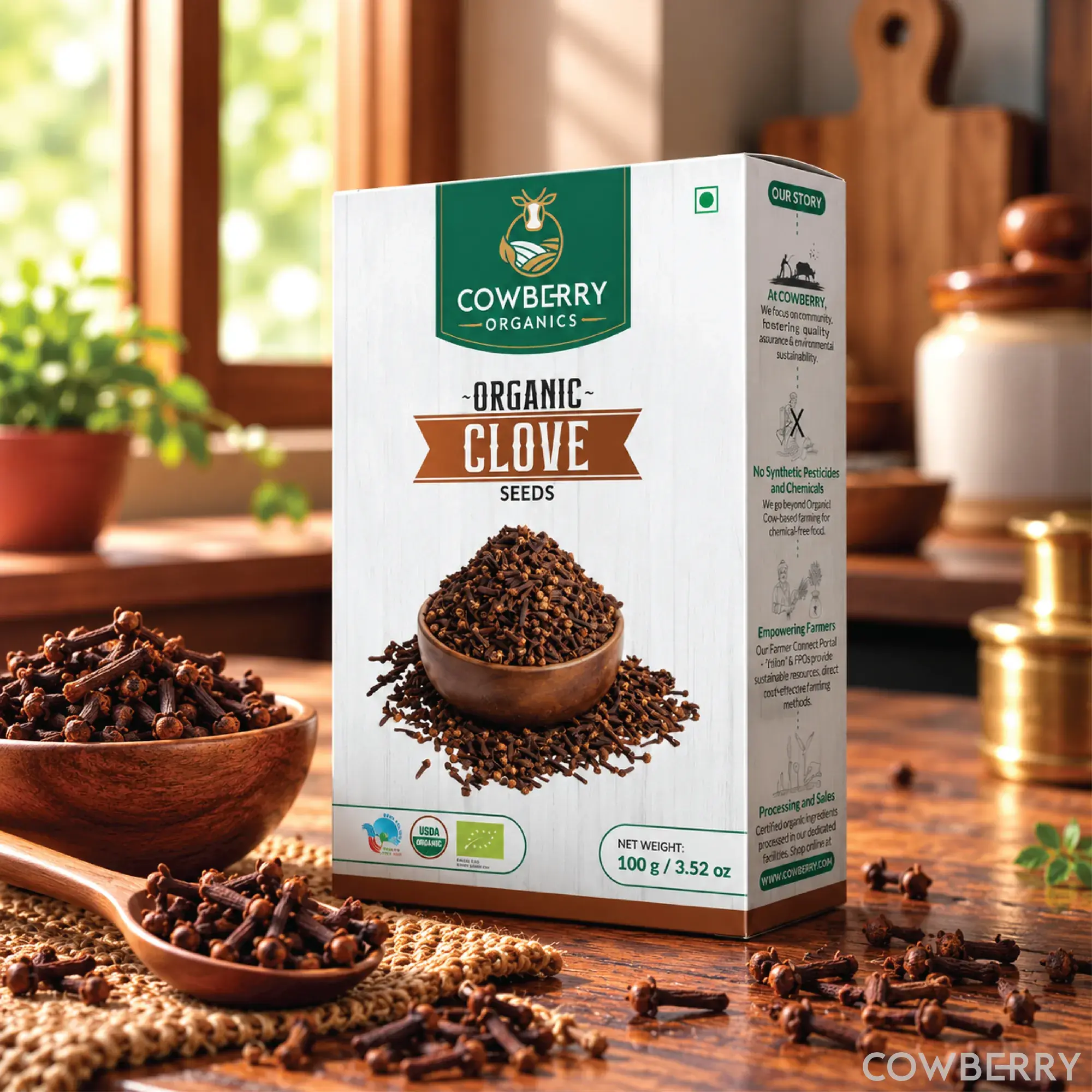
Whole organic buds are the sensible buy if you cook with cloves often, and whole cloves from Kerala work in every dish above.
What to avoid
- Changing or skipping diabetes medicines because of anything you have read about cloves or any other spice. Take your readings to your doctor; the dose is their call.
- Clove oil swallowed or dosed daily. No human evidence connects clove oil with blood sugar, and the 2020 review of clove and its oil covers toxicological activity alongside its other effects, from laboratory and animal work, not safe amounts for people. Food amounts are the sensible ceiling.
- "Diabetic" spice mixes and chai masala blends that list sugar, maltodextrin or refined flours on the label; the label, not the front of the pack, tells the truth.
- Sweet clove preparations as a daily habit. A clove-flavoured mithai is still a mithai.
- Making cloves the whole plan. A spice cannot carry a diabetic diet; the dal, vegetables, whole grains and your medicines carry it.
Side effects and who should limit cloves are on cloves benefits and side effects.
Talk to your doctor or dietitian
Diabetes is managed with medicines, monitoring and a diet built for one person, and a spice sits outside all three. If you take insulin or tablets that lower blood glucose, leave the dose exactly as prescribed and tell your doctor about any change you make to your food, because a big change in what you eat can move readings in either direction. A dietitian can fit your meals into a carbohydrate count and will tell you what a spice can and cannot contribute to it. Before you add clove oil, clove capsules or a daily laung habit to a medical condition, talk to your doctor before using spices or supplements in place of the medicines you have been prescribed. For a person with diabetes, the sensible order is the same as for any change: talk to your doctor or dietitian first, and let the spice stay a spice. For names, storage and cooking, the cloves guide has the rest.
FAQs
Can diabetic eat cloves?
Yes, as a spice in food. A few buds in a dal, curry or chai add aroma and almost no carbohydrate. One gram of whole cloves carries about 0.2 g. No human trial has shown that cloves lower blood sugar, so they replace nothing on the plate or in the medicine box. Keep them to kitchen amounts and let your meter and your doctor judge the rest.
Does laung cause acidity?
The clove research does not answer this. The two published reviews of clove, from 2014 and 2020, cover laboratory and animal work and do not report acidity from food amounts of the spice. Cloves are eaten a few buds at a time inside cooked dishes, far from the amounts studied in laboratories. If acidity is a regular problem, ask your doctor rather than blaming or removing a spice on a guess.
Is laung good for health?
As a spice, yes; as a medicine, the evidence is not there. IFCT 2017 gives cloves 34.52 g of fibre and 567 mg of calcium per 100 g, and a 2014 review credits clove and its main compound eugenol with antioxidant and antimicrobial activity in laboratory studies. A 2014 review of culinary spices notes that small culinary doses make a true health benefit hard to prove, so use laung for flavour.
What is the glycemic index of cloves?
No GI value has been published for cloves. A GI test feeds ten or more people a portion carrying 50 g of available carbohydrate, which would take about 267 g of cloves, far more than anyone cooks with. What matters for diabetes is the amount on the plate: 1 g of cloves carries about 0.2 g of carbohydrate, too little to move a reading.
Does cloves reduce blood sugar?
No human study has shown that. Two reviews of the spice, from 2014 and 2020, cover laboratory and animal work on its compounds, and neither reports a human trial on blood sugar. Keep cloves in food amounts for flavour, keep the medicines exactly as prescribed, and talk to your doctor before using any spice or supplement in place of them.
Can cloves raise blood sugar?
Not in kitchen amounts. Two grams of cloves, a heavy day's use, carry about 0.4 g of carbohydrate, which is far below any food portion. What raises blood sugar in a clove dish is the sugar, rice or maida around the spice, never the buds themselves. Count the dish, not the clove.
How many cloves can a diabetic eat per day?
No trial has set a number, so no medical amount exists. In cooking, 2 to 6 buds temper a dal or curry, and that kitchen range is the sensible one. Chewing or brewing a daily medicinal amount is not supported by any study, so keep cloves to what a recipe would use.
References
- Indian Food Composition Tables (IFCT) 2017, ICMR-National Institute of Nutrition
- Dietary Guidelines for Indians, ICMR-National Institute of Nutrition
- University of Sydney: about the glycemic index
- Cortes-Rojas DF, de Souza CR, Oliveira WP. Clove (Syzygium aromaticum): a precious spice. Asian Pac J Trop Biomed, 2014
- Batiha GE, Alkazmi LM, Wasef LG et al. Syzygium aromaticum L. (Myrtaceae): Traditional Uses, Bioactive Chemical Constituents, Pharmacological and Toxicological Activities. Biomolecules, 2020
- Opara EI, Chohan M. Culinary herbs and spices: their bioactive properties, the contribution of polyphenols and the challenges in deducing their true health benefits. Int J Mol Sci, 2014
Shop this article
Keep reading
Coriander water benefits: what dhania water actually does
Peanuts in Hindi (moongfali): groundnut names in Indian languages
Coriander vs cilantro: are they the same herb?