by COWBERRY

5 minute read
Cinnamon in Hindi (dalchini): names in English and Indian languages

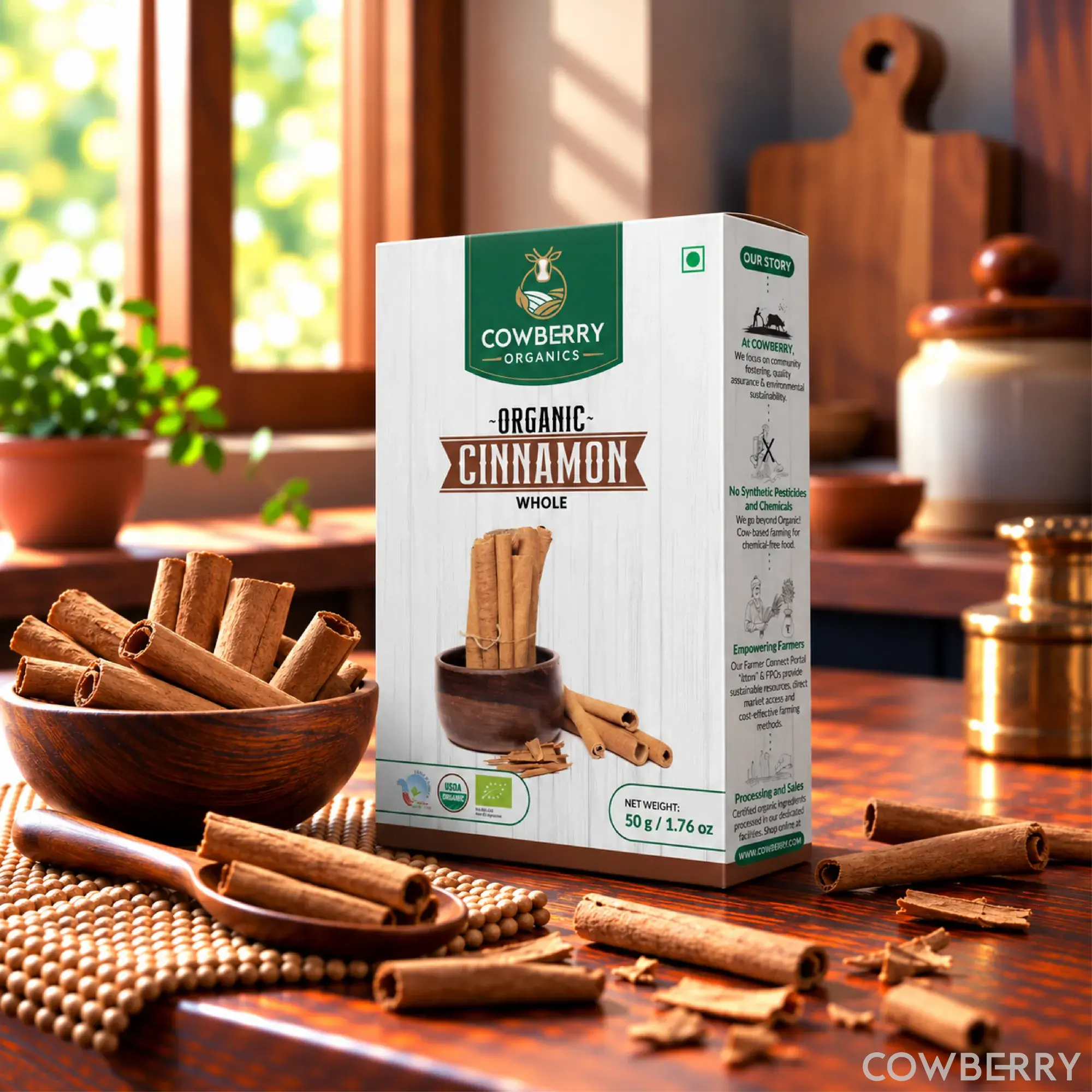
Cinnamon in Hindi is dalchini, the name COWBERRY's own whole-spice pack carries; in English it is cinnamon, and the botanical name on the USDA record is Cinnamomum aromaticum. The table below shows every name the public records carry, language by language, and explains the gaps honestly; the spice itself is covered on the cinnamon guide.
Cinnamon in Hindi and other languages: the quick answer
Three names cover the whole page: dalchini in Hindi, cinnamon in English, and the botanical name Cinnamomum aromaticum. The table below is built from the USDA FoodData Central record for ground cinnamon, which lists the English entry Spices, cinnamon, ground and the botanical name, and nothing for any Indian language; that is why the Hindi row reads as a dash there. The Hindi name comes from COWBERRY's own pack, which carries it as Organic Dalchini (Cinnamon). Where any other row shows a dash, that language has no name in either public record, and none is guessed.
| Language | Name (romanised) |
|---|---|
| English | Spices, cinnamon, ground |
| Hindi | — |
| Marathi | — |
| Gujarati | — |
| Punjabi | — |
| Bengali | — |
| Odia | — |
| Assamese | — |
| Kannada | — |
| Telugu | — |
| Tamil | — |
| Malayalam | — |
| Urdu | — |
| Sanskrit | — |
| Botanical name | Cinnamomum aromaticum |
Source: USDA FoodData Central record 171320 (English and scientific name only; no Indian-language names in source). — means no name recorded in the source.
Cinnamon in English and the botanical name
In English the spice is cinnamon, and the record the table is built from lists its English entry as Spices, cinnamon, ground: the ground form is the one the record analyses. The botanical name listed beside it is Cinnamomum aromaticum. That is a telling detail, because Cinnamomum aromaticum is cassia, not the true cinnamon of the thin rolled quills; the same record lists the common name Cassia for it. IFCT 2017, the Indian food tables, do not list cinnamon at all, which is why the names here come from the USDA record. The cassia point is unpacked on the cinnamon vs cassia page.
Names by region: what is on record
North India is the region with a name on record: the Hindi word dalchini is the one COWBERRY's pack carries. For every other Indian language the table stays blank, because neither the USDA record nor any COWBERRY product page carries a regional name, and a guessed spelling in a names table would mislead more than a dash. That honesty has a payoff: every name shown can be checked against its source, and none of them is a loose transliteration.
Often confused with: dalchini vs cinnamon, and cassia
Two confusions sit behind the searches. First, dalchini and cinnamon are the same spice: one Hindi name, one English name, no difference. Second, cinnamon and cassia are two different barks that share a shelf: cassia is the thicker, layered bark the ground-spice record above is identified with, while true cinnamon is the very thin bark FSSAI's quick test describes, thin enough to be rolled around a pencil or pen. The same USDA record carries the scientific name Cinnamomum verum, the true cinnamon's botanical name. The full comparison, including the coumarin difference, is on cinnamon vs cassia.
Where it grows and where COWBERRY's comes from
COWBERRY's cinnamon comes from the lush spice-growing regions of Kerala, where the warm tropical climate and rich natural surroundings provide favourable conditions for cinnamon cultivation. It is grown through traditional cow-based natural farming and sold whole. The organic cinnamon product page carries the Hindi name dalchini in its title, the same word this page opens with. For what the spice holds, see cinnamon nutrition per 100g; the cinnamon powder guide takes it from nutrition to buying.
FAQs
What is dalchini?
Dalchini is the Hindi name for cinnamon, one spice with two names. COWBERRY's own pack carries both together, as Organic Dalchini (Cinnamon). In the USDA record, the ground form is the same bark, listed as Spices, cinnamon, ground.
What is dalchini called in English?
Cinnamon. The USDA FoodData Central record for the ground spice lists the English name as Spices, cinnamon, ground, and dalchini is simply the Hindi word for the same bark. There is no second English name to learn.
What is the difference between dalchini and cinnamon?
None in the spice: dalchini is Hindi, cinnamon is English, and they name the same bark. The real difference people are reaching for is usually cinnamon versus cassia, the two different barks; that one is on the cinnamon vs cassia page.
Why dalchini is called dalchini?
Where the word comes from is not on record, so no guess is made. What is on record: dalchini is the Hindi name COWBERRY's pack carries for the spice, and the English and botanical names are the ones in the table.
Is dalchini powder the same as cinnamon powder?
Yes, the same ground bark under its two names. The USDA record the numbers come from is for the ground form, and the home-grinding route is the same for both names; see cinnamon how to make powder.
What is the difference between cinnamon and cassia?
Two different barks: cassia is the thick, layered bark the ground-spice record above is identified with, and a 2010 review names it as the main dietary source of coumarin; true cinnamon is the very thin bark of the quick test. The side-by-side is on cinnamon vs cassia.
References
Shop this article
Keep reading
Coriander water benefits: what dhania water actually does
Peanuts in Hindi (moongfali): groundnut names in Indian languages
Coriander vs cilantro: are they the same herb?