by COWBERRY

6 minute read
Is bajra good for weight loss? Calories, fibre, and how to eat it

Is bajra good for weight loss? Only inside a calorie plan: bajra is 348 kcal per 100 g, and its 11.49 g of fibre helps you feel full, which the Dietary Guidelines say reduces the need for extra calories. One roti is 139 kcal. The bajra hub covers the grain itself; this page does the weight arithmetic.
Short answer: is bajra good for weight loss?
Pearl millet for weight loss is a swap play, not a supplement. Weight changes on the balance of calories taken in and spent, and no single grain tips that balance by itself. Bajra earns its place two ways: as a swap, a bajra roti in place of a katori of milled rice keeps the meal's calories about level while the fibre rises; and as a high-fibre grain, since the Dietary Guidelines describe whole grains including millets as providing sustained energy and helping you feel full, reducing the need for extra calories. On its own, bajra at 348 kcal per 100 g is not a low-calorie food, so portions still decide.
Calories in bajra: per 100 g, per roti and per katori
Raw bajra carries 348 kcal per 100 g, with 61.78 g of carbohydrate, 11.49 g of fibre and 10.96 g of protein. Cooked into the amounts people actually eat: one bajra roti (40 g of flour) gives 139 kcal, 24.7 g of carbohydrate, 4.6 g of fibre and 4.4 g of protein, and one katori of cooked bajra (40 g of raw grain) matches it at 139 kcal. Two rotis make 278 kcal. None of these figures include the ghee, oil or butter in the pan, which is where a careful roti often fails; the table below is the raw grain itself.
| Nutrient | Pearl millet (bajra), raw |
|---|---|
| Energy (kcal) | 348 |
| Protein (g) | 11 |
| Fat (g) | 5.4 |
| Carbohydrates (g) | 62 |
| Dietary fibre (g) | 11 |
| Iron (mg) | 6.4 |
| Calcium (mg) | 27 |
| Magnesium (mg) | 124 |
| Potassium (mg) | 365 |
| Sodium (mg) | 4.1 |
| Zinc (mg) | 2.8 |
| Folate (mcg) | 36 |
| Glycemic index (GI) | 57 |
Per 100 g raw, edible portion. Composition: IFCT 2017 (ICMR-NIN). GI: University of Sydney GI database. — means not reported. These are average values for the food; the label on a pack gives the values for that product.
Why the fibre and protein help
Bajra's 11.49 g of fibre per 100 g is the part the guidelines keep coming back to: dietary fibre delays and retards the absorption of carbohydrates and fats, and it increases the satiety value of a meal — the technical way of saying fibre makes a meal more filling. The obesity chapter puts it plainly for whole grains including millets: they provide sustained energy and help you feel full, reducing the need for extra calories. The protein side is smaller but useful: 10.96 g per 100 g, or 4.4 g in a roti, and the ICAR-IIMR bulletin notes millet protein is short on lysine, so dal in the same meal complements it. A 2025 review of pearl millet calls out its high dietary fibre, surpassing rice, and a potential role in weight management — potential, not a promise.
How much bajra and how to eat it
Swap, don't stack. One roti or one katori per meal, in place of the katori of rice it replaces, keeps the day's calories about flat while the fibre rises. The Dietary Guidelines suggest 20 to 30 percent of an adult's cereals come from millets, and for typical weight-loss diets, which run 500 to 750 kcal a day below requirement, they say protein near 15 percent of energy may be important to preserve muscle mass, and they advise against a deficit beyond 40 percent of requirement. They also keep the cereal-to-pulse ratio at 3:1 or 5:1, so bajra with dal, sabzi and curd is the shape of the meal, and regular physical activity is the other half. For bajra for weight loss, that is the whole game: the swap, the deficit and regular physical activity. The bajra hub lists the everyday ways to cook the grain.
Better and worse ways to eat bajra on a deficit
Better: bajra khichdi with dal and vegetables in one pot; bajra upma for breakfast with vegetables; a bajra roti with dal, sabzi and curd; whole bajra cooked like rice under a curry. Measure the ghee with a teaspoon, not the eye, or skip it.
Worse: a bajra laddu or jaggery-sweetened porridge; deep-fried bajra vadas; rotis drenched in ghee; and the silent one — bajra added to the same rice and rotis you already eat, which raises the day's total instead of cutting it.
Talk to your doctor or dietitian
Bajra fits a weight plan only when the day's calories are planned, and anyone on medication or with a health condition should not wing that plan. Talk to your doctor or dietitian before you start: ask for your daily calorie and protein targets, whether a 500 to 750 kcal deficit is safe for you, and how many bajra portions a day fit those numbers.
FAQs
Does pearl millet increase weight?
Only the way any food does: when the day's calories exceed what is spent. Bajra itself is 348 kcal per 100 g, and a measured roti is 139 kcal, which fits a deficit fine. Weight climbs when portions climb, or when the ghee on top climbs — not because the grain is bajra.
Does pearl millet reduce weight?
No food reduces weight by itself; the calorie balance does. What bajra adds is 11.49 g of fibre per 100 g, and the guidelines note that dietary fibre increases the satiety value of a meal, so a bajra swap can help you end the day inside the plan rather than outside it.
Is bajra good for weight loss?
As a swap inside a calorie plan, yes. One 40 g roti is 139 kcal with 4.6 g of fibre, and the guidelines credit whole grains including millets with helping you feel full, which reduces the need for extra calories. Stacked on top of your usual rice, it helps no one.
Does bajra have protein?
Yes: 10.96 g per 100 g, about 4.4 g in one 40 g roti. The ICAR-IIMR bulletin notes millet protein is short on the amino acid lysine, so the traditional pairing — bajra roti with dal — complements the millet protein at the meal.
Does bajra have fibre?
Yes, and it is the headline: 11.49 g per 100 g, about 4.6 g in one roti. The Dietary Guidelines describe dietary fibre as delaying and retarding the absorption of carbohydrates and fats while increasing the satiety value of a meal.
Bajra roti vs wheat roti for weight loss?
Compare portions, not names: a 40 g bajra roti is 139 kcal, a 30 g wheat phulka about 97 kcal, and both are whole grains with roughly 11 g of fibre per 100 g. The full side-by-side is on bajra vs wheat.
References
- Indian Food Composition Tables (IFCT) 2017, ICMR-National Institute of Nutrition
- Dietary Guidelines for Indians, ICMR-National Institute of Nutrition
- Nutritional and health benefits of millets, ICAR-Indian Institute of Millets Research (PDF)
- Tanwar R, Panghal A, Kumari A et al. Nutritional, phytochemical and functional potential of pearl millet: a review. Chem Biodivers, 2025
Shop this article
Keep reading
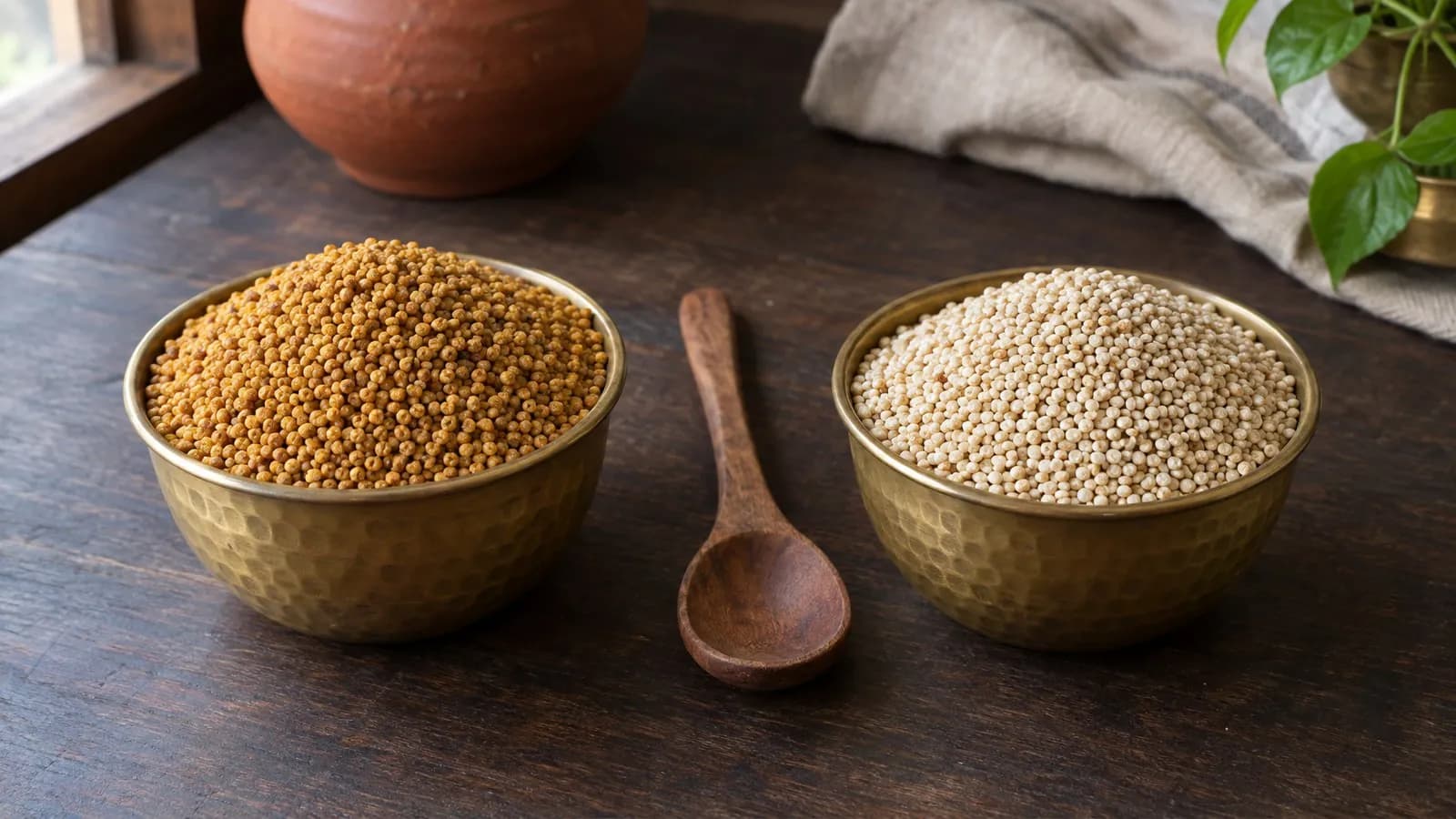
Foxtail millet vs quinoa: nutrition, taste and which to choose
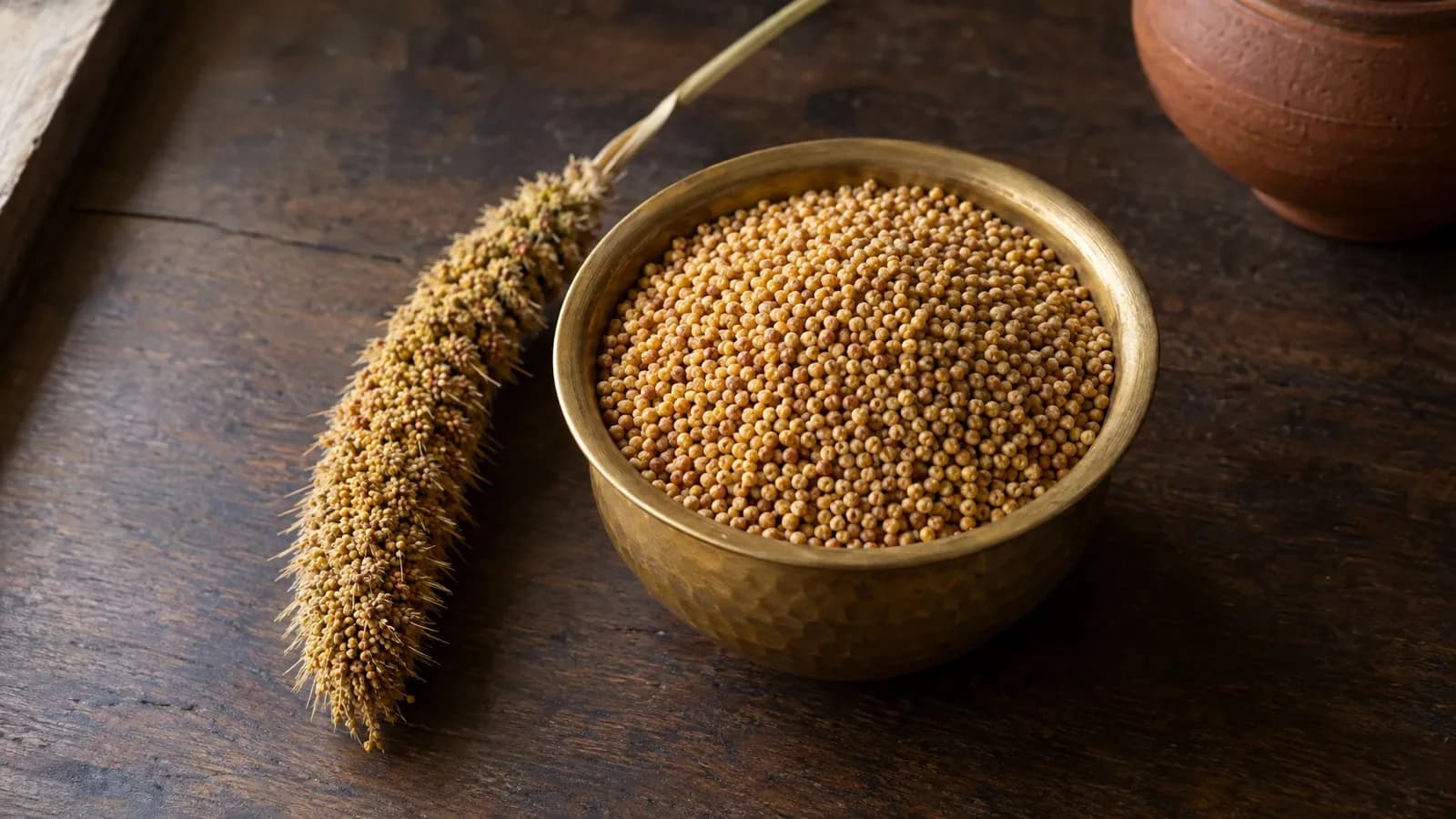
Foxtail millet in Kannada, Hindi, Tamil and other Indian names
10 benefits of kangni (foxtail millet) and its side effects