by COWBERRY

6 minute read
Toor dal recipes: 8 simple dishes to make at home

Toor dal recipes carry one bag of dal from a plain everyday katori to sambar, khichdi and dal dhokli, and this page lines up all eight, each with its recipe-card time and its calories per serving. The dal itself, from soaking to storage, is on the toor dal hub.
The everyday bowls: plain dal and dal palak
The toor dal recipe is the baseline every other dish here starts from: one cup of dal to three cups of water, three whistles plus five slow minutes, and a ghee-cumin-garlic tadka to finish. Its card reads “about an hour including the soak, serves four”, at 233 kcal per serving.
Dal palak adds spinach in the last minutes of cooking, one of the leafy greens the guidelines list as plant iron foods. It prints “about 55 minutes, serves four” and 199 kcal per serving, the lightest lunch bowl here after rasam.
The South Indian pot: sambar and rasam
Sambar is toor's most famous form: the recipe roasts and grinds its own masala from coriander, chana dal and red chillies, and the card says “about an hour, serves four” with 227 kcal per serving.
Rasam is the thin, peppery cousin built on just a quarter cup of dal, ready in “about 40 minutes, serves four” at 82 kcal per serving, the lightest number on this page.
Gujarati lunches: toor dal fry and dal dhokli
Toor dal fry is the Gujarati dry dal: two whistles, drained, then dry-fried with groundnuts, coconut and jaggery, “about 45 minutes, serves four with roti or rice” and 275 kcal per serving, a small, dense bowl.
Dal dhokli is the one-pot Gujarati lunch of wheat dhokli cooked in a sweet-sour tamarind and jaggery dal with a groundnut tempering; “ready in about 70 minutes, serves four” at 293 kcal per serving, the highest count here because the wheat and the dal share the pot.
One pot and dough: khichdi and dal roti
Toor dal khichdi cooks rice and dal together, three parts rice to two parts dal, in five cups of hot water, a four-to-one water ratio: one whistle plus eight slow minutes, “under an hour including the soak, serves four” and 284 kcal per serving.
Toor dal roti kneads the soaked dal into whole-wheat dough, half a cup of dal to one cup of atta, for eight rotis at two per serving: “about 55 minutes of work after a three-hour soak, and the batch feeds four”, 246 kcal per serving.
Toor dal recipes vegetarian, from 82 to 293 kcal
Every toor dal recipes vegetarian list should know its ladder, and this one runs from rasam's 82 kcal per serving to dal dhokli's 293 kcal, with the everyday plain dal at 233 kcal and sambar at 227 kcal in the middle. Time runs the same way: rasam is the quickest at about 40 minutes, and dal dhokli the longest at about 70 minutes. For the lightest lunch, rasam or dal palak; for the fullest one-pot, khichdi or dhokli; for the crispest plate, the fry. All eight are vegetarian and built on one bag of split toor dal.
The ladders also order the shopping: rasam wants a quarter cup of dry dal, the plain dal a full cup, and the dhokli brings wheat dough of its own. Whatever the pick, the star is the same split toor dal, so one bag stocks every dish on this page.
Serving ideas that need no recipe card
Seven of the eight work as the dal half of the cereal-pulse pair the Dietary Guidelines describe, with rice or roti on the side; the dal roti is the pair baked into one bread. A squeeze of lemon over the bowl is the vitamin C that lifts plant iron absorption; tea stays an hour away from the meal because it binds dietary iron. For a bigger plate, plain dal takes steamed rice, sambar takes idli or rice, and the dry fry takes roti or rice, exactly as its card prints.
A week of Indian toor dal recipes from one bag
Four of the bowls portion a cup of dry dal across their four servings, about 50 g each; rasam builds on a quarter cup, and the khichdi, roti and dhokli on half a cup. A cup of dal, the standard 200 g measure, makes the four servings the plain dal recipe prints. Cooked dal keeps up to two days in the fridge, so a week's dal can be cooked in two sittings. Soak for 20 to 30 minutes on an everyday cook, or overnight in the fridge when you plan ahead. Two days of lunches come from one sitting: the plain dal keeps that whole window, and the rasam is quick enough to make fresh on the day. The toor dal hub carries the dal itself, names to storage.
FAQs
Can toor dal cause gas?
It can, as with most pulses. The sugars behind the gas, raffinose, stachyose and verbascose, come from a 2019 review published in Current Opinion in Food Science; the same review notes the explanation has lately been questioned and records that most people settle within a few weeks of eating pulses regularly. Every one of the eight recipes here cooks the dal fully soft.
Does toor dal have protein?
Yes: 21.7 g per 100 g raw, and a cooked katori from 30 g of dry dal carries about 6.5 g. The recipe servings here run from rasam's 2.8 g to toor dal fry's 12.6 g of protein per serving, on each card's own portion. Two katoris double the protein to about 13 g. Beside rice or roti, the dal supplies the lysine the cereal lacks.
Which toor dal is best?
For these eight recipes, the plain split toor dal is the one to buy, and it is the only dal they call for. The which toor dal is best guide walks through the oily, plain, polished and unpolished packs and what each suits, sambar and the everyday dal included. Unpolished dal works in every recipe here.
What is toor dal?
Toor dal is the split pigeon pea, Cajanus cajan, the yellow dal behind every recipe on this page; IFCT 2017 files it as red gram and Hindi speakers call it arhar. Raw, it holds 21.7 g of protein and 9.1 g of fibre per 100 g, and it cooks down soft, which is why it carries sambar, rasam and the everyday dal.
Why toor dal causes gas?
The sugars in the dal are the answer the review gives: galacto-oligosaccharides the small intestine does not digest are fermented in the colon, and the fermentation makes gas. A 2019 review questions the explanation itself, and adds that flatulence fades for most people over a few weeks of regular eating. The review's reassurance covers properly cooked pulses, and all eight recipes here take the dal there.
References
- Indian Food Composition Tables (IFCT) 2017, ICMR-National Institute of Nutrition
- Dietary Guidelines for Indians, ICMR-National Institute of Nutrition
- Thompson HJ. Improving human dietary choices through understanding of the tolerance and toxicity of pulse crop constituents. Curr Opin Food Sci, 2019
- UK Food Standards Agency: How to chill, freeze and defrost food safely
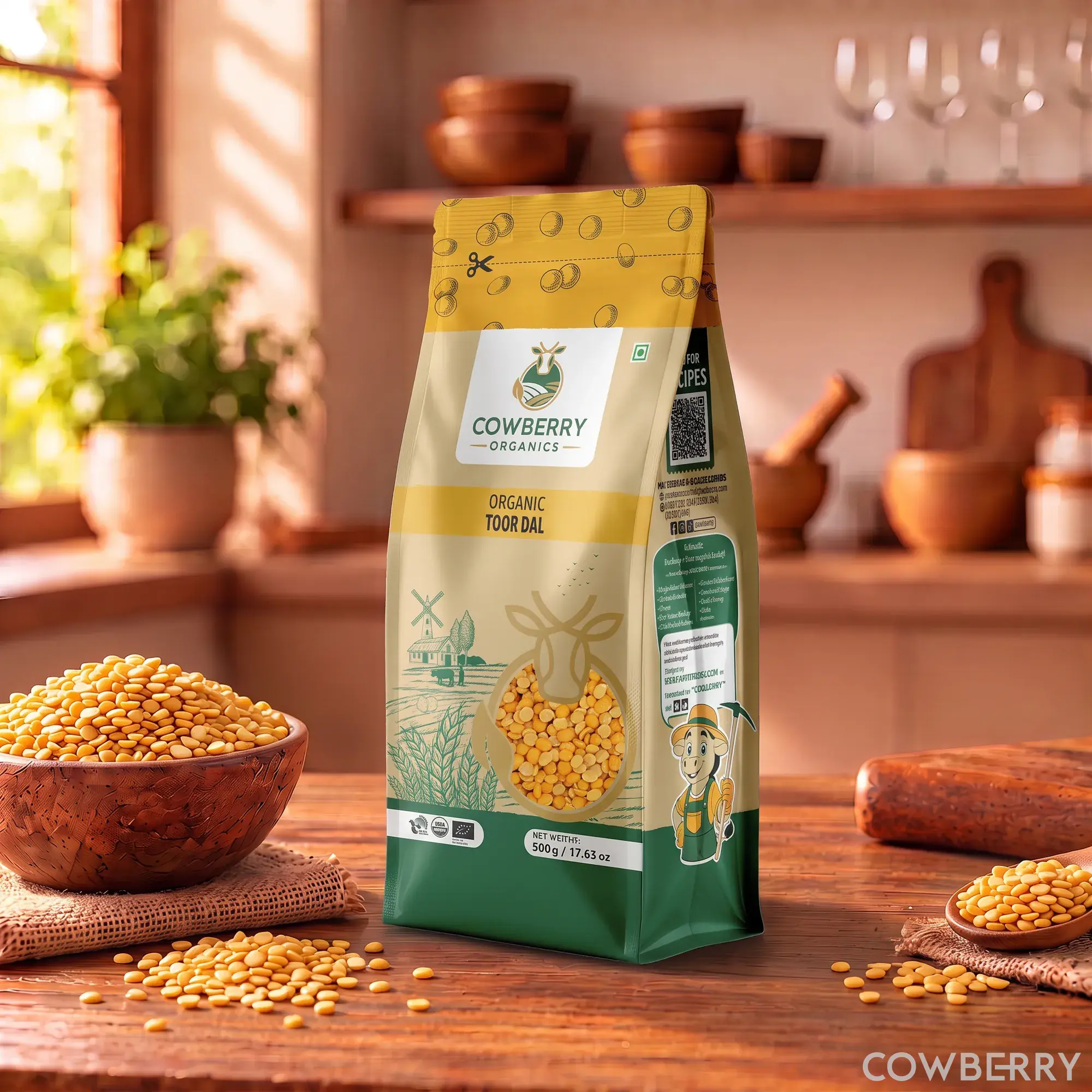
Shop this article
Keep reading
Rajma recipe: 5 ways to cook rajma beans at home
Dalia recipes: 10 easy broken wheat dishes from khichdi to laddu
Amaranth recipes: 8 rajgira dishes from roti to ladoo