by COWBERRY

5 minute read
Difference between star anise and anise seed

The difference between star anise and anise seed starts with the plants: star anise is the dried fruit of the evergreen tree Illicium verum, and anise seed is the seed of Pimpinella anisum. The shared English word anise is what brings the two together in searches, and the comparison below sticks to what the published sources record. The spice itself is covered on the star anise hub page.
Difference between star anise and anise seed: the verdict
The difference is three differences, each named below with its source.
- The plants. Star anise is the fruit of Illicium verum, an aromatic evergreen tree in the family Illiciaceae; anise seed comes from Pimpinella anisum, a different plant.
- The part eaten. Star anise is a whole dried fruit, a star-shaped pod of eight carpels; anise seed is a seed, as its name says.
- The catch. Star anise carries one real caution: a 2011 review records that the true spice sometimes carries contamination from highly toxic Japanese star anise (Illicium anisatum) and poisonous star anise (Illicium lanceolatum). No such warning is on record for anise seed.
Star anise vs anise seed, side by side
The table names the source behind each fact, and where no source records a fact the cell says so instead of guessing.
| Star anise | Anise seed | |
|---|---|---|
| Plant | Illicium verum, an aromatic evergreen tree (2011 review) | Pimpinella anisum, a different plant (USDA food database) |
| Family | Illiciaceae (2011 review) | Not recorded |
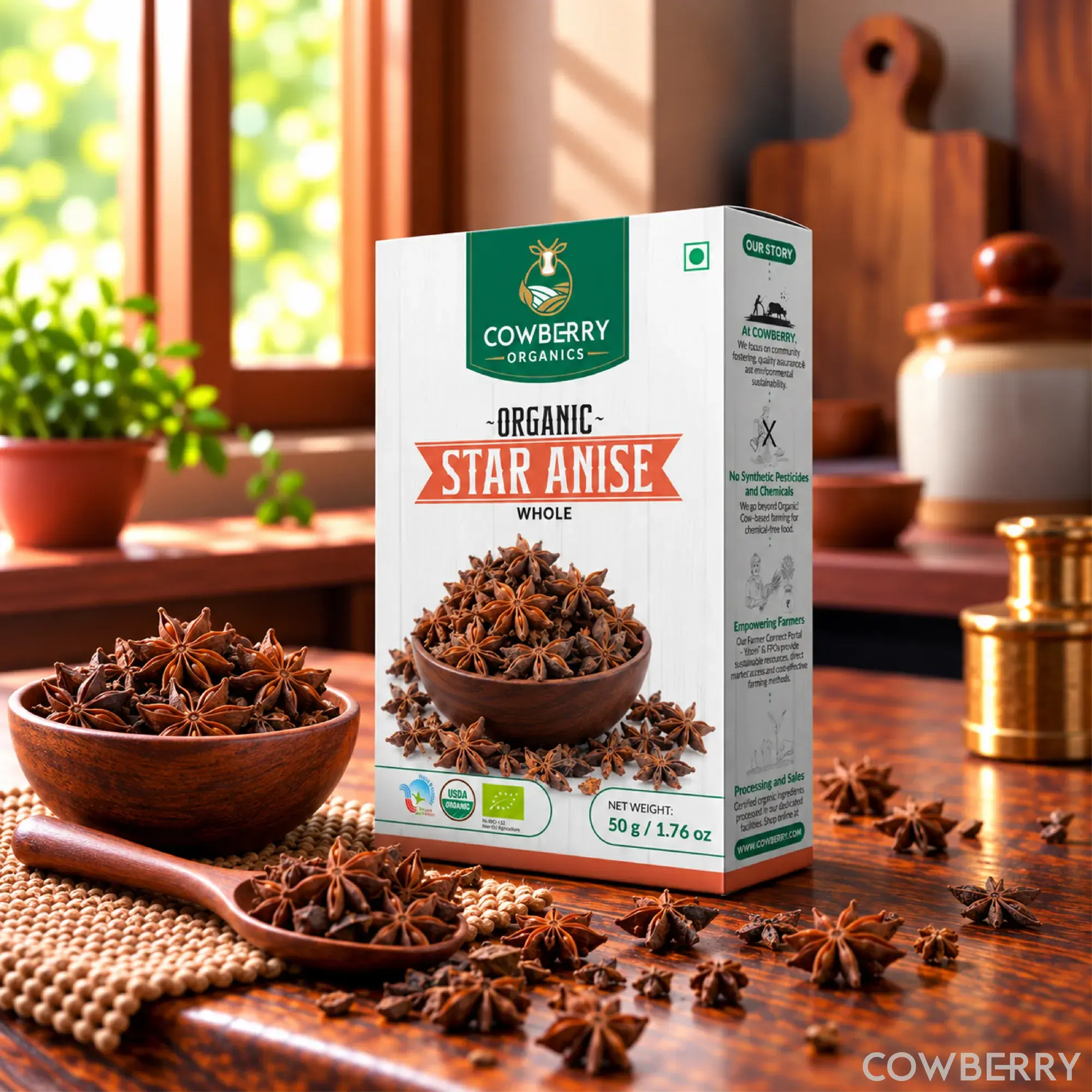
| Part used | The dried fruit, sold whole as pods (2011 review, COWBERRY's pack) | The seed (USDA food database) |
| Look | A star of eight carpels set around a central axis (COWBERRY's description) | A seed, as the name says |
| Flavour | Naturally sweet, licorice-like (COWBERRY's description) | Not described |
| Other names | Chinese star anise (2011 review) | Aniseed |
| In Indian cooking | Biryanis, curries, masalas, soups, teas (COWBERRY's description) | No use recorded |
| Warning | Sometimes contaminated with toxic look-alikes (2011 review) | None recorded |
Nutrition: what the tables do and do not say
IFCT 2017 and the USDA food database cover the two spices differently, and that difference is itself the point. IFCT 2017, the Indian food composition tables, carries no entry for star anise at all, so no Indian composition numbers exist for the spice. The USDA food database does carry a record for anise seed, under the entry Spices, anise seed, and it names the plant as Pimpinella anisum; those numbers describe the other plant, and none of them is presented as if it were star anise's.
On top of that, a 2014 review in the International Journal of Molecular Sciences makes the same point for the whole spice shelf: spices are eaten in small quantities, usually combined with other foods, which makes their true health benefit hard to establish. For two spices used in pinches, the composition question matters less than the plant question, which this page has already answered.
Taste and cooking
Star anise's flavour is naturally sweet, licorice-like, and that is the spice's own description. The pods go into the pot whole for biryani, curry, masala and slow-simmered soup, often alongside cinnamon, cloves and ginger, and they come out of the pot before serving; two pods steeped in hot water make the tea on the star anise tea page. The hard pod is never eaten.
For anise seed, no source in the references prints a taste or cooking description: the USDA record is composition data, and the 2011 review covers only star anise. What is recorded is the one fact that matters for cooking, that the two come from different plants, so a recipe naming one does not want the other.
Cost and where each fits
No price for either spice appears in the published sources, so no cost comparison is given. Where each fits is clearer. Star anise is the Indian pantry spice: the sources record it in biryanis, curries, masalas and tea, and COWBERRY's pods come from organically grown Arunachal Pradesh farms, naturally dried and gently cleaned. For anise seed, no Indian recipe use is recorded in the references, so it cannot be placed in an Indian kitchen.
Which one should you buy
For Indian cooking, buy star anise, and buy it as whole pods in a sealed, labelled pack; the label checks are on the how to check star anise purity page. Anise seed is a different plant's seed, so it cannot stand in for star anise in a recipe that names the pods. If a reader wants the licorice note, the star anise pods deliver it and are the spice the recipes call for. The spice itself, its names and buying, is on the star anise hub page.
FAQs
What is the difference between star anise and anise seed?
The plant and the part. Star anise is the dried fruit of Illicium verum, an aromatic evergreen tree; anise seed comes from Pimpinella anisum, a different plant, as the USDA food database records. One shared word, two different plants.
What is the difference between star anise and aniseed?
None; aniseed is another name for anise seed. So the real difference is the one above: star anise, the dried fruit of Illicium verum, against the seed of Pimpinella anisum. The shared word anise is the whole trap, which is why the two are set side by side on this page.
Can star anise be eaten?
As a flavouring, yes: whole pods steep in tea or simmer in biryani and curry, then come out of the pot before anyone eats; the hard pod is never eaten itself. In the small culinary amounts used in cooking it is a food. The one caution is the look-alikes, covered on the page about which star anise is toxic.
What can I use instead of star anise?
No published source records a substitute, so none is given. Anise seed is a different plant's seed, and no published source says the two swap. For biryani and masala, follow the recipe; for tea, the pods are the point. Restock rather than guess.
How does star anise taste?
Naturally sweet, with a licorice-like note, and strong enough that two pods flavour a whole cup of tea. The pods give biryani, soup and chai a warm sweet-spice note, and the pod is lifted out before serving; the flavour lives in the liquid, not in eating the pod.
References
- Wang GW, Hu WT, Huang BK et al. Illicium verum: a review on its botany, traditional use, chemistry and pharmacology. J Ethnopharmacol, 2011
- USDA FoodData Central
- Opara EI, Chohan M. Culinary herbs and spices: their bioactive properties, the contribution of polyphenols and the challenges in deducing their true health benefits. Int J Mol Sci, 2014
- Indian Food Composition Tables (IFCT) 2017, ICMR-National Institute of Nutrition
Shop this article
Keep reading
Coriander water benefits: what dhania water actually does
Peanuts in Hindi (moongfali): groundnut names in Indian languages
Coriander vs cilantro: are they the same herb?