by COWBERRY

6 minute read
Star anise tea: how to make it, plus soaked star anise water

Star anise how to make tea, in one line: steep two whole pods in a cup of just-boiled water, covered, for five to seven minutes, then strain and drink. The same pods also make star anise water by an overnight soak; both methods follow, with timings and the one real caution around this spice. The star anise hub covers the spice itself, its names and its cooking.
Star anise tea recipe: the short answer
Star anise tea is an infusion of the whole dried fruit, not a tea-leaf blend. Two whole pods go into one 240 ml cup of water that has just boiled, the cup is covered, the pods steep for five to seven minutes, and the liquid is strained into the cup while the pods are thrown away. There is nothing to grind, crush or cook. The pods give the tea the spice's naturally sweet, licorice-like flavour, which is the whole point of the cup. For a stronger brew, steep longer rather than adding pods; three pods in one cup turns the tea harsh. Milk tea works too, with the pods simmered along with tea leaves in milk and water.
Step by step: star anise tea recipe
- Boil the water. Bring 240 ml of water (one cup) to a rolling boil, then take it off the heat. The pods should steep in just-boiled water rather than boil in it.
- Add the pods. Drop two whole star anise pods into the hot water and stir once. Whole pods only, because they strain out cleanly at the end.
- Cover and steep. Put a lid or a saucer over the cup and leave it for five to seven minutes. The cover holds the heat in, which is what draws the flavour out of the pods.
- Add company if you like. The spice is often combined with cinnamon, cloves and ginger; add a small stick of cinnamon, two cloves or two slices of ginger together with the pods and let everything steep as one.
- Strain and drink. Pour the tea through a tea strainer into the cup, discard the pods, and drink hot. Sweeten only if you like; the point of the cup is the flavour.
- Milk tea version. For chai with the spice, put two pods, tea leaves for one cup, 120 ml of milk and 120 ml of water in a pan, bring it to a gentle simmer for three to four minutes, then strain. The pods come out with the tea leaves.
Star anise water: the overnight soak
Star anise water how to make: put two or three whole pods in a glass of clean water, cover the glass and leave it on the counter overnight. By morning the water carries the sweet, licorice-like aroma of the pods; strain them out and drink the water at room temperature or gently warmed. The pods are used once and then discarded.
What the soak does not do is worth saying plainly. Herbs and spices are eaten in tiny amounts and mixed into other foods, so their real health benefit is hard to pin down; that is the 2014 review in the International Journal of Molecular Sciences, and it covers the whole spice shelf. For star anise itself, the 2011 review in the Journal of Ethnopharmacology reports laboratory studies on extracts, not on water soaks or cups of tea. Expect aroma from this drink and no documented effect beyond it.
Common mistakes (and the fix)
- Too many pods. Three or more pods in one cup make the tea bitter rather than stronger. Steep longer for more flavour, never more pods.
- Steeping too long. Past ten minutes the tea turns harsh and the sweet note disappears. Five to seven minutes, covered, is the recipe.
- The wrong star anise. This is the caution that matters. A 2011 review records that true star anise is sometimes contaminated with the highly toxic Japanese star anise (Illicium anisatum) and the poisonous star anise (Illicium lanceolatum). Buy whole pods in a sealed, labelled pack rather than loose, so the spice in the cup is the one the pack names; the full check is on the page about which star anise is toxic.
- Expecting a health effect. No benefit from drinking this tea is documented in the published research. The evidence that does exist is summarised under star anise benefits; flavour is what the cup promises.
- Boiling the pods with the water. Pods boiled hard in the water give a duller, more cooked cup. Boil the water first, take it off the heat, then steep.
Time and quantity table
The numbers below are kitchen quantities for one serving, the same figures used in the steps above.
| Step | Time or quantity |
|---|---|
| Water | 240 ml (one cup) per serving |
| Star anise | Two whole pods per cup |
| Steep, plain tea | Five to seven minutes, covered, off the heat |
| Milk tea | Pods plus tea leaves simmered three to four minutes in 120 ml milk and 120 ml water |
| Star anise water | Two or three pods in a glass of water, soaked overnight at room temperature |
| Leftover brewed tea | Up to two days in the fridge |
| Dry pods | A jar with a tight lid, kept cool, dry and dark |
These are kitchen timings; a hotter kitchen shortens the steep a little and a cold one lengthens it. The two-day fridge rule for the brewed tea follows the UK Food Standards Agency's guidance for refrigerated food. For the spice itself, its Indian names, cooking and buying, start from the star anise hub page.
FAQs
Can you drink star anise?
Yes, as an infusion. Two whole pods steeped in a cup of just-boiled water for five to seven minutes give a clear, aromatic tea; you drink the strained liquid, not the pods. Keep to these small culinary amounts. One caution: true star anise is sometimes contaminated with the toxic Japanese star anise, so use pods from a sealed, labelled pack.
Can star anise be used in milk tea?
Yes. Simmer two whole pods with your tea leaves in milk and water for three to four minutes, then strain everything together; the pods lend the chai their sweet, licorice-like note. The spice is also paired with cinnamon, cloves and ginger, so add those to the same pan for a spiced chai and strain once at the end.
Does star anise help with sleep?
No study on record documents a cup of star anise tea helping sleep. The 2011 review records traditional uses such as dispelling cold and relieving pain, and laboratory studies where extracts showed sedative activity; that is extract work, not tea. Drink the tea for flavour, and ask your doctor about sleep on its own.
How to use chakra phool?
Use the whole pods, then take them out before serving. Star anise (chakra phool) goes into biryanis, curries, masalas, soups and slow-cooked dishes while they simmer, and into teas exactly as the recipe on this page shows; the pod itself is not eaten. Dry pods keep in a tightly lidded jar, somewhere cool and dry.
Is star anise good for health?
There is no honest yes. Spices are eaten in such small amounts, usually with other foods, that their true health benefit stays hard to establish, as a 2014 review puts it. For star anise itself, the research on record covers laboratory extracts, not cups of tea. Use it as a flavouring. What the studies do and do not show is on the star anise benefits page.
References
- Wang GW, Hu WT, Huang BK et al. Illicium verum: a review on its botany, traditional use, chemistry and pharmacology. J Ethnopharmacol, 2011
- Opara EI, Chohan M. Culinary herbs and spices: their bioactive properties, the contribution of polyphenols and the challenges in deducing their true health benefits. Int J Mol Sci, 2014
- UK Food Standards Agency: How to chill, freeze and defrost food safely
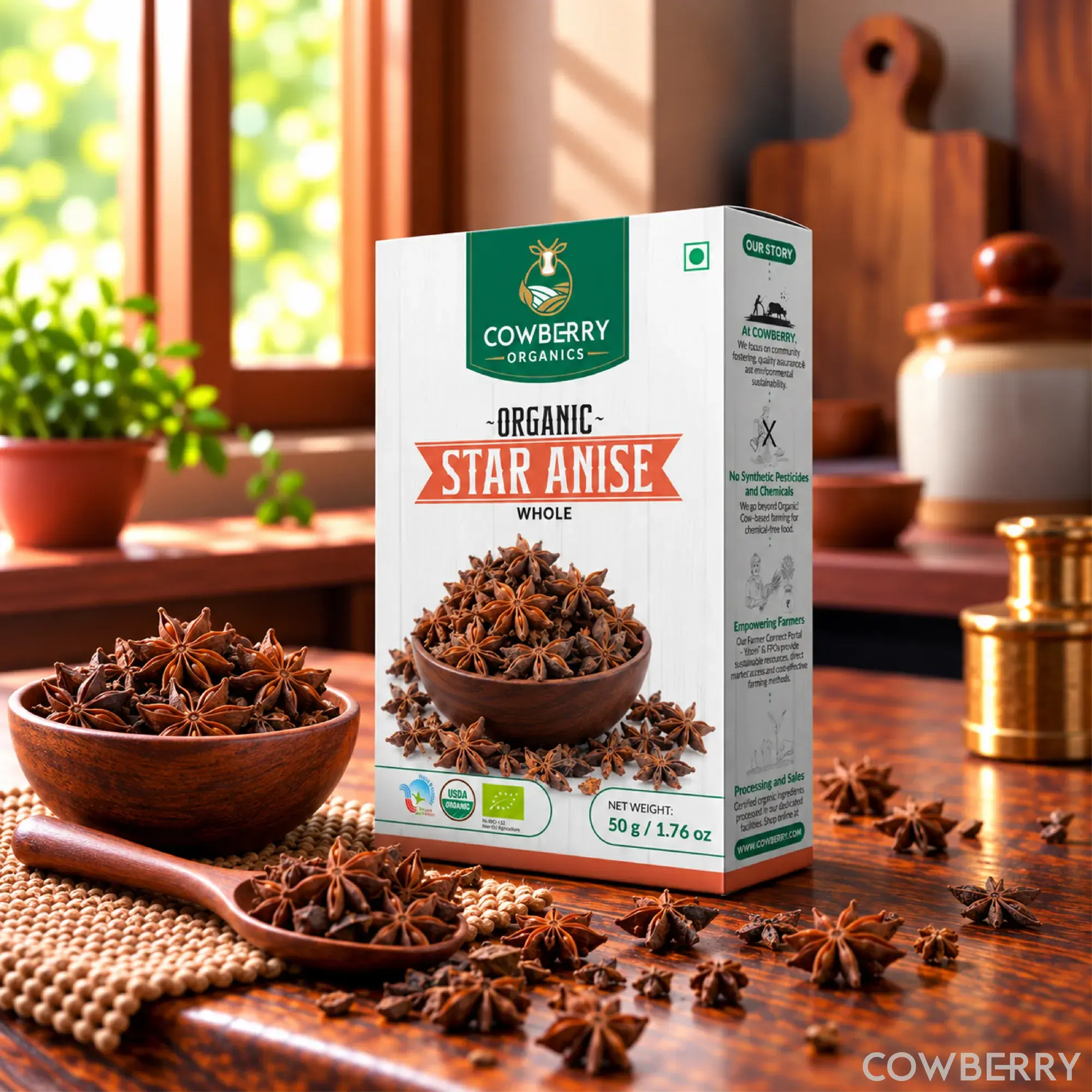
Shop this article
Keep reading
Coriander water benefits: what dhania water actually does
Peanuts in Hindi (moongfali): groundnut names in Indian languages
Coriander vs cilantro: are they the same herb?