by COWBERRY

7 minute read
10 benefits of sesame seeds (and their side effects)

Sesame seeds benefits, one nutrient at a time: 1283 mg of calcium, 15 mg of iron, 21.7 g of protein and 17 g of fibre per 100 g (IFCT 2017), with the trial results on blood pressure and blood fats. Each claim below carries its number and its source, and the side effects, daily amount and ways to eat til follow. Names and storage are on the sesame seeds hub.
Sesame seeds benefits for bones, blood and protein
1. Calcium for bones: 1283 mg per 100 g
White sesame seeds carry 1283 mg of calcium per 100 g (IFCT 2017), and a 20 g portion gives 257 mg. The dietary guidelines name sesame among their good calcium sources, together with milk, curd, ragi and amaranth leaves, which makes til a useful extra for anyone whose plate runs short on dairy. A spoonful over curd simply adds to the calcium already in the bowl.
2. Iron for blood: 15 mg per 100 g
The same table prints 15.04 mg of iron per 100 g, with about 3 mg in a 20 g portion. For plant iron to be taken up well, the guidelines advise pairing it with a little vitamin C — guava, citrus or a chutney of coriander and green chillies — and keeping tea roughly an hour from the meal. Honest scale: a spoonful of til adds a useful bit of iron, not the whole day's.
3. Protein: 21.7 g per 100 g
Sesame's 21.7 g of protein per 100 g sits between groundnut's 23.65 g and mustard seeds' 19.51 g, and the dietary guidelines list the seed with the nuts and seeds that carry a substantial share of protein. A 20 g portion adds 4.3 g to a meal, which is real protein from a sprinkle rather than a main dish.
4. Fibre: 17 g per 100 g
At 16.99 g of fibre per 100 g, sesame leads groundnut and mustard seeds on fibre, and the guidelines note that dietary fibre is important for proper bowel function. A 20 g portion gives 3.4 g, and the guidelines add that fibre-containing foods with enough fluids reduce constipation, so drink water with it.
Sesame seeds benefits for the heart and blood lipids
5. Lignans in the seed, and in the oil pressed from it
A 2022 review in Nutrients describes sesame as rich in lignan-like active ingredients, and the dietary guidelines note that lignans in sesame oil reduce blood cholesterol. The lignan story belongs to the oil, but it begins in the seed, which the same review calls one of the first oil crops used in humans.
6. Blood pressure: what eight controlled trials found
A 2017 meta-analysis of controlled trials reported that sesame consumption brought systolic blood pressure down by 7.83 mmHg and diastolic by 5.83 mmHg, across eight trials with 843 participants. When the same authors kept only the four higher-quality trials, the systolic fall was 3.23 mmHg, a significant drop, and the diastolic fall 2.08 mmHg, which did not reach significance; they asked for larger and better-designed studies.
7. Triglycerides fell; cholesterol showed no significant change
A 2016 meta-analysis of ten controlled trials found no significant change in total, LDL or HDL cholesterol with sesame, while serum triglycerides dropped by 0.24 mmol/l. The authors concluded the evidence was insufficient to back a cholesterol-lowering claim. That is the honest summary to keep: til may help the triglyceride line, and the cholesterol claim stays unproven.
Sesame seeds benefits in everyday eating
8. Magnesium, zinc and potassium
IFCT 2017 prints 372 mg of magnesium, 7.77 mg of zinc and 460 mg of potassium per 100 g. The dietary guidelines describe the shared roles of minerals: they go into the maintenance of skin, hair, nails, blood and soft tissues, and they govern nerve cell transmission, fluid balance and enzyme activity. Til carries all three of these minerals in one small seed.
9. Sesamol and sesamin, the seed's antioxidants
COWBERRY names sesamol and sesamin among the antioxidants in white sesame, and the 2022 review lists antioxidant effects among the findings from in vitro and in vivo studies and clinical trials of sesame.
10. The whole seed over the extracted oil
The dietary guidelines suggest that pastes of oilseeds and nuts can be used in place of extracted refined oils and fats. The point for til: the whole seed keeps the fibre, protein and minerals alongside its fat, where a pressed oil leaves most of those behind. Eating the seed and cooking with the oil are two different habits, and the seed is the one this page is about.
Sesame seeds side effects: who should limit them
- Calories add up fast. Sesame carries 520 kcal per 100 g, so the sensible serving is a 20 g portion at 104 kcal, not a bowl at tea. Think of til as a sprinkle within the day's nuts and seeds.
- Fibre without fluids. The 17 g of fibre per 100 g is useful, and the dietary guidelines note that fibre-containing foods with enough fluids reduce constipation. If you add a lot of til to a dry diet, drink water with it.
- Pregnancy. The dietary guidelines' pregnancy section counts nuts and oilseeds in its balanced day, with no warning against sesame. If your doctor or dietitian has told you otherwise, follow that advice instead.
Allergy is the fourth point. The dietary guidelines note that some people are allergic to specific foods, that even small quantities can cause severe reactions in them, and that they should avoid foods with those ingredients and check the allergen declaration on packs. If til has ever given you a reaction, keep away from it.
How much sesame seeds to eat per day
The dietary guidelines print no sesame-only daily allowance. What they do print is a combined amount: all nuts and seeds together, 35 g a day, on a vegetarian plate of about two thousand kilocalories. Til sits inside that share, so measure a 20 g portion rather than pouring straight from the packet.
What a 20 g portion gives: 104 kcal, 4.3 g of protein, 257 mg of calcium and 3 mg of iron, straight from the IFCT 2017 values on the sesame seeds nutrition page. Two spoonfuls across the day's meals is a sensible rhythm; on a medically prescribed diet, talk to your doctor or dietitian before changing anything.
How to eat sesame seeds: raw, roasted, soaked and as laddu
Four kitchen ways, with the full method in our guide to eating sesame seeds: eaten raw on salads and curd, soaked through the night for chutneys, dry-roasted for about 5 minutes until they pop, or rolled with jaggery into til ke laddu. The laddu recipe makes 12 from a cup of sesame, and each small laddu works out to about 114 kcal by the recipe's own sums.
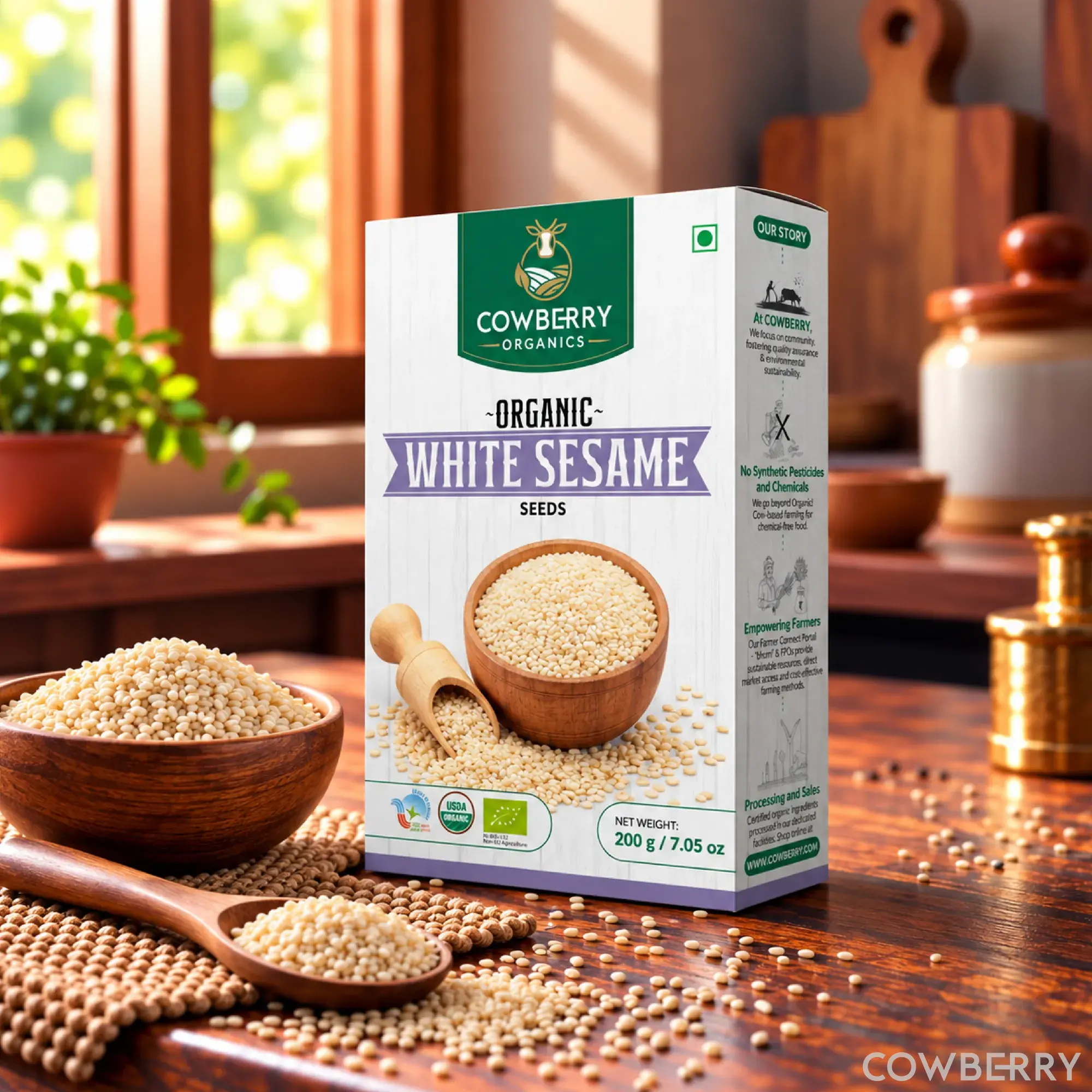
The seed these numbers describe is the white one COWBERRY packs: Organic White Sesame Seeds. For the same story in Hindi, see the til khane ke fayde page, and the whole cluster starts at the sesame seeds hub.
FAQs
Is sesame seeds good for health?
Yes, on the numbers: 1283 mg of calcium, 15.04 mg of iron, 21.7 g of protein and 17 g of fibre per 100 g, and in controlled trials sesame lowered blood pressure and triglycerides, though cholesterol did not move significantly. It is a food with a strong profile, not a medicine, and it earns its place as part of meals.
Why sesame seeds are good for you?
The short list: calcium at 1283 mg and iron at 15.04 mg per 100 g, protein at 21.7 g, fibre at 16.99 g, lignans and the antioxidants sesamol and sesamin, and trial results showing lower blood pressure and triglycerides. The sections above carry the numbers and sources behind each of those claims.
Can sesame seeds be taken with milk?
Yes. The dietary guidelines list sesame beside milk and curd among their good calcium sources, so the two sit on one list rather than against each other. A 20 g portion of sesame adds 257 mg of calcium on top of the milk's own calcium.
Why sesame seeds are not good for pregnancy?
There is no such reason in the sources: the dietary guidelines' pregnancy section includes nuts and oilseeds in its balanced day, and neither the guidelines nor IFCT 2017 records a reason to avoid sesame in pregnancy. If your doctor or dietitian advises differently in your case, follow their advice.
Can sesame seeds cause constipation?
Not by its composition: sesame carries 16.99 g of fibre per 100 g, and the dietary guidelines describe dietary fibre as important for proper bowel function. The catch is fluid: they add that fibre-containing foods with enough fluids reduce constipation, so drink enough when adding til to meals.
References
- Indian Food Composition Tables (IFCT) 2017, ICMR-National Institute of Nutrition
- Dietary Guidelines for Indians, ICMR-National Institute of Nutrition
- Wei P, Zhao F, Wang Z et al. Sesame (Sesamum indicum L.): a comprehensive review of nutritional value, phytochemical composition, health benefits, development of food, and industrial applications. Nutrients, 2022
- Khosravi-Boroujeni H, Nikbakht E, Natanelov E, et al. Can sesame consumption improve blood pressure? A systematic review and meta-analysis of controlled trials. J Sci Food Agric, 2017
- Khalesi S, Paukste E, Nikbakht E, et al. Sesame fractions and lipid profiles: a systematic review and meta-analysis of controlled trials. Br J Nutr, 2016
Shop this article
Keep reading
Coriander water benefits: what dhania water actually does
Peanuts in Hindi (moongfali): groundnut names in Indian languages
Coriander vs cilantro: are they the same herb?