by COWBERRY

5 minute read
Mustard seeds in English, Hindi and Indian languages (rai)

Mustard seeds in Hindi is rai; in English the same seed is mustard seeds, botanical name Brassica nigra, black mustard. Other languages have their own words: mohori in Marathi, sorse in Bengali, sasuve in Kannada, avalu in Telugu, kadugu in Tamil and Malayalam. The mustard seeds hub covers the seed itself.
Mustard seeds in Hindi, English and 13 Indian languages
One line per language: Hindi rai; Marathi mohori; Gujarati rai; Punjabi rai; Bengali sorse; Odia sorisa; Assamese soriyah; Kannada sasuve; Telugu avalu; Tamil kadugu; Malayalam kadugu; Urdu rai; Sanskrit sarssapa. In English it is mustard seeds, and the botanical name is Brassica nigra.
Every name here comes from IFCT 2017, the Indian Food Composition Tables by ICMR-NIN, which record the local names under food code H013 for mustard seeds. Thirteen Indian languages name the seed in those lists, and the word rai carries across four of them: Hindi, Gujarati, Punjabi and Urdu.
| Language | Name (romanised) |
|---|---|
| English | Mustard seeds |
| Hindi | Rai |
| Marathi | Mohori |
| Gujarati | Rai |
| Punjabi | Rai |
| Bengali | Sorse |
| Odia | Sorisa |
| Assamese | Soriyah |
| Kannada | Sasuve |
| Telugu | Avalu |
| Tamil | Kadugu |
| Malayalam | Kadugu |
| Urdu | Rai |
| Sanskrit | Sarssapa |
| Botanical name | Brassica nigra |
Source: IFCT 2017 (ICMR-NIN) local-names list. — means no name recorded in the source.
Mustard seeds in English, and the botanical name
Rai in English is mustard seeds. IFCT 2017 gives the seed the English name "Mustard seeds" and the botanical name Brassica nigra, which is black mustard, and the composition entry under food code H013 belongs to this black seed. So mustard seeds and black mustard seeds are one and the same on this page, and when a pack says black rai it is the same seed again: rai is only the Hindi word for it.
The mustard family keeps other entries nearby. Mustard leaves are listed as Brassica juncea, a second species, and mustard oil sits under Brassica spp. as its own food; the Hindi names for those are sarson ka sag and sarson ka tel. The seed's name stays rai. The full sorting of rai, sarso and sarson is on the rai vs sarso page.
Mustard seeds names by region
North India: rai in Hindi, Punjabi and Urdu
In Hindi, Punjabi and Urdu the name IFCT 2017 records is the same word, rai, and it is the word northern shop shelves carry.
West India: mohori in Marathi, rai in Gujarati
Marathi breaks the pattern with mohori, while Gujarati keeps rai, the same word as Hindi. The mustard seeds in Gujarati answer is therefore the easiest of all: rai.
East India: sorse, sorisa, soriyah
The eastern names all open with an s: sorse in Bengali, sorisa in Odia and soriyah in Assamese.
South India: sasuve, avalu and kadugu
Kannada has sasuve, Telugu avalu, and Tamil and Malayalam share kadugu. For the mustard seeds in Telugu answer on a recipe card, avalu is the word; a sambar written in Telugu calls its tempering seed avalu.
Sanskrit: sarssapa
The Sanskrit name IFCT 2017 records for the seed is sarssapa, and for mustard oil sarshapa taila. Two further Hindi names belong to the plant's other parts: sarson ka sag for the leaves and sarson ka tel for the oil, from the same IFCT name lists.
Often confused with: oil, sarson and black mustard
Three mix-ups show up in shops and searches, and each has a short answer.
- Mustard seeds vs mustard oil. The oil is pressed from mustard and named after it, but it is a cooking fat, not the seed: IFCT 2017 records its Hindi name as sarson ka tel, against rai for the seeds.
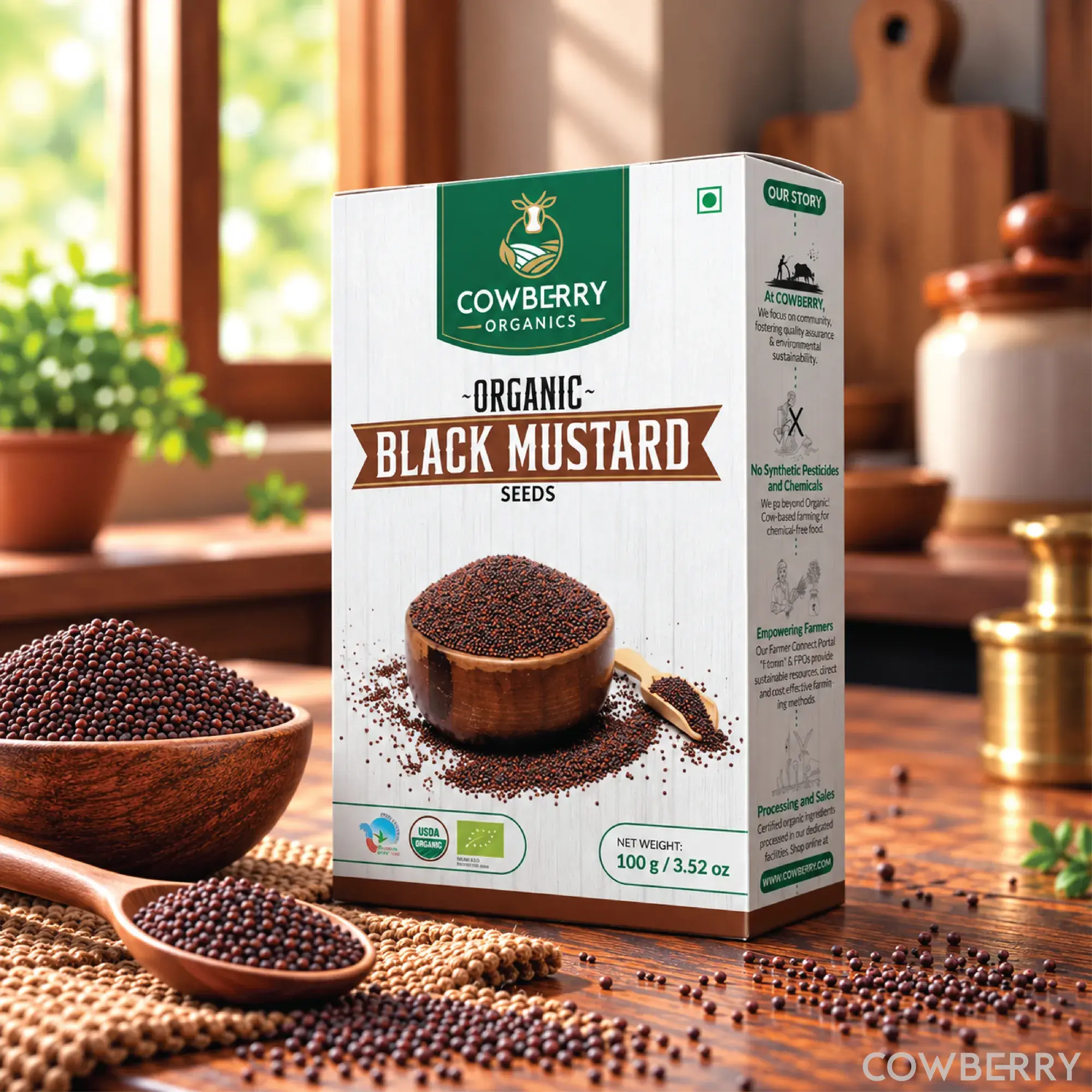
- Rai vs sarso. Rai names the seed; sarson, in IFCT's Hindi names, belongs to the leaves (sarson ka sag) and the oil (sarson ka tel). Packs blur the line further: the seed COWBERRY sells as Organic Black Mustard Seeds (Small) lists Sarson Dana, Kala Sarson and Black Sarson Seeds among the names it is sold under. The rai vs sarso page untangles the three words.
- Mustard seeds vs black mustard seeds. The same seed: the composition entry is Brassica nigra, black mustard, so both phrases point at one jar.
For what the seed contains, see mustard seeds nutritional value per 100g.
Where mustard grows
Mustard is a crop of many countries: a 2025 review in Frontiers in Nutrition calls Brassica juncea a globally cultivated species. COWBERRY's black mustard seeds are grown in Rajasthan and Bengal, farmed with cow-based methods and packed whole as Organic Black Mustard Seeds (Small). The seed's everyday job is the tadka, its pickle job is the lemon pickle recipe, and cooking, storage and nutrition sit on the mustard seeds hub.
FAQs
Is mustard seeds rai?
Yes. Rai is the Hindi name IFCT 2017 records for mustard seeds, so mustard seeds and rai are one seed, Brassica nigra, the black mustard of the tadka. The English name in the same list is mustard seeds. The rest of India uses its own words: sorse in Bengali, sasuve in Kannada, kadugu in Tamil.
What is mustard seeds in hindi?
Rai. The name list in IFCT 2017, the ICMR-NIN food tables, gives rai as the Hindi name for mustard seeds, and the same word serves Punjabi, Gujarati and Urdu. On shop shelves the seed also appears as rai dana and, in sarson spellings, as sarson dana; the word on the jar, rai or sarson, names the same small seed.
Difference between rai and sarso?
Rai is the seed, and sarson, in the Hindi names IFCT 2017 records, attaches to the plant's other parts: sarson ka sag for the leaves and sarson ka tel for the oil. Packs still sell the seed under sarson names, which is where the mix-up comes from. The rai vs sarso page lays the three words side by side.
What is rai in english?
Mustard seeds. The English name IFCT 2017 gives the seed is mustard seeds, and the botanical name is Brassica nigra, black mustard. Rai in English is never a different seed; packs sold in English text call it black mustard seeds, sometimes with the word small attached, and COWBERRY's own pack is named Organic Black Mustard Seeds (Small).
What is the scientific name of mustard seeds?
The scientific name for the seed IFCT 2017 tables is Brassica nigra, black mustard. The leaves of the mustard plant carry a different species name in the same tables, Brassica juncea, and the oil sits under Brassica spp. A 2025 review in Frontiers in Nutrition covers the juncea species in depth.
References
Shop this article
Keep reading
Coriander water benefits: what dhania water actually does
Peanuts in Hindi (moongfali): groundnut names in Indian languages
Coriander vs cilantro: are they the same herb?