by COWBERRY

7 minute read
Jowar in English, Hindi, Kannada, Telugu, Tamil and other languages

Jowar in English is sorghum (Sorghum bicolor), the grain behind Maharashtra's bhakri; jowar atta in English is sorghum flour and jowar roti is sorghum flatbread. It is jowar or juar in Hindi, jwari in Marathi, jola in Kannada, jonna in Telugu and cholam in Tamil. This page lists every name, the botanical name and the grains it is confused with; the rest is in the jowar guide.
Quick answer: jowar in English, Hindi and 11 more Indian languages
One line per language, romanised: English sorghum (IFCT lists the grain under its Indian name, jowar); Hindi jowar or juar; Marathi jwari (IFCT prints jondhahlaa); Gujarati jowar, jowari or juar; Punjabi javara or jowar; Bengali jowar or juar; Odia janha or juara; Assamese jowar; Kannada jola or jolada; Telugu jonna; Tamil cholam; Malayalam cholam (IFCT records irunku); Urdu jowar; Sanskrit not recorded in either source. The table below is the IFCT 2017 local-names list for sorghum, food code A005, with the spellings from the ICAR-Indian Institute of Millets Research vernacular-names page added for Marathi, Gujarati, Odia, Kannada and Tamil. A dash means neither source records a name, and we do not guess one.
| Language | Name (romanised) |
|---|---|
| English | Jowar |
| Hindi | Jowar |
| Marathi | Jondhahlaa, Jwari |
| Gujarati | Jowar, Jowari, Juar |
| Punjabi | Javara |
| Bengali | Jowar |
| Odia | Janha, Juara |
| Assamese | Jowar |
| Kannada | Jolada, Jola |
| Telugu | Jonna |
| Tamil | Cholam |
| Malayalam | irunku |
| Urdu | Jowar |
| Sanskrit | — |
| Botanical name | Sorghum vulgare |
Source: IFCT 2017 (ICMR-NIN) local-names list. — means no name recorded in the source.
Marathi ‘Jwari’: ICAR-Indian Institute of Millets Research, millets information page (vernacular names). Gujarati ‘Jowari, Juar’: ICAR-Indian Institute of Millets Research, millets information page (vernacular names). Odia ‘Juara’: ICAR-Indian Institute of Millets Research, millets information page (vernacular names). Kannada ‘Jola’: ICAR-Indian Institute of Millets Research, millets information page (vernacular names).
Botanical and English names: sorghum, Sorghum bicolor, great millet
The botanical name is Sorghum bicolor (L.) Moench, as the ICAR-IIMR millets bulletin gives it. IFCT 2017 prints Sorghum vulgare, a name the same bulletin also uses in its nutrient tables; both names refer to the same cultivated grain sorghum.
In English the grain is sorghum, or grain sorghum, which is one of the four groups ICAR-IIMR sorts the crop into; the others are forage sorghum, grass sorghum, and Sudan sorghums and broomcorn. The bulletin also records other names for the crop, such as great millet and guinea corn, used in West Africa, Asia and parts of the Middle East.
So the everyday translations are: jowar atta in English is sorghum flour; jowar roti in English is sorghum flatbread, or simply sorghum roti; jowar bhakri is a thick, hand-patted sorghum flatbread; jowar rava is cracked sorghum; and jowar puffs are popped sorghum.
Jowar names by region, and what they tell you
Hindi and Urdu: jowar, which the ICAR-IIMR page also spells jowari or juar for Hindi; IFCT prints jowar for Urdu too. Jowar ki roti is the usual dish name, and jowar ka atta the flour.
Marathi: IFCT 2017 prints jondhahlaa; the ICAR-IIMR page records jwari, the word in jwarichi bhakri, so the table adds it.
Gujarati: jowar in IFCT, and jowari or juar on the ICAR-IIMR page.
Punjabi: IFCT gives javara; the ICAR-IIMR page lists plain jowar.
Bengali, Odia and Assamese: jowar in Bengali and Assamese, with juar as a second Bengali spelling in the ICAR-IIMR bulletin; janha in Odia, with juara as the ICAR-IIMR spelling.
Kannada: jolada in IFCT and jola on the ICAR-IIMR page. A jowar roti in Kannada is jolada rotti.
Telugu: jonna, in both IFCT 2017 and the ICAR-IIMR list.
Tamil and Malayalam: cholam in both, as the ICAR-IIMR bulletin records it, while IFCT prints irunku for Malayalam. The Tamil name IFCT prints for maize, makka cholam, contains the same word, which is where confusion starts (see the next section).
Sanskrit: neither IFCT 2017 nor the ICAR-IIMR page records a Sanskrit name, so the table shows a dash rather than a guess.
Often confused with: jowar vs bajra, maize and jau
Jowar vs bajra. Both are millets and both are patted into bhakri, but they are different plants. Jowar (sorghum) has a mild taste; bajra (pearl millet, Pennisetum) carries about three times as much fat, and ICAR-IIMR ties that fat to pearl millet meal spoiling in storage. By custom, many homes in Maharashtra and Gujarat eat jowar roti in summer and bajra in winter. The bajra guide covers the other grain in the same detail.
Jowar vs maize (makka, makki). Maize is a different plant (Zea mays in IFCT 2017), but in three languages the name IFCT prints for it contains the sorghum word: mekke jola in Kannada, mokkajonna in Telugu and makka cholam in Tamil. If a recipe says makki or makka, it means maize (corn), not jowar.
Jowar vs jau. Jau is barley. The NHS names barley, with wheat and rye, as one of the three cereals that contain gluten, so jau is not gluten-free; jowar has no gluten. The two words sound alike in Hindi, but jau ki roti is made from barley and has nothing to do with sorghum.
Sorghum vs jowar. These are the same grain; sorghum is the English and botanical name, jowar the Indian one. Sorghum vulgare, the name in IFCT 2017, and Sorghum bicolor, the name ICAR-IIMR uses, both refer to it.
Where jowar grows in India
ICAR-IIMR counts sorghum among the eight millets grown across India under rain-fed conditions. It names Telangana, Andhra Pradesh, Maharashtra and parts of Central India as the areas where sorghum is sown as a major crop, and notes that some southern regions grow it as fodder. Rainfall shapes the map: sorghum leads where the annual rainfall is above 400 mm, and pearl millet rivals it at about 350 mm. In the desert regions of Rajasthan bajra is the main crop and jowar the allied one, while in eastern Rajasthan and Gujarat it is the other way round. The FAO describes millets as crops that grow on arid land with few inputs and stand up well to a changing climate.
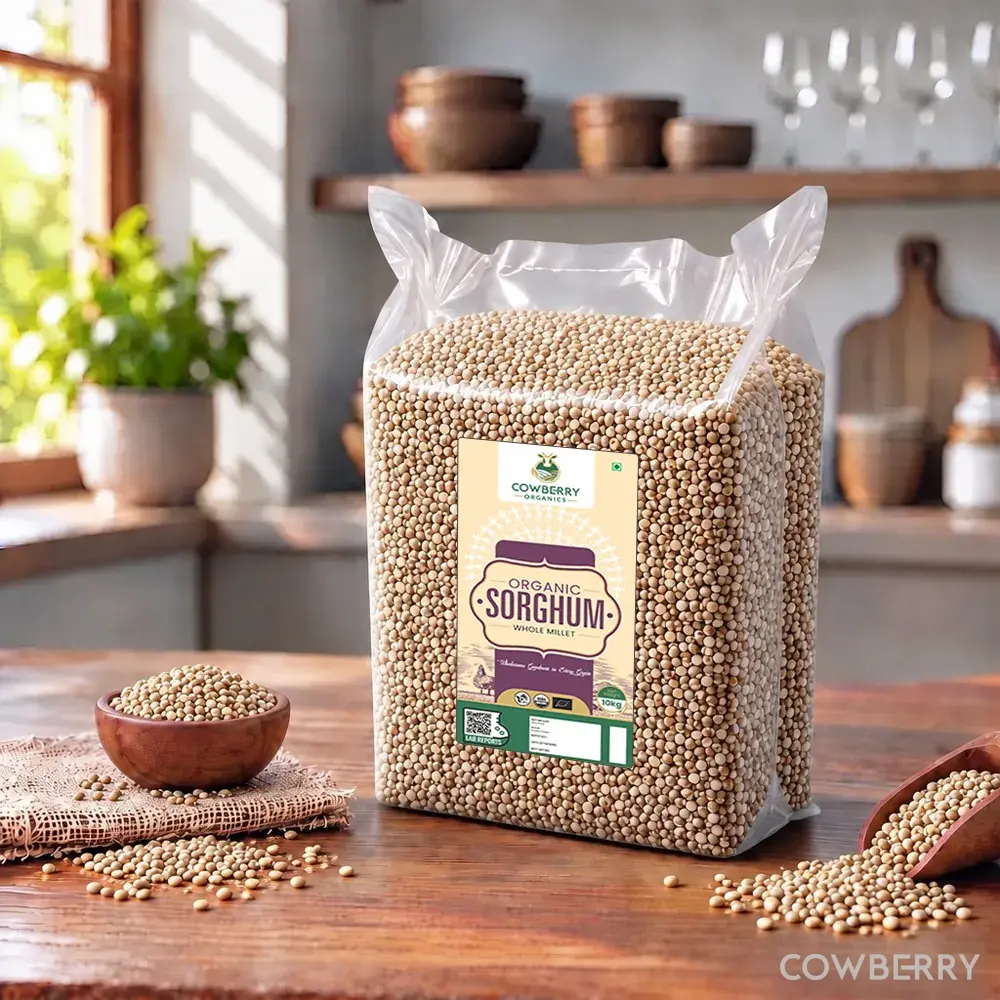
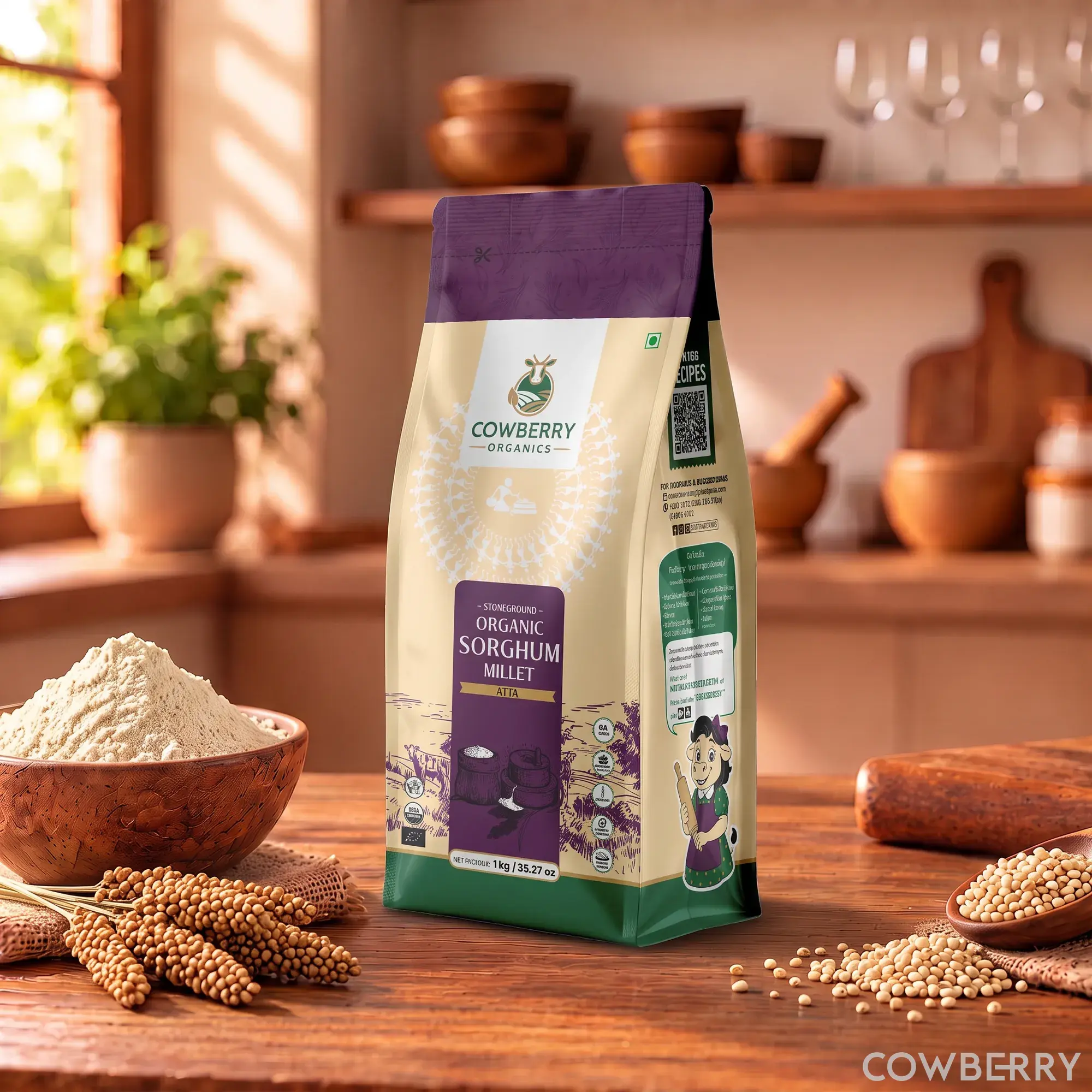
COWBERRY's sorghum and jowar atta come from organic farms in Maharashtra. Cooking, storage and buying advice for the grain is in the jowar guide, and the three everyday dishes are on the jowar bhakri, jowar upma and jowar dosa pages.
FAQs
What is jowar called in English?
Jowar is called sorghum in English, or grain sorghum to separate it from the forage and grass sorghums and broomcorn. ICAR-IIMR also records great millet and guinea corn as names for it. The botanical name is Sorghum bicolor; IFCT 2017 lists the grain as Sorghum vulgare, a name ICAR-IIMR also uses in its nutrient tables.
What is sorghum flour in Hindi?
Sorghum flour is jowar ka atta, or simply jowar atta, in Hindi, and the ICAR-IIMR page also records the Hindi spellings jowari and juar. It is the flour for jowar ki roti and bhakri, and because sorghum has no gluten the dough is made with boiling water, kneaded while warm and usually patted out by hand rather than rolled.
What is the difference between sorghum and jowar?
None: sorghum is the English and botanical name and jowar the Hindi and trade name for the same grain, Sorghum bicolor. A pack labelled sorghum flour abroad and one labelled jowar atta in India hold the same thing, though varieties differ: ICAR-IIMR sorts sorghum by the colour of the grain's outer layer, which can be white, yellow or red.
What is the difference between bajra and jowar?
Bajra is pearl millet and jowar is sorghum, two different plants. Jowar tastes mild; bajra has about three times the fat, and ICAR-IIMR links that fat to its flour going off in storage. Both make bhakri, and in many Maharashtra and Gujarat homes custom keeps jowar for summer and bajra for winter.
What is the difference between jowar and jau?
Jau is barley and jowar is sorghum. Barley is one of the three cereals the NHS lists as containing gluten, along with wheat and rye, so jau does not suit a gluten-free diet, while jowar has no gluten. The words sound alike, but jau ki roti comes from barley, and bhakri and jolada rotti come from jowar.
Is sorghum a millet?
Yes. Sorghum is one of the eight millets that the ICAR-Indian Institute of Millets Research lists as commonly cultivated in India. The institute counts finger millet (ragi) among the small, or minor, millets, while sorghum and pearl millet (bajra) stand outside that group. It describes millets as small-seeded grasses grouped by how they are farmed and used rather than by botany, so the label fits sorghum even though it also ranks among the world's major cereals.
References
- Indian Food Composition Tables (IFCT) 2017, ICMR-National Institute of Nutrition
- ICAR-Indian Institute of Millets Research: millets information and vernacular names
- Nutritional and health benefits of millets, ICAR-Indian Institute of Millets Research (PDF)
- FAO: International Year of Millets 2023
- NHS: coeliac disease
Shop this article
Keep reading
Foxtail millet vs quinoa: nutrition, taste and which to choose
Foxtail millet in Kannada, Hindi, Tamil and other Indian names
10 benefits of kangni (foxtail millet) and its side effects