by COWBERRY

7 minute read
Jeera vs shahi jeera: difference, taste and which to choose

Jeera vs shahi jeera: jeera is cumin seeds, Cuminum cyminum, with a full entry in the Indian food tables; shahi jeera has no entry in those tables and no product page in this shop. Every measurable below belongs to jeera, and for shahi jeera the honest answer is the botanical name on the pack. The seed itself is on the cumin seeds guide.
Jeera vs shahi jeera: the verdict in three lines
Jeera is cumin seeds, Cuminum cyminum — the everyday tadka spice, with a full nutrition entry in IFCT 2017 and a names list covering thirteen Indian languages.
Shahi jeera has no entry of its own in the Indian food tables: no nutrition figures, no names list, and no product in this shop.
The one to cook with is jeera, because it is the seed every recipe on this site covers.
What jeera is: the seed with the full paper trail
Jeera is cumin seeds, the seed of Cuminum cyminum, and the documented one of this pair. IFCT 2017 prints its full nutrition entry per 100 g: 305 kcal, 22.62 g of carbohydrate, 30.35 g of fibre, 13.91 g of protein, 16.64 g of fat, 20.58 mg of iron and 878 mg of calcium. The same source lists its name across the language map: jira in Hindi, Marathi, Punjabi, Odia and Urdu, jiru in Gujarati, jire in Bengali, jeera in Assamese, jeerakam in Tamil and Malayalam, jeelakarra in Telugu, jeerage in Kannada, jiraka in Sanskrit — plus the English name cumin seeds.
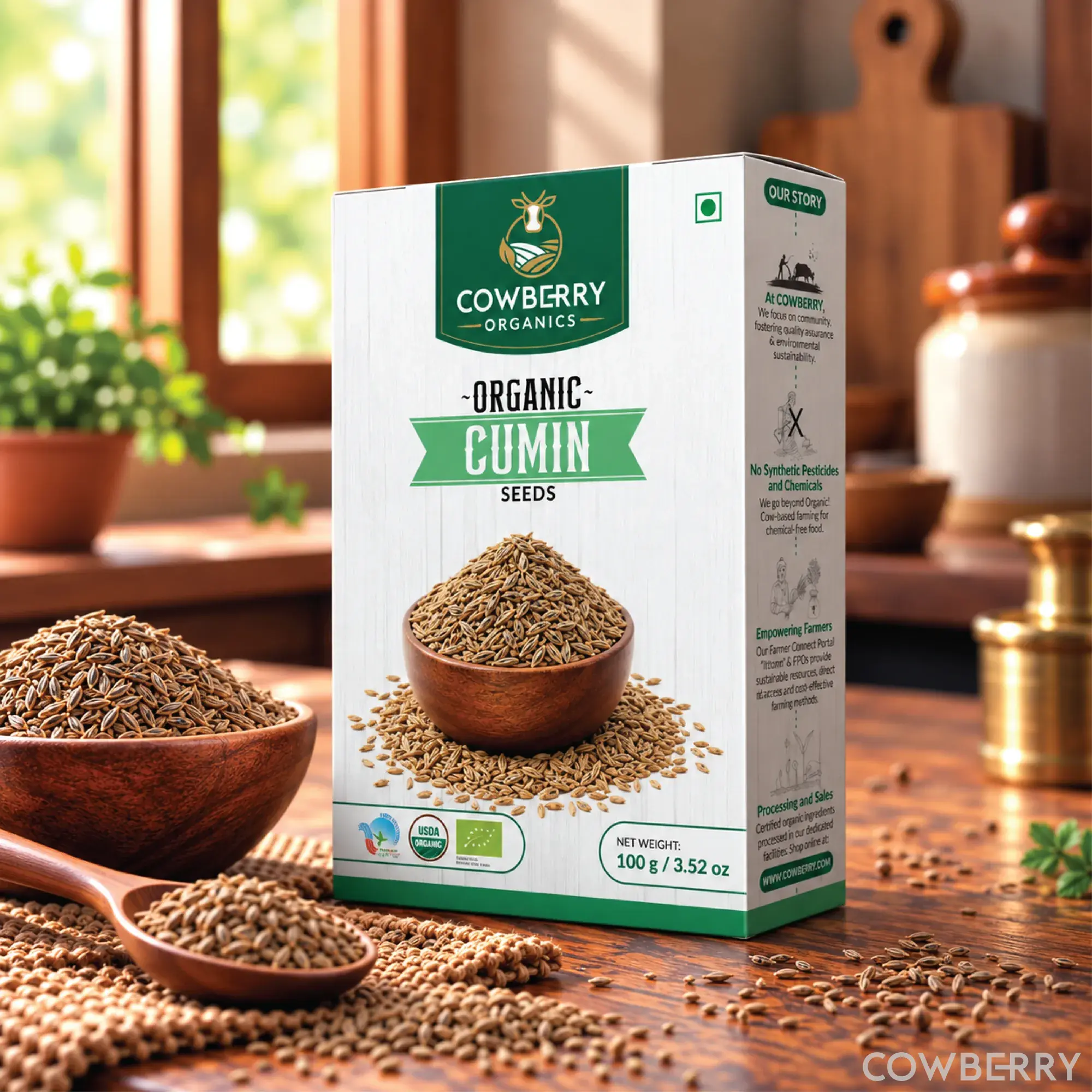
The shop's pages complete the picture: COWBERRY's cumin seeds come from Rajasthan and Gujarat, where the dry climate and sandy soil give the seed its deep, smoky aroma and earthy intensity, and the packs are cleaned and packed whole with nothing added. In the kitchen, jeera is the tadka seed: crackled in ghee at the start of a dal or sabzi, tempering jeera rice and jeera aloo, and steeping into jeera water and jeera tea. The full cumin seeds guide covers the seed from names to storage.
What shahi jeera is: the honest answer
Here is everything this page can print about shahi jeera: nothing beyond the name itself. IFCT 2017 has no separate entry for shahi jeera — no nutrition figures, no names list of its own. The shop sells no shahi jeera product, and none of the reviews listed below carries a shahi jeera entry. No entry prints the seed's size, colour or taste, so this page describes none, and jeera's numbers are not lent to it.
What the name itself shows is limited but real: shahi jeera (also spelled shah jeera) shares the jeera half of its name with cumin, and the shahi prefix marks it as the fancier cousin in everyday talk. Whether a specific shahi jeera pack is a second plant or just a premium grade of jeera is settled only by the pack itself — read the botanical name printed on it. If it reads Cuminum cyminum, it is cumin seeds; if it reads something else, it is another seed, and no table on this page covers it. Cumin vs caraway meets the same wall: the food tables print no caraway entry either. The cumin names page lists the names that do have printed rows.
The nutrition table: jeera's numbers, and none for shahi jeera
The table below prints IFCT 2017's per-100 g entry for cumin seeds. Beside it, shahi jeera's column would be empty, because the tables print no figure for it. Read the table as the whole numerical story of this comparison: every number on the page belongs to jeera.
What the numbers mean in a real pinch: one teaspoon of cumin seeds (2.5 g) adds about 8 kcal, 0.6 g of carbohydrate and 0.8 g of fibre. For shahi jeera there is no per-teaspoon line to compute, because there is no per-100 g line to start from. If a shop's shahi jeera pack is labelled Cuminum cyminum, then it is cumin, and this table is its table.
| Nutrient | Cumin seeds (jeera), raw |
|---|---|
| Energy (kcal) | 305 |
| Protein (g) | 14 |
| Fat (g) | 17 |
| Carbohydrates (g) | 23 |
| Dietary fibre (g) | 30 |
| Iron (mg) | 21 |
| Calcium (mg) | 878 |
| Magnesium (mg) | 442 |
| Potassium (mg) | 1886 |
| Sodium (mg) | 125 |
| Zinc (mg) | 4.3 |
| Folate (mcg) | 28 |
Per 100 g raw, edible portion. Composition: IFCT 2017 (ICMR-NIN). — means not reported. These are average values for the food; the label on a pack gives the values for that product.
Taste and use: which one to actually cook with
The question this page was asked — which seed you should actually cook with — has a one-word answer: jeera. Every recipe, every nutrition figure and every reference on this site attaches to jeera, so it is the seed with a documented role on the plate. Its taste is on record in the product pages: a deep, smoky aroma and earthy intensity from Rajasthan and Gujarat seed, the flavour a tadka crackles into ghee. For shahi jeera, no table or product page prints a taste, so this page offers none to compare.
In practice the choice is simpler than the search suggests. The recipes this site prints call for jeera by name — jeera rice, jeera aloo — and the drinks built on the seed, jeera water and jeera tea, use whole cumin seeds. A shahi jeera pack whose label carries another botanical name belongs to other recipes, which no page here covers.
Cost and where each fits
No price is printed in the food tables, so this page gives none for either seed — cost comparisons live on the shop shelf, not in the tables. What is on record is where each fits. Jeera fits everywhere the site's pages look: the nutrition entry, the thirteen-language names list, the recipes, the storage and drink pages. Shahi jeera fits nowhere in print, which is itself the answer: if a pack does not carry a botanical name you recognise, the safest reading is that it is a different product the tables do not describe.
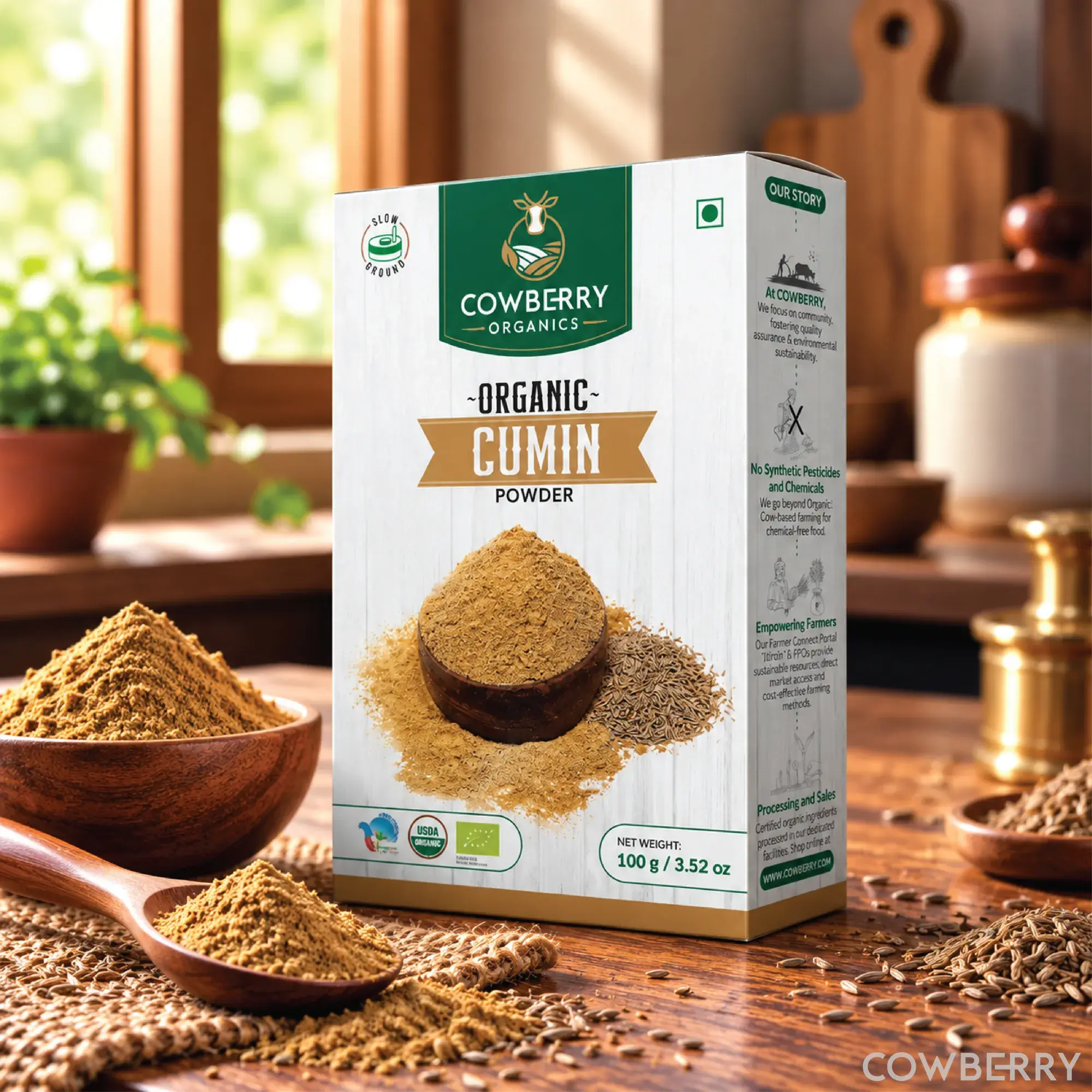
For a kitchen, the working rule follows from the page: use the seed the recipe names, and every recipe here names jeera. This shop's whole cumin seeds and slowly ground cumin powder are both Rajasthan and Gujarat jeera with nothing added, one seed at two grindings. Where a family recipe calls for shahi jeera by name, check the pack's botanical name first — that one line decides whether it is cumin in a fancier jar or a different seed.
FAQs
Difference between jeera and shahi jeera?
Jeera is cumin seeds, Cuminum cyminum, with a full IFCT 2017 nutrition entry and a names list covering thirteen Indian languages. Shahi jeera has no entry of its own in the food tables — no nutrition figures, no names list, and no product page in the shop. The only difference this page can print is that one seed is documented and the other is not.
Which cumin is best?
The cumin your recipe calls for, which on every page of this site is whole cumin seeds or cumin powder — the same Rajasthan and Gujarat jeera, one whole and one slowly ground. Neither form is better than the other; they are one seed at two grindings. Shahi jeera is not in the running, because no table or product page prints a single fact about it.
Why cumin in salsa?
Nothing on this page answers that question, and this page will not guess. What is documented is cumin's role in its own kitchen: crackled in ghee for dal, sabzi, jeera rice and jeera aloo, steeped for jeera water and jeera tea. Whether a salsa recipe calls for cumin is that recipe's business, not a fact this page can print.
Is shahi jeera the same as caraway?
The food tables print nothing that connects shahi jeera to caraway, so the comparison cannot be made from anything here. Searches for cumin vs caraway land in the same empty space. The only check that settles the question is the botanical name printed on the pack in hand.
Should I buy shahi jeera instead of jeera?
On the evidence this page can print, no. Jeera has the nutrition entry, the names list, the recipes and the product pages; shahi jeera has none of them, so nothing here recommends the swap. If a family recipe names shahi jeera specifically, check the pack's botanical name first — if it reads Cuminum cyminum, it is cumin seeds under a fancier label.
Does shahi jeera have its own nutrition values?
Not in the food tables. IFCT 2017 prints a full per-100 g entry for cumin seeds and no separate entry for shahi jeera, so no nutrition table on this page can include it. Any shahi jeera pack whose label names Cuminum cyminum is cumin, and the jeera table above is its table.
References
Shop this article
Keep reading
Coriander water benefits: what dhania water actually does
Peanuts in Hindi (moongfali): groundnut names in Indian languages
Coriander vs cilantro: are they the same herb?