by COWBERRY

7 minute read
Mustard seeds: how to use them in cooking (tempering 101)

Mustard seeds how to use: add them to hot oil first and wait for the pop, then pour the tadka over dal, sambar, upma or poha. Soaked and ground seeds do a different job in pickles and pastes, and whole seeds sit in pickle jars for months. This page is the method; the mustard seeds hub covers names, nutrition and storage.
Short answer: why mustard seeds are used in cooking
Mustard seeds are a flavouring, used in small amounts, and the ICMR-NIN "My Plate for the Day" lists mustard among the spices and herbs, next to turmeric, ginger, pepper and cumin. The heat of the pan is what makes them useful: fried briefly in oil, the seed pops and its sharp, wasabi-like edge spreads through the oil, and the oil carries it into the dish. COWBERRY's pack describes the same method in one line: lightly roast or fry the seeds in oil until they pop, then add them to curries, soups and stir-fries for flavour. That, in short, is the whole job of the seed.
How to use mustard seeds in cooking: the tadka, step by step
- Heat the fat. Warm a spoon or two of oil or ghee in the pan over a medium flame. Give it half a minute; the oil should shimmer, not smoke.
- Add the seeds. Half a teaspoon of rai for a dal or sabzi for four is a good start; add more once you know the dish.
- Wait for the pop. The seeds crackle within seconds and jump in the pan. When most have popped, the tadka is ready; a few seeds that did not pop are normal.
- Add the aromatics. Curry leaves, dry red chillies and hing go in next for a few seconds, then the chopped onion, ginger or garlic.
- Pour it over, or cook it in. For dal and sambar, pour the whole tadka over the cooked pot and stir. For vegetables and poha, cook the dish in the same pan so the spiced oil coats everything.
The order matters: the seeds go into the hottest oil because they need heat to pop, while everything after them must not burn. Take the pan off the flame the moment the pop slows, and the sharpness stays bright instead of turning bitter.
Whole, ground or soaked: other ways to eat mustard seeds
Whole in pickles. Pickles take the seed whole, and COWBERRY's lemon pickle recipe uses black mustard seeds as its base. The seeds sit in the jar for the whole pickling time, softening and flavouring the pickle slowly.
Ground. For chutneys and pickle masalas the seed is ground into a paste or powder. Ground rai spreads its sharpness through a wet masala where whole seeds would stay separate, so grinding is the pickle-maker's way of seasoning evenly.
Soaked. A soak softens the seed for grinding; the FAQ below gives the timing. Soak only what the recipe needs, and drain before the grind.
As mustard oil. The seed is also pressed for mustard oil, sarson ka tel, a cooking fat of its own with a story of its own; the naming around the seed, the leaves and the oil is sorted out on the rai vs sarso page.
Common mistakes with mustard seeds, and the fix
- Oil not hot enough. Seeds dropped into warm oil sink and sit there, and the dish gets raw, bitter seeds. Heat the oil until a single test seed sizzles and pops, then add the rest.
- Oil too hot. Smoking oil burns the seeds black in a second and the tadka turns bitter. If the oil smokes, lift the pan off the flame and wait a few seconds before the seeds go in.
- Overcooking after the pop. Once most seeds have popped, every extra second deepens the bitterness. Add the aromatics at once, or take the pan off the heat.
- Wet pan, wet spoon. Water in the pan spits when the oil heats and stops the seeds from frying evenly; dry the pan and the spoon first.
- Too many seeds. More rai does not mean more flavour, only more sharpness. Half a teaspoon seasons a whole pot of dal.
- Argemone lookalikes. When buying loose seeds, check for argemone seeds, which are black and rough; the check is in the next section.
How to identify mustard seeds, and how to store them
The FSSAI Eat Right India test for mustard seeds is a quick check on a plate. Take a small quantity of seeds on a glass plate and look: mustard seeds have a smooth surface, and pressed open the inside is yellow. Argemone seeds are grainy and rough, black outside and white inside. Any rough black seed among the smooth yellow-hearted ones means the batch should not be cooked.
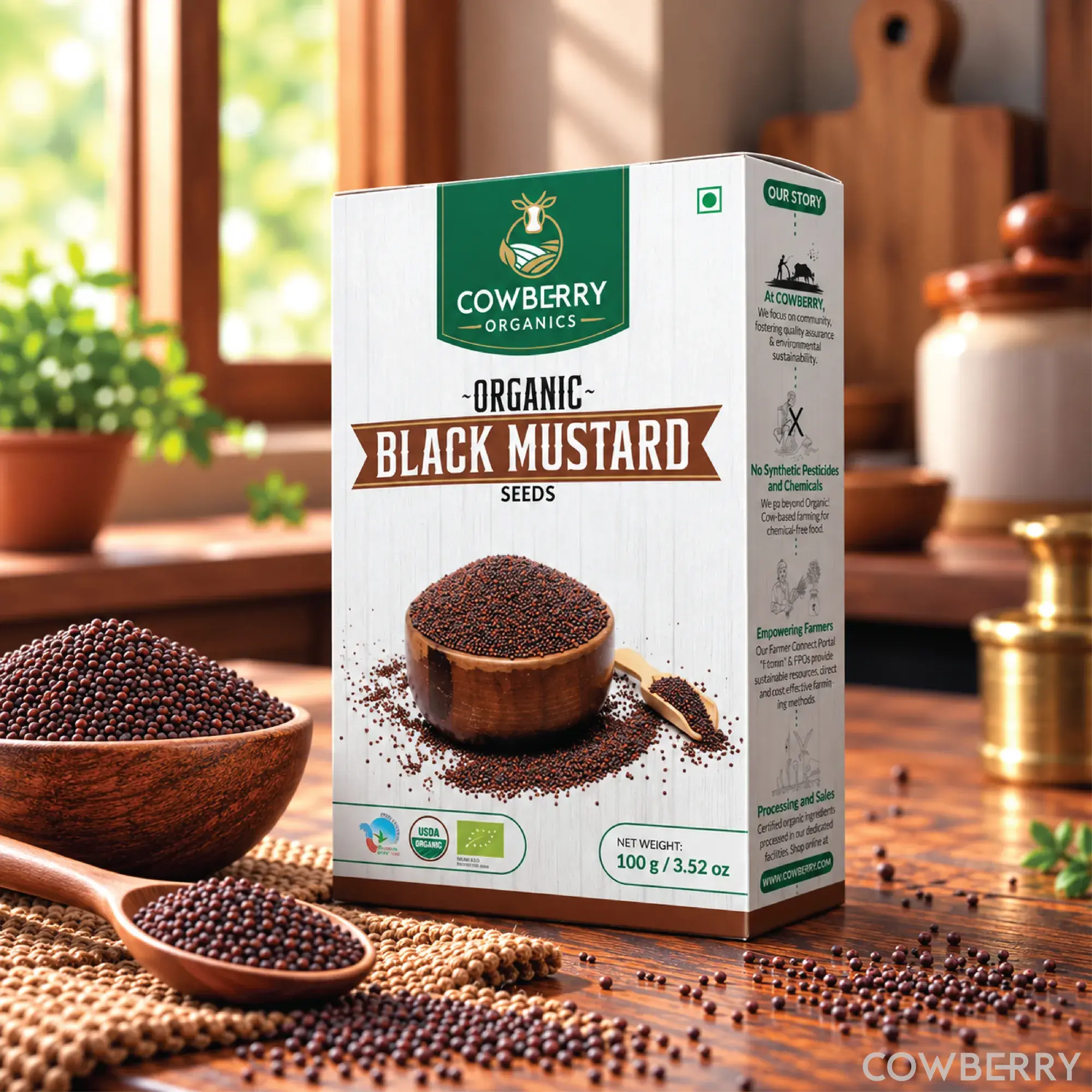
Buy packed where you can; COWBERRY's Organic Black Mustard Seeds (Small) come cleaned and packed whole, from Rajasthan and Bengal. Storage is simple and the same for every whole spice: an airtight jar in a cool, dry place, away from the stove's steam. The ICMR-NIN dietary guidelines say the same for food grains: dried adequately and stored in airtight containers, protected from moisture, moulds and insects. A jar of rai kept this way stays pungent for many months.
Time and quantity table
The table condenses the method. All times are for a home burner and ordinary steel or iron pans.
| Step | Time or quantity |
|---|---|
| Heat the oil | About half a minute on a medium flame, until it shimmers |
| Seeds in oil to first pop | A few seconds |
| Finish the tadka | Add the aromatics the moment most seeds have popped |
| Typical measure | Half a teaspoon of rai (about 2.5 g) for a dal or sabzi for four |
| Soak, for grinding into pastes | A few hours, or overnight; drain before grinding |
| Store | Airtight jar, cool dry place, many months |
Storage, nutrition and the regional names sit on the mustard seeds hub, and the mustard seeds types guide walks through black, brown and yellow.
FAQs
Can mustard seeds be eaten raw?
Yes. The seed is edible as it is, but raw it is sharp and bitter; popped in hot oil first, the heat takes off the rawness and leaves the aroma. Raw whole seeds also turn up in some pickles, where the jar's salt and acid work on them over the pickling weeks.
How long to soak mustard seeds?
There is no fixed figure in the food tables for soaking mustard seeds. In the kitchen, a soak of a few hours, or overnight, softens the seeds enough for grinding into chutney and pickle pastes; drain the water before grinding. Soaked seeds spoil faster than dry ones, so soak only what the recipe needs.
Why mustard seeds are used in cooking?
For flavour: heated in oil, the seed pops and its sharpness spreads into the oil, and the oil carries it through the whole dish. COWBERRY's pack puts the same method in one line, roast or fry until they pop and then add the curries, soups and stir-fries. The ICMR-NIN plate lists mustard among spices and herbs, the small flavouring group of the Indian meal.
How to identify mustard seeds?
By the surface and the inside. The FSSAI Eat Right India test takes a small quantity on a glass plate: mustard seeds are smooth, and pressed open they show yellow inside. Argemone seeds, the lookalike that gets mixed in, are rough and grainy, black outside and white inside. Spotting the rough black seeds is the whole test.
Why mustard seeds taste bitter?
Chemistry again. The pack for COWBERRY's rai puts the heat down to allyl isothiocyanate, the compound in wasabi, while a 2025 review records glucosinolates among the seed's phytochemicals. Eaten raw, that sharpness reads as bitter; popped in hot oil, the same seed turns aromatic. That is the point of the tadka.
References
- Dietary Guidelines for Indians, ICMR-National Institute of Nutrition
- Hu Y, Yan Z. Comprehensive advances in phytochemical components, bioactive functionality, and processing applications of mustard (Brassica juncea (L.) Czern.): a review. Front Nutr, 2025
- FSSAI Eat Right India: DART (Detect Adulteration with Rapid Test), salt, spices and condiments tests
Shop this article
Keep reading
Coriander water benefits: what dhania water actually does
Peanuts in Hindi (moongfali): groundnut names in Indian languages
Coriander vs cilantro: are they the same herb?