by COWBERRY

8 minute read
How to cook indrayani rice: water ratio, cooker timing, non-sticky

How to cook indrayani rice: rinse once or twice, cook in measured water and rest before serving, and the grains come out soft but separate; a little more water makes them sticky, the way varan-bhat likes it. This short-grained, mildly aromatic rice cooks in about 12 to 15 minutes in a pot or cooker. The full story of the grain is on the indrayani rice hub.
Short answer
Rinse, measure, cook, rest. Indrayani is a short-grained rice that cooks soft and slightly sticky by nature, so the two knobs that decide the texture are water and resting. In a pressure cooker, a first whistle, five minutes on a low flame and a natural release give soft grains that still hold their shape, about 12 to 15 minutes from lighting the flame. In a pot, 1.75 to 2 cups of water per cup of rice, a low covered simmer and a 5 to 10 minute rest do the same. For the very soft, clinging texture of varan-bhat, cook the rice in a generous pot of water and strain it, or raise the cooker water to 2.5 cups.
Indrayani rice water ratio
Start from 1.75 to 2 cups of water for every cup of indrayani rice; a cup of rice is about 200 g. At 1.75 cups the grains cook through and stay separate, which suits pulao-style dishes and reheated leftovers; at 2 cups they come out softer, the everyday Maharashtrian style. The pressure cooker needs slightly less water, 1.5 to 2 cups per cup of rice, because little steam escapes. For grains that cling, as in varan-bhat, push the water up: 2.5 cups per cup in the cooker, or skip measuring and boil the rice in a generous pot of water and drain it, the way pasta is cooked. More water and a longer covered rest make the rice stickier; less water and an open rest keep it non-sticky.
How to cook indrayani rice in the pressure cooker
- Rinse. Put one cup of rice (about 200 g) in a bowl, cover it with water, swish with your fingers and pour the cloudy water off. Repeat once. This lifts the surface starch, the first step to non-sticky grains.
- Measure the water. Tip the rice into the cooker and add 1.5 to 2 cups of water for soft, separate grains, or 2.5 cups for the sticky varan-bhat texture. A pinch of salt is optional.
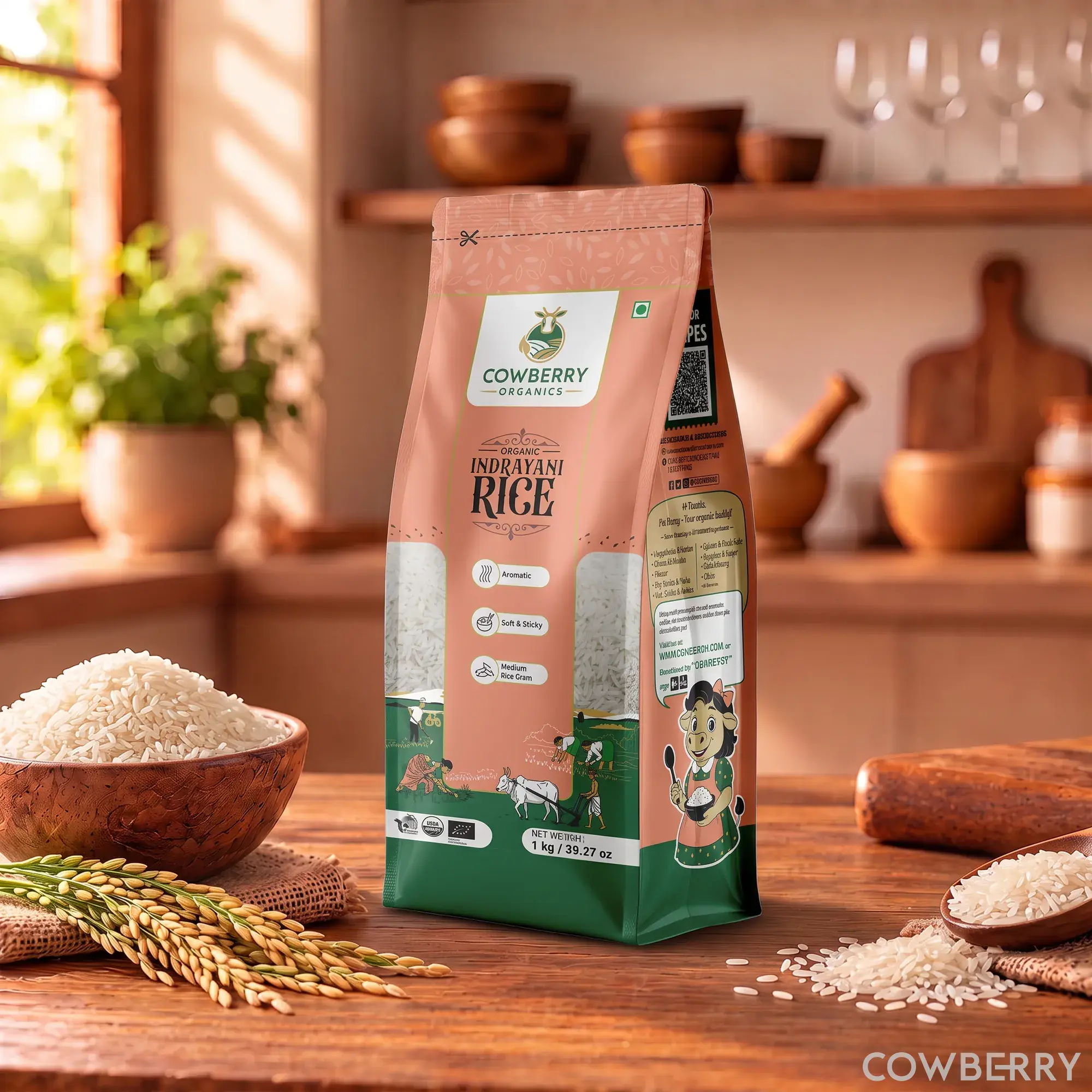
- Cook on medium, then low. Close the lid, set the flame to medium and let the cooker build pressure. After the first whistle, lower the flame and cook five minutes, then switch off. In all, about 12 to 15 minutes from lighting the flame, the time COWBERRY's organic indrayani rice pack notes give for the grain.
- Let the pressure settle on its own. Do not lift the weight or run water over the lid; the rice finishes in the trapped steam. Ten minutes of natural release is enough.
- Open and rest. Open the lid away from your face, fluff the rice gently with a fork and leave the lid askew for five minutes so the surface dries a little and the grains firm up.
How to cook indrayani rice in a pot
- Rinse, and soak if you like. Rinse one cup (about 200 g) in two changes of water. A 20-minute soak in fresh water shortens the simmer and gives softer grains; it is optional.
- Boil the measured water. In a heavy-bottomed pot, heat 1.75 to 2 cups of water until it boils hard, add the drained rice and a pinch of salt, and stir once.
- Simmer covered. Lower the flame to the smallest setting, cover with a tight lid and cook about 15 minutes, until the water is taken up and the surface of the rice shows small holes.
- Rest off the flame. Turn the flame off, keep the lid on for 5 to 10 minutes, then fluff with a fork. The rest is what keeps the grains whole.
- For sticky varan-bhat rice, boil and drain. Cook the rice in a large pot of boiling water for 12 to 15 minutes, until a grain squashes flat between thumb and finger, then drain in a colander. The grains come out soft, wet and clinging, ready for varan.
Common mistakes (and the fix)
- Too much water. Pour in more water than the ratio above, or simmer too long, and the grains turn to paste. Measure the water; if the rice is already overcooked, spread it on a plate for a few minutes so it dries and firms a little.
- Stirring while it cooks. Each stir breaks grains and works out starch, and the rice turns gluey. Stir once, when the rice goes into the water, then not again; fluff after cooking instead.
- Opening too early. Lifting the cooker weight or peeking under the pot lid lets the steam out before the centres have finished. Wait for the natural release, or the full covered rest.
- Skipping the rinse. Unrinsed rice carries surface starch, so the same water ratio gives stickier, cloudier grains. Two changes of water is enough.
- Too little water. If the centres stay hard after the usual time, add two or three tablespoons of hot water, cover and cook a few minutes more on low.
- A high flame under the pot. It boils the water away before the centres cook and scorches the bottom layer. Keep the pot on the lowest setting.
Time and quantity table
One cup of indrayani rice is about 200 g and fills roughly five katoris once cooked, at the standard 40 g of raw rice for each katori.
| Step | Time or quantity |
|---|---|
| Rinse | Two changes of water, about a minute |
| Pressure cooker | First whistle, then 5 minutes on low, then a natural release; about 12 to 15 minutes from lighting the flame |
| Pot, measured water | About 15 minutes on the lowest flame after the water boils, then a 5 to 10 minute covered rest |
| Pot, boil and drain (for varan-bhat) | 12 to 15 minutes in boiling water, then drain |
| Water, pressure cooker | 1.5 to 2 cups per cup of rice; 2.5 cups for sticky grains |
| Water, pot | 1.75 to 2 cups per cup of rice |
| Yield | One cup of raw rice gives about five katoris once cooked |
| Leftover cooked rice | Cool and refrigerate within two hours; eat within two days |
IFCT 2017 has no separate entry for indrayani rice, so the values shown are those of raw milled rice: 357 kcal and 7.94 g protein per 100 g. One katori of cooked rice (40 g raw) then comes to about 143 kcal and 3.2 g protein; the full indrayani rice nutrition breakdown is on its own page. Cooled cooked rice lasts up to two days refrigerated — the UK Food Standards Agency's limit for leftovers. One cooking habit shifts the starch: in a 2015 study of 15 healthy adults, white rice chilled for 24 hours at 4 °C before reheating carried more resistant starch and gave a lower glycemic response than rice served straight off the stove. The indrayani rice hub covers the grain itself.
FAQs
How to make indrayani rice non sticky?
Wash the rice twice, pouring off the cloudy water each time; use the lower end of the water range (1.5 cups in the pressure cooker, 1.75 in a pot, per cup of rice) and do not stir while it cooks. Once it is done, open the lid, fluff with a fork and leave it uncovered for about five minutes so the surface steam clears. The grains stay soft but hold their shape.
Is indrayani rice sticky?
Yes, mildly and by nature. It is a short-grained rice, and COWBERRY's product notes describe a soft, slightly sticky texture, which is what makes it the rice of varan-bhat and khichdi in Maharashtra. With measured water and a rest it cooks separate; with extra water it turns properly sticky.
How to make indrayani rice sticky?
Use more water and skip the drying rest. In the pressure cooker, 2.5 cups of water per cup of rice plus a covered rest makes the grains cling; in a pot, boil the rice in plenty of water for 12 to 15 minutes and drain it, the way varan-bhat rice is usually made. Mash a spoonful against the side of the bowl to check the softness.
How to store indrayani rice?
Keep dry rice in a sealed jar or tin somewhere cool and dry, which preserves its aroma, as COWBERRY's storage advice puts it. Cooked rice is different: cool it, move it to the fridge within two hours in a covered dish, and finish it within two days, the leftover window the UK Food Standards Agency gives.
Does indrayani rice have low glycemic index?
There is no GI figure for indrayani rice in the University of Sydney GI database, so no low-GI claim can be made for it. A 2012 Indian study fed cooked Sona Masuri, Ponni and Surti Kolam rice to healthy volunteers and measured GI 72, 70 and 77, all classed as high GI. More on what indrayani rice offers is on the indrayani rice benefits page.
References
- Indian Food Composition Tables (IFCT) 2017, ICMR-National Institute of Nutrition
- University of Sydney glycemic index database (GI search)
- UK Food Standards Agency: How to chill, freeze and defrost food safely
- Sonia S, Witjaksono F, Ridwan R. Effect of cooling of cooked white rice on resistant starch content and glycemic response. Asia Pac J Clin Nutr, 2015
- Shobana S, Kokila A, Lakshmipriya N, et al. Glycaemic index of three Indian rice varieties. Int J Food Sci Nutr, 2012
Shop this article
Keep reading
Red rice vs brown rice: the fibre, GI and honest verdict
Red rice vs black rice: nutrition, glycemic index and which to choose
Red rice nutrition per 100g: calories, protein, fibre and GI