by COWBERRY

5 minute read
How green tea is made: from leaf to your cup

How green tea is made comes down to one rule: the freshly plucked leaf is heated quickly and dried, so it keeps its green colour instead of darkening the way black tea does. The leaf is the young shoot of the tea plant, Camellia sinensis, and this page follows it from bush to cup; the green tea guide covers names, nutrition and benefits.
Short answer
Pluck, heat, roll, dry. Young leaves are picked from the bush, heated quickly to stop the change that darkens a leaf, rolled into shape and dried, and that is the whole process. The heating step is the one that sets green tea apart: a 2020 Cochrane review groups the teas of the plant Camellia sinensis into green, black and oolong. Green tea is minimally processed, which lets it keep its green colour. Black tea is the same leaf left to oxidise fully.
How green tea leaves are made, step by step
- Plucking. Young leaves are plucked from the bush.
- Heating. The leaves are steamed, or tossed in a hot pan, soon after picking. This step stops the change that would darken the leaf, and it is what keeps green tea green.
- Rolling. The heated leaves are rolled and pressed so they curl into shape.
- Drying. The rolled leaves are dried until crisp.
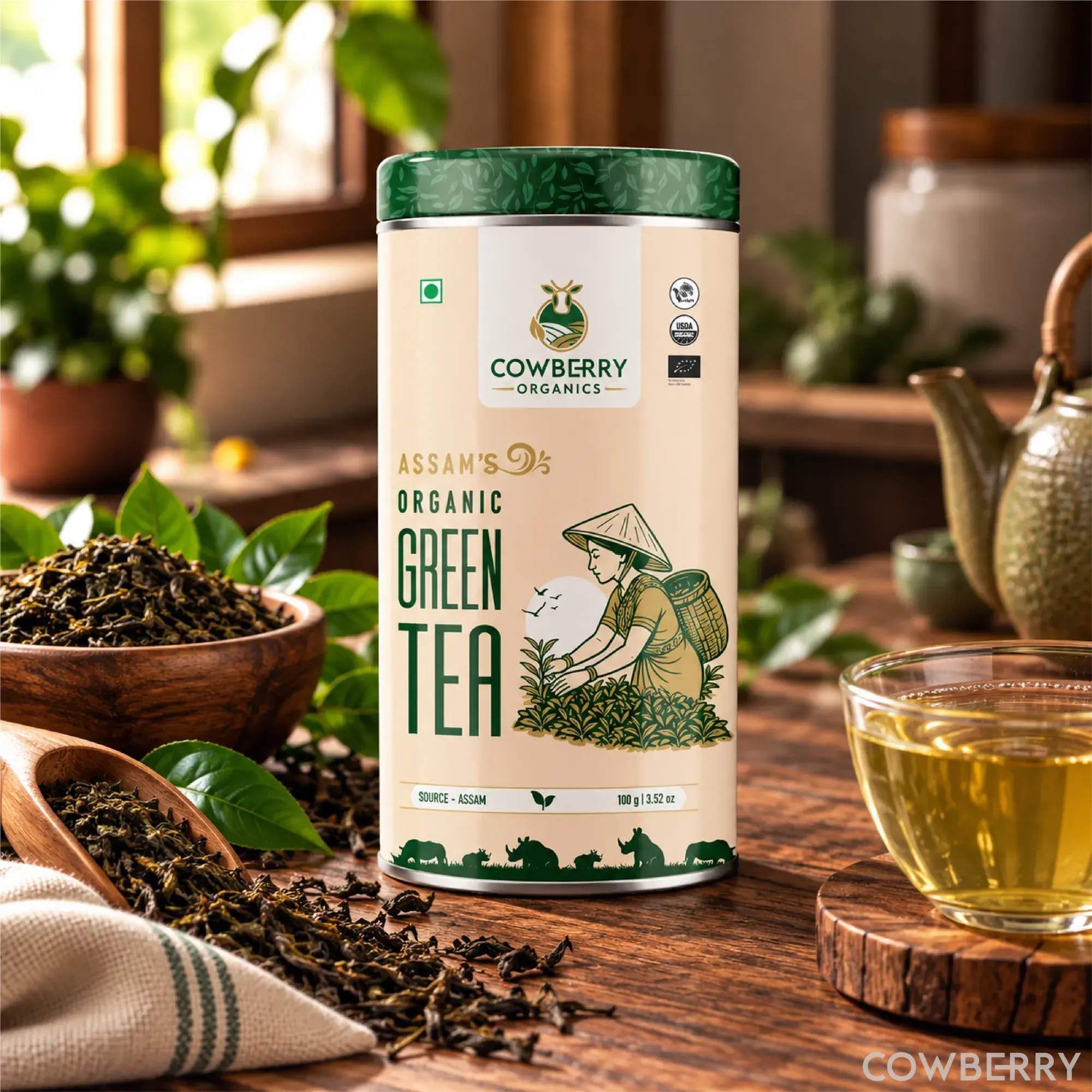
That is the green tea leaves making process in four steps, and the end result is a dry, whole leaf. COWBERRY's green tea is made from whole young leaves grown organically in Assam without synthetic chemicals, harvested at the right stage and minimally processed, with no artificial flavours or additives. The fully oxidised leaf, by contrast, is the chai patti of the chai patti recipe.
Why the leaf stays green, and how to dry green tea leaves at home
The colour tells the processing story. Green tea is minimally processed so it keeps its natural green colour and delicate flavour, while black tea undergoes full oxidation, which results in a stronger taste and a darker colour. The quick heating step is the cut-off point between the two.
How to dry green tea leaves at home. If you have fresh leaves, rinse them, pat them fully dry, spread them in a single layer on a clean cloth or tray, and dry them in the shade or over very gentle warmth until they turn crisp and crumble between the fingers. Dry them slowly and turn the leaves once or twice, and stop the moment they are crisp. Leaves dried this way skip the quick heating step above, so expect them to darken and taste different from bought green tea. Store the dried leaves exactly like bought tea: sealed against air, kept cool, dark and dry, and set apart from strong odours, as the how to store green tea page details.
Common mistakes when buying and brewing
The mistakes that matter happen after the factory. Buying stale leaf. Old or badly stored leaves smell flat before you brew them; a fresh pack usually smells clean and leafy, and the green tea hub explains what else the leaf carries. Boiling water. The brewing error to avoid is boiling water, which may make the tea taste bitter; pour water at 80 to 85 °C instead, as the how to make green tea page sets out. Steeping too long. Steep for 2 to 3 minutes, as the pack guidance says, and strain on time. Storage. Moisture and direct sunlight can fade the leaf; keep the pack sealed and cool.
Stage by stage table
Each stage changes the leaf in one visible way. The brewing row uses the figures on COWBERRY's pack guidance, and the storage row is its printed storage rule.
| Stage | What happens to the leaf |
|---|---|
| Plucking | Young leaves are picked from the bush |
| Heating | Steam or dry heat stops the leaf from darkening; green tea is minimally processed |
| Rolling | The leaf is curled and pressed into shape |
| Drying | The leaf is dried until crisp |
| Brewing | 1 tsp of leaves in water at 80 to 85 °C, steeped for 2 to 3 minutes, then strained |
| Storing | Sealed airtight, cool, dark and dry, kept apart from strong odours |
The table reads top to bottom: what the bush grows, what the factory does, and what your kitchen does next.
FAQs
What leaves are used for green tea?
The young leaves of the tea plant, Camellia sinensis; a 2020 Cochrane review groups the teas of this plant into green, black and oolong. COWBERRY's pack is made from whole young leaves grown in Assam and minimally processed.
What is green tea made of?
Just tea leaves. Green tea is made from freshly harvested tea leaves that are minimally processed to preserve their natural colour and fresh taste. For COWBERRY's green tea, nothing is added afterwards: the pack holds whole leaves with no artificial flavours, colours or preservatives.
Where are green tea leaves grown?
COWBERRY's green tea comes from organic tea gardens in Assam, where the soil and climate suit the tea bush, and the pack describes the tea as whole young leaves grown organically in hilly regions. The same plant, Camellia sinensis, is grown in other tea-growing regions too, but a pack should say where its own leaf came from.
How are green tea leaves grown?
For COWBERRY's tea: organically, in Assam, without synthetic chemicals. The gardens sit in hilly regions, and the leaves are harvested at the right stage, then minimally processed. Organic growing means the farm works without the chemical inputs of conventional farming, and COWBERRY's pack is India Organic, USDA & EU certified.
Does green tea have caffeine?
Yes. Green tea naturally contains a moderate amount of caffeine, lighter than coffee. The NHS estimates a cup of tea, black or green, carries about 75 mg of caffeine, next to 100 mg for a cup of instant coffee; in pregnancy its guidance is a daily total of no more than 200 mg.
References
Shop this article
Keep reading
Coffee vs tea: caffeine, benefits and which is better
Coffee calories per 100g: powder, beans and filter coffee
Coffee in pregnancy: how much caffeine is safe