by COWBERRY

4 minute read
Amchur in English: dry mango powder names in Indian languages

Amchur in English is dry mango powder, usually shortened to mango powder, and in Hindi it is amchur, also spelled aamchur. Those three are the only names on record, and this page says so plainly. The amchur powder hub covers the spice itself; here are its names, language by language.
Amchur in English, Hindi and Indian languages: quick answer
The quick answer in one line: English calls it dry mango powder, Hindi calls it amchur, and the second spelling aamchur turns up just as often. Those are the only names on record. IFCT 2017 prints no entry for amchur, so every other column — Tamil, Telugu, Bengali, Marathi, Kannada and the rest — shows a dash rather than a guessed name. The three names in the table below come from that article, and everything about the powder itself — storing and cooking with it — is on the amchur powder hub.
| Language | Name (romanised) |
|---|---|
| English | Mango powder |
| Hindi | Amchur, Aamchur |
| Marathi | — |
| Gujarati | — |
| Punjabi | — |
| Bengali | — |
| Odia | — |
| Assamese | — |
| Kannada | — |
| Telugu | — |
| Tamil | — |
| Malayalam | — |
| Urdu | — |
| Sanskrit | — |
| Botanical name | — |
Source: no source found. — means no name recorded in the source.
English ‘Mango powder’: Wikipedia: Amchoor. Hindi ‘Amchur’: Wikipedia: Amchoor. Hindi ‘Aamchur’: Wikipedia: Amchoor.
Amchur in Hindi: amchur and aamchur
In Hindi the powder is amchur, a word that also appears spelled aamchur. So amchur in Hindi and dry mango powder in Hindi are the same answer: amchur, written in Latin letters on the pack, with no second word in play.
The English name follows the same idea. The Dietary Guidelines for Indians count mango powder among the spices of Indian cooking, and dry mango powder is the fuller English form of the same name; both turn up in searches for amchur meaning in English, and both mean the one powder.
Amchur in Tamil, Telugu, Bengali and the other languages
Searches for amchur in Tamil, amchur in Telugu and amchur in Bengali are common, and the honest answer is that no Tamil, Telugu or Bengali name for the powder is on record. IFCT 2017 prints none, and the Wikipedia article on Amchoor records only the Hindi word and its English equivalent. The table above shows the same blanks.
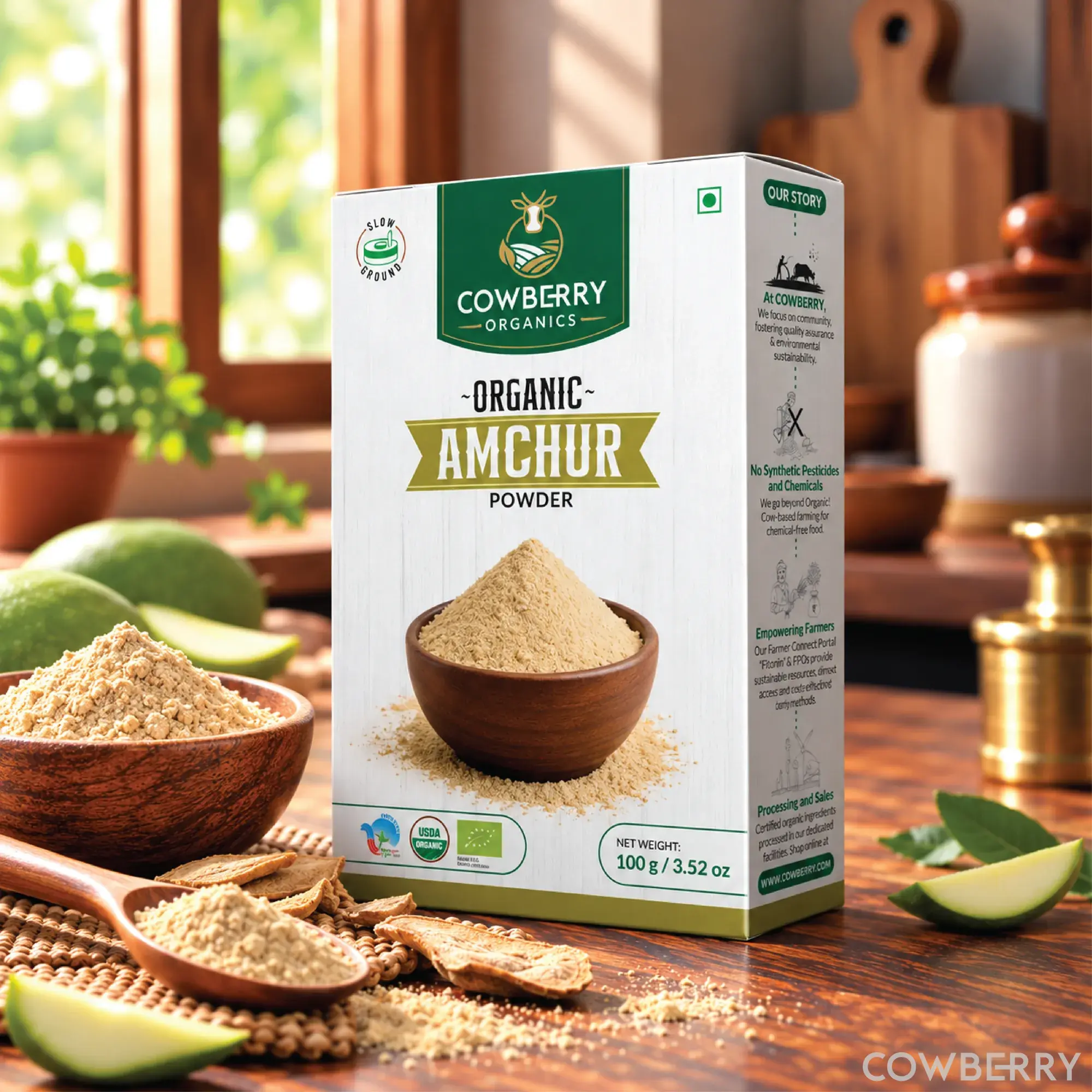
The contrast with tamarind shows how the list handles a spice it does record: IFCT 2017 gives tamarind pulp as imli in Hindi, chinch in Marathi and puli in Tamil, a full set of regional names that amchur simply does not have on paper. Packs that carry the powder print the Hindi word in Latin letters, as COWBERRY's Organic Amchur Powder does.
Often confused with: dry mango powder and chaat masala
Dry mango powder is not a different spice: it is amchur under its English name, and the two are the same sun-dried, ground raw green mango. The name that does point elsewhere is chaat masala, a blend that uses amchur as its sour base under cumin, coriander and black pepper; it is amchur plus more, not another word for it. The chaat masala recipe shows the share. Imli is different again: that is tamarind pulp, the other great Indian sour, and the amchur vs tamarind page sets the two apart dish by dish.
Where amchur comes from
Amchur starts as raw green mangoes, the sour, unripe fruit picked before it colours. COWBERRY's amchur powder is made from mangoes grown in Uttar Pradesh and Madhya Pradesh, sun-dried and finely ground, with no artificial colours, preservatives or flavour enhancers, and it is sold as organic amchur powder; COWBERRY's amchur powder is India Organic, USDA & EU certified. Making a jar at home takes the same path — peel, slice, sun-dry, grind — and the how to make amchur powder at home page walks through it step by step.
FAQs
Is dry mango powder and amchur powder same?
Yes, they are the same powder under two names: amchur in Hindi and dry mango powder in English, one sun-dried, ground raw green mango either way. Any recipe that asks for one means the other, and a pack of either does the same job.
What is the difference between dry mango powder and amchur powder?
None in the jar: the two names point to one powder made from sun-dried raw green mangoes. The difference is only language — amchur is the Hindi word on Indian packs and dry mango powder its English form — so swapping between the two is a swap of labels, not of spice.
Why is amchur powder used?
To sour food without wetting it. As a dry powder it sharpens chaat, salads, curries, chutneys and spice blends without adding liquid, which is why it forms the sour base of chaat masala and gets sprinkled over chole, chaat and fruit.
What is amchur called in English?
Dry mango powder, usually shortened to mango powder; the Dietary Guidelines for Indians list mango powder among Indian spices. The Hindi word amchur itself stays on English-language packs, COWBERRY's included, so the two names meet in the same jar.
References
Shop this article
Keep reading
Coriander water benefits: what dhania water actually does
Peanuts in Hindi (moongfali): groundnut names in Indian languages
Coriander vs cilantro: are they the same herb?