by COWBERRY

5 minute read
How to make amchur powder at home from raw mango

How to make amchur powder at home: take raw green mangoes, peel and slice them thin, dry the slices in the sun until they are crisp, then grind and sieve them into a fine powder. Nothing else goes into it. The amchur powder hub covers the spice, its uses and its storage; here is the full method, step by step.
How amchur is made: the short answer
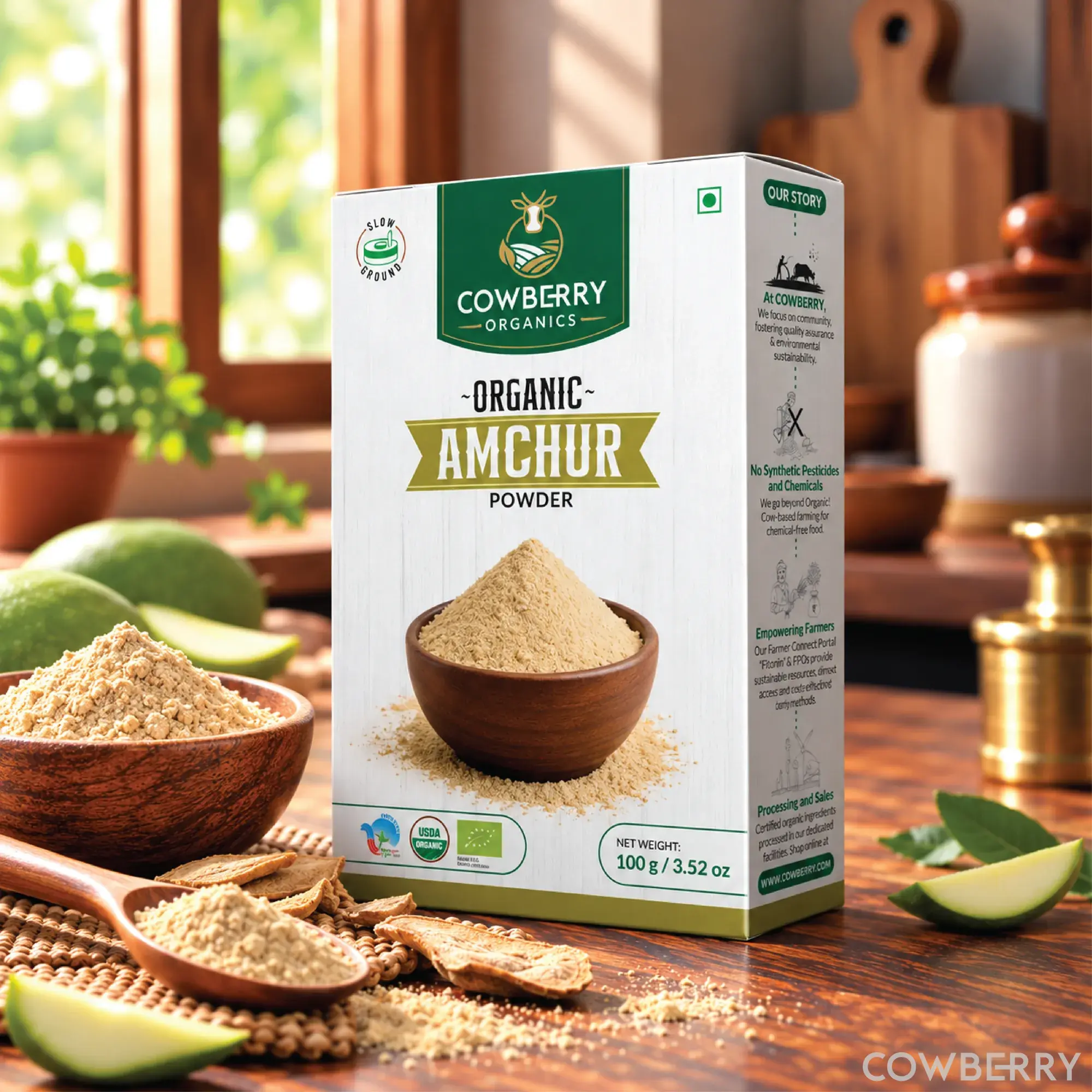
Amchur is dry mango powder with one ingredient: raw green mango. The fruit is peeled, sliced thin and sun-dried until the slices are brittle, then ground into a fine powder. That is the entire method, and shop amchur is usually made the same way; COWBERRY's own amchur powder is made from sun-dried raw green mangoes with nothing added.
Three things do the work: the sun, which dries; the slicing, which decides how evenly; and the grind, which turns crisp slices into powder. No salt, no sugar, no preservative belongs in the jar.
Step by step: how to make amchur powder at home
- Choose raw mangoes that are fully green and firm, with no yellow patch.
- Wash the mangoes, wipe them dry and peel off the skin.
- Slice the flesh thin and even, so every slice dries at the same pace; discard the stone.
- Spread the slices on a clean, dry cloth or tray in full sun, not overlapping.
- Leave them out until the slices shrink, turn light brown and snap crisply when bent; bring the tray in at night and in rain.
- Grind the crisp slices in small batches to a fine powder, then sieve; re-grind anything the sieve holds back.
- Store the powder in an airtight jar in a cool, dry place; it keeps for months.
Read the slices, not the clock: the powder is ready to grind when a slice snaps instead of bending.
Common mistakes when making amchur powder (and the fix)
- Slices cut thick: the centres stay soft and can spoil the whole jar. Slice thin and even.
- Drying in the shade or indoors: the slices never reach the crisp stage. Use full sun, the whole day.
- Grinding before fully dry: you get a damp, clumpy powder that will not keep. The slices must snap, not bend.
- Skipping the sieve: coarse bits sink to the bottom of a curry. Sieve, and re-grind what stays behind.
- Storing warm or damp: the powder lumps and loses its tang. A cool, dry cupboard and a shut lid.
- Starting with ripe mangoes: a ripe mango dries into something sweet, not the sour amchur. The fruit must be raw and green.
Time and quantity table
The honest answer on time is that it depends on the sun, the season and how thin you slice, and no single day count fits every kitchen. The cue is the snap. What each stage needs:
| Stage | What to watch |
|---|---|
| Slicing | Thin, even slices; thick slices dry slowly in the middle |
| Sun-drying | Full sun until the slices are crisp and light brown; they must snap, not bend. Turn them once or twice, and bring the tray in at night and in rain |
| Grinding | Small batches, then sieve; re-grind the coarse remains |
| Storing | Airtight jar, cool and dry; the powder keeps for months |
| Yield | A couple of green mangoes fill a small spice jar; the dry slices shrink to a fraction of their fresh weight |
How to use homemade amchur
A jar of homemade amchur does the same jobs as the shop powder: it sharpens curries, soups, chutneys and salads, sits in marinades and spice blends, and is the finishing sprinkle on chole and chaat. It also supplies the sour base of chaat masala, under cumin, coriander and black pepper; the chaat masala recipe shows the blend.
Researchers have also looked at amchur beyond the kitchen: in a 2011 laboratory study, when amchur was combined with carrot, onion or garlic, more iron and zinc became available from food grains in a digestion model, but only in a few of the grains that were tested. It is an interesting laboratory finding about minerals in grains, not a health promise.
If the jar runs out mid-recipe, the amchur substitute guide covers the wet and dry swaps, and the amchur powder hub keeps everything about the spice in one place.
FAQs
How is dried mango powder made?
Raw green mangoes are peeled, sliced thin and sun-dried until the slices turn crisp, then ground and sieved into a fine powder. That is the whole method; no other ingredient is added, and no preservative is needed once the powder is stored dry in an airtight jar.
Does amchur have salt?
No. Amchur is dried, ground raw mango with nothing added, so it carries no salt; the tang is the mango's own. It is often used beside salt in chaat and curries, which is where the confusion comes from, but the powder itself is just mango.
Does dry mango powder expire?
It fades slowly rather than spoils on a date. In an airtight jar in a cool, dry place it keeps for months; if it clumps or loses its smell, it has taken in moisture or age and is past its best. Keep the lid shut and the spoon dry.
How to make dry mango powder at home?
The same way: peel and slice raw green mangoes thin, dry the slices in full sun until they snap crisply, then grind and sieve them. The only test that matters is the snap, not the number of days, since the sun decides the time.
References
Shop this article
Keep reading
Coriander water benefits: what dhania water actually does
Peanuts in Hindi (moongfali): groundnut names in Indian languages
Coriander vs cilantro: are they the same herb?