by COWBERRY

8 minute read
Ajwain khane ke fayde aur nuksan

Ajwain khane ke fayde do alag cheezon pe khade hain: ek lamba traditional use, aur seed ke components thymol aur carvacrol pe hui purani research. Ye page batata hai ki 2014 ki Phytotherapy Research review kya dikhati hai aur jo koi study hamein mili wo logo mein kya nahi dikhati, phir nutrition, nuksan aur kitchen ki matra; ajwain hub naam aur cooking cover karta hai.
Ajwain khane ke fayde: record asal mein kya dikhata hai
Ye page ajwain khane ke fayde ke claims ko record ke saamne rakhta hai. Ajwain Trachyspermum ammi ka seed hai, English mein carom seeds, aur Indian Food Composition Tables (IFCT 2017) mein Omum ke naam se record hai. Iske claims do dheron mein baithe hain. Pehla dher tradition ka hai: 2014 ki Phytotherapy Research mein ek review is baat se shuru hoti hai ki plant apne various therapeutic effects ke liye traditionally use hota aaya hai, aur 2008 ki Asia Pacific Journal of Clinical Nutrition ki ek review note karti hai ki Indian spices pe current biomedical efforts unke scientific merits pe focused hain, taaki traditional uses ke liye science-based evidence mil sake. Doosra dher purani research ka hai: wahi 2014 review report karti hai ki previous studies ne plant aur uske constituents, thymol aur carvacrol, ke anti-inflammatory, antioxidant aur immunological effects dikhaye hain.
Dono reviews ke abstract mein ajwain ka logo mein koi trial describe nahi hai, isliye ye page logo mein koi effect claim nahi karta aur tradition ko proof ka kapda nahi pahinata. 2014 ki International Journal of Molecular Sciences ki ek review ek wajah batati hai jisse human record patla ho sakta hai: culinary herbs aur spices normally chhoti quantity mein aur doosre foods ke saath khaye jaate hain, jisse unka asli health benefit prove karna mushkil ho jaata hai.
Carom seeds khane ke fayde, nutrient ke hisaab se
Neeche ke nutrients IFCT 2017 ki ajwain ki per 100 g composition se hain, aur har ek ke saath ye hai ki ek teaspoon asal mein kya deta hai, kyunki seed pinch bhar khaya jaata hai.
Fibre: 20.58 g per 100 g
Ajwain mein 20.58 g dietary fibre hai per 100 g, jo ek teaspoon (5 g) mein simat kar lagbhag 1 g reh jaata hai. ICMR-NIN Dietary Guidelines dietary fibre ke baare mein likhti hain ki ye carbohydrates aur fats ke absorption ko delay aur retard karti hai aur satiety value badhati hai, isliye table mein seed fibre ka strong source dikhta hai; practice mein pinch bhar portion is fibre ko daily source nahi, footnote bana deta hai. Cumin aur coriander seeds ke saath poori per-100 g table carom seeds nutritional value per 100g page pe hai.
Calcium: 1034 mg per 100 g
Calcium ka figure bada hai: 1034 mg per 100 g, isliye ek teaspoon mein lagbhag 52 mg aata hai. Wahi teaspoon 0.7 mg iron rakhta hai, aur table mein 13.65 mg iron aur 5.67 mg zinc bhi per 100 g print hain, folate 51.79 mcg ke saath. 2014 ke ek alag Food Chemistry analysis ne aromatic spices mein ajwain mein 84.95 micrograms zinc per gram maapa, aur jo spices test hue unmein toxic trace elements arsenic, cadmium aur lead bahut low paaye.
Ye nutrients kya nahi kehte
Composition facts effect claims nahi hote: koi study nahi mili jo test kare ki pinch bhar ajwain logo mein iron, calcium ya zinc status ka kya karta hai. Upar ke numbers ek seed ko doosre se compare karne ke liye sabse sahi hain, aur nutrition page inhe waise hi use karta hai.
Thymol aur carvacrol: purani studies ne kya paaya
Ajwain ki chemistry pe 2014 ki Phytotherapy Research review sabse poori record hai jo ye page point kar sakta hai, aur wo dhyan se padhne layak hai ki kya kehti hai aur kya chhod deti hai.
Components
Review kehti hai ki plant mein various components hain jaise thymol aur carvacrol, aur seed ki khushbu aur taste strong aur pungent hain.
Anti-inflammatory aur antioxidant effects
Review report karti hai ki previous studies ne plant aur uske constituents ke potent anti-inflammatory aur antioxidant effects dikhaye hain, aur wo in findings ko is roop mein padhti hai ki plant aur uske constituents ka kai inflammatory aur immunological disorders mein aur oxidative stress conditions mein therapeutic value hai. Framing hi sab kuch hai: review ke abstract mein logo mein koi trial describe nahi hai, aur uski wording previous studies ke baare mein hai, isliye ye page unhein plate ke pinch ka claim nahi banata.
Antimicrobial effects
Wahi review record karti hai ki plant ke liye alag therapeutic effects jaise antifungal, antibacterial, antiparasitic aur antilipidemic describe kiye gaye the. Word hai described, established nahi, aur abstract ye nahi kehta ki inhe logo mein test kiya gaya.
Ismein se kuch bhi small print nahi hai. Review ka sabse strong sentence — potent anti-inflammatory aur antioxidant effects — previous studies ke baare mein ek statement hai, aur use human health ka promise maan lena source se aage padhna hai. Ye page us line ke is paar rehta hai.
Ajwain ke nuksan: jo record mein hai aur jo nahi
Koi study nahi mili jo logo mein carom seeds ke side effects list kare, aur 2014 review ka abstract logo se koi safety finding report nahi karta. Ye page jo imaandaari se keh sakta hai: ajwain ek strongly flavoured seed hai, isliye recipe ki pinch se zyada daalne par taste harsh hone ki sambhavna hai; neeche ki kitchen amounts ise chhota rakhti hain. Ajwain spice hai, supplement nahi, aur koi dose record mein nahi hai jiske neeche rehna ho.
Do situations mein guess ki jagah professional se poochhna behtar hai. Agar aap pregnant hain, nursing kar rahe hain ya regular medicines le rahe hain, toh ajwain ko roz ki aadat banane se pehle doctor ya dietitian se baat karein. Aur agar gas, acidity ya pet ki pareshani baar baar laut rahi hai, toh seed ki taraf haath badhane ki jagah doctor se milein — koi study nahi mili jo in complaints ke khilaf ajwain ko test kare, ghar ki aadat chahe jo kahe.
Roz kitna ajwain
Koi guideline ajwain ki daily amount print nahi karti, aur koi study set nahi karti, isliye is page pe koi dose nahi hai. Working kitchen amounts apne dum pe khade hain: quarter teaspoon chaar logo ki dal ya curry season karta hai, aur ek teaspoon (5 g) ek cup ajwain water banata hai. Ek teaspoon jo add karta hai wo chhota hai — lagbhag 18 kcal, 0.8 g protein, 1 g fibre aur 52 mg calcium — aur strain kiye pani ke cup mein seed ka zyadatar hissa strainer mein hi reh jaata hai.
Older adults ke liye ICMR-NIN Dietary Guidelines well-cooked, soft food preparations with less salt aur moderate amounts of spices recommend karti hain, jo qualitative steer hai, measure nahi. Jo bhi medical diet pe hai use apni matra doctor ya dietitian se settle karni chahiye, aur jo pregnant ya nursing hai use ajwain water roz ki aadat banane se pehle poochhna chahiye.
Carom seeds kaise khayein
Roz ke uses, poore methods ke links ke saath. Tempering: quarter teaspoon hot oil ya ghee mein dal ya sabzi ki shuruaat mein jaata hai aur kuch seconds crackle karta hai. Dough: poore seeds paratha dough mein gunde jaate hain, stuffed paratha ke liye ek pinch. Ajwain water: ek teaspoon ek cup pani mein teen se paanch minute simmer, ya raat bhar aath ghante bhigokar subah strain. how to use carom seeds page pe quantities aur mistakes hain; how to make carom seeds water page pe dono methods step by step hain.
Khane mein seed ke liye, ajwain roti recipe ek teaspoon seeds aath soft rotiyon mein gundhta hai, aur ajwain laddu recipe do teaspoons pandrah roasted atta laddus ke batch mein fold karta hai. Seed ke English aur Hindi naamon pe ajwain in english and hindi page poora list karta hai, aur ajwain hub poora cluster ikattha karta hai.
FAQs
Is carom seeds good for health?
Imaandaar jawab: flavour spice ke roop mein haan; medicine ke roop mein koi study nahi dikhati. Seed ki composition asli hai — 358 kcal, 15.89 g protein aur 20.58 g fibre per 100 g — lekin 2014 ki ek review note karti hai ki spices chhoti matra mein doosre foods ke saath khaye jaate hain, jisse true health benefit prove karna mushkil hai. Ajwain ko spice jar mein rakhein, medicine cabinet mein nahi.
What is carom seeds?
Carom seeds ajwain hai, Trachyspermum ammi ka seed, jo IFCT 2017 food tables mein omum ke naam se likha hai. Ye wahi strongly flavoured seed hai jo tempering, paratha dough aur ajwain water mein jaata hai. Jo ye nahi hai wo jeera hai — cumin alag seed hai, aur jo recipe carom seeds maange wo ajwain maangti hai, cumin nahi.
Can ajwain be taken during pregnancy?
Koi study nahi mili jo pregnancy mein ajwain test kare, isliye kisi bhi taraf lean karne ke liye koi safety finding nahi hai. Upar ki pinch amounts kitchen measures hain, pregnancy advice nahi. Agar aap pregnant hain aur ajwain water ya seeds regularly chahti hain, toh pehle doctor se poochhein.
Why ajwain is good for stomach?
Pet ke liye record mein jo hai wo ghar ki aadat hai, finding nahi: 2014 ki Phytotherapy Research review plant ke traditional therapeutic uses list karti hai, aur uska abstract logo mein koi trial describe nahi karta. Koi study nahi mili jo pet ki shikayaton ke khilaf ajwain test kare. Jo pet aksar pareshan kare, uske liye doctor pehla sahi kadam hai.
Difference between ajwain and jeera?
Ye do plants ke do seeds hain: ajwain carom hai, Trachyspermum ammi, aur jeera cumin hai, Cuminum cyminum. IFCT 2017 is jodi ke Hindi naam ajwan aur jira record karta hai, aur Tamil mein omum aur jeerakam. Recipe mein dono ek-dusre ki jagah nahi chalte: jo seed recipe mein likha hai wahi use karein. Jeera ka label wala jar cumin hai; sirf ajwain ka label wala jar ajwain hai.
References
- Indian Food Composition Tables (IFCT) 2017, ICMR-National Institute of Nutrition
- Dietary Guidelines for Indians, ICMR-National Institute of Nutrition
- Alavinezhad A, Boskabady MH. Antiinflammatory, antioxidant, and immunological effects of Carum copticum L. and some of its constituents. Phytother Res, 2014
- Khan N, Choi JY, Nho EY et al. Determination of minor and trace elements in aromatic spices by micro-wave assisted digestion and inductively coupled plasma-mass spectrometry. Food Chem, 2014
- Opara EI, Chohan M. Culinary herbs and spices: their bioactive properties, the contribution of polyphenols and the challenges in deducing their true health benefits. Int J Mol Sci, 2014
- Krishnaswamy K. Traditional Indian spices and their health significance. Asia Pac J Clin Nutr, 2008
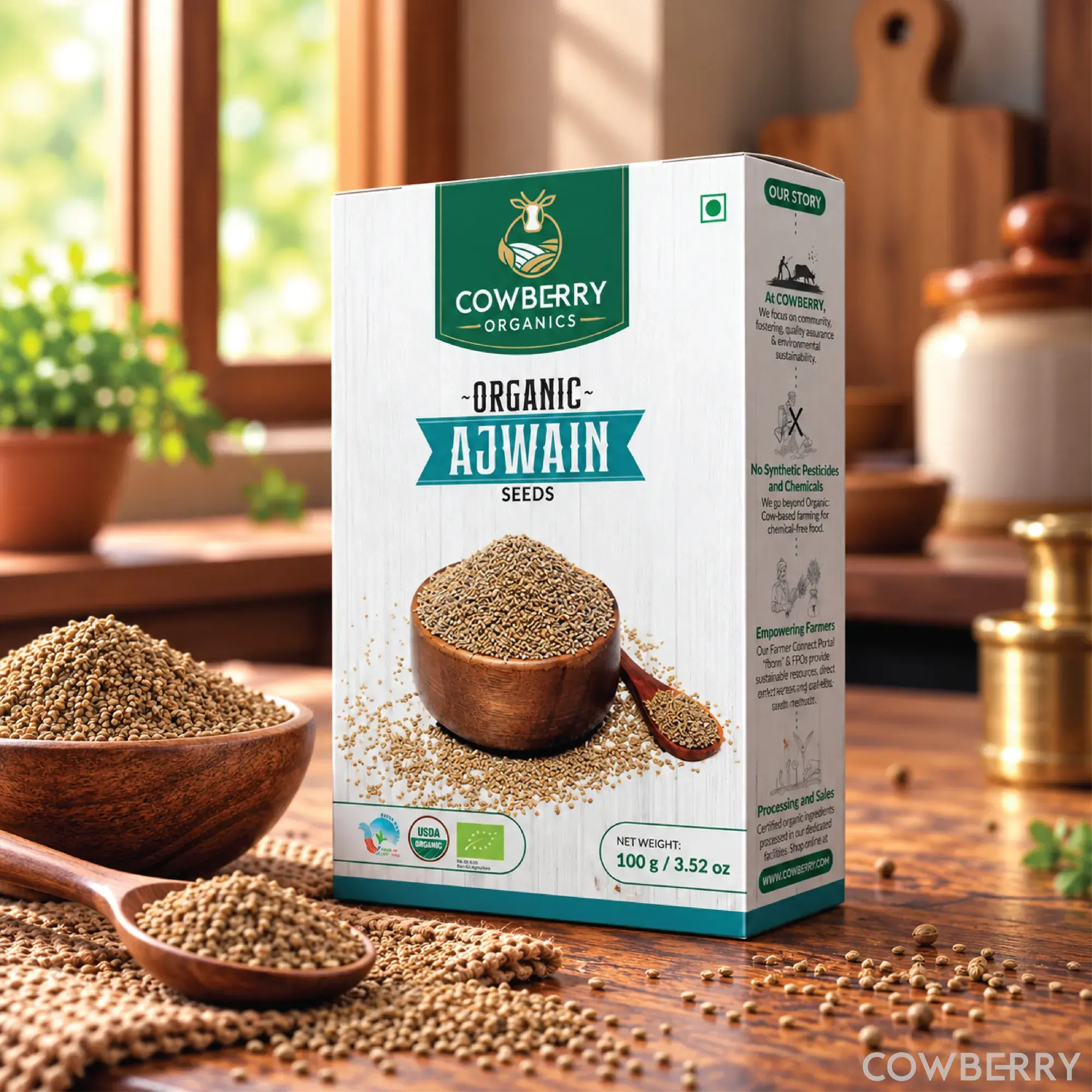
Shop this article
Keep reading
Dhania khane ke fayde aur nuksan (coriander)
Kadi patta ke fayde aur nuksan: curry leaves khane ke fayde in hindi
Rajma ke fayde aur nuksan: kidney beans ke fayde in Hindi