by COWBERRY

7 minute read
How to make carom seeds water (ajwain tea) and when to drink it

How to make carom seeds water: warm a teaspoon of ajwain seeds with a cup of water, simmer for three to five minutes, strain and drink, or soak the seeds in water overnight and strain in the morning. Both methods are below with timings, quantities and the mistakes to avoid; the ajwain hub covers the seed itself.
Short answer: how to make carom seeds water
You heat, steep or soak, then strain. The boiled version is ajwain tea: one teaspoon of seeds (about 5 g) simmered in one cup (240 ml) of water, then strained into a cup. The soaked version, ajwain pani, skips the stove: the same teaspoon of seeds sits in a covered glass of water overnight and the water is strained in the morning. Both give a sharp, herbal drink that carries the seed's flavour; the steeped tea is usually the stronger of the two, and the overnight soak is gentler and needs no watching. Quantities scale together, so two cups take two teaspoons.
Step by step: ajwain water how to make (boiled)
- Measure. One teaspoon of ajwain seeds (about 5 g) and one cup of water (240 ml). Use a small pan with a lid.
- Boil. Bring the water to a boil, add the seeds, lower the heat and simmer gently for three to five minutes. Keep the lid on so little water is lost.
- Steep. Take the pan off the heat and leave it covered for another two minutes; the water turns pale and the kitchen fills with the smell of the seeds.
- Strain. Pour through a small tea strainer into a cup; the seeds stay behind and are thrown away.
- Drink warm. Sip it while it is hot enough to be comfortable. What is left can be cooled and refrigerated for the same day or the next.
Ajwain pani how to make: the overnight soak
- Measure into a glass. One teaspoon of ajwain seeds (about 5 g) in a clean glass or jar, with one cup (240 ml) of water.
- Cover and leave. Cover the glass and leave it on the counter for eight hours, usually overnight. The seeds swell in the water; eight hours is enough, and a longer soak only makes the drink more strongly flavoured.
- Strain in the morning. Pour through a strainer into a cup. Drink it at room temperature, or warm it gently in a small pan without boiling.
Ajwain pani is simply the soaked version: the same seed-to-water ratio as the tea, no stove and no watching. Whichever method you choose, the drink is ready in one cup, so there is no reason to make more than the household will drink in a day.
When to drink ajwain water
No published guideline fixes a time of day for ajwain water, and no study we could find measures the drink itself, so the timing is habit rather than science. Many people take it warm after a meal; others make the overnight soak and drink it first thing in the morning. Choose whichever fits your kitchen.
One habit has its own history: giving ajwain water to a woman who has just delivered. It is a home tradition in many Indian households, and no research we could find looks at ajwain water in women who have just delivered, so there is no measured reason behind the practice to report. What the published record holds is thinner: the 2014 Phytotherapy Research review notes the plant's traditional therapeutic uses, with the research behind them done in the laboratory rather than in people. If you are pregnant or have recently delivered, ask your doctor before making ajwain water a daily habit.
Common mistakes
- Too many seeds. Far more than a teaspoon per cup is likely to taste harsh; ajwain is a strongly flavoured seed, and a little goes a long way. Scale seeds and water together.
- Boiling too long. A long, hard boil can dull the smell that is the point of the drink. Simmer gently for three to five minutes, then steep off the heat.
- Skipping the strain. Whole seeds at the bottom of a cup are gritty to swallow. Strain into the cup, every time.
- Making a week's batch. The water is best fresh. Cooled and refrigerated, it keeps for up to two days; after that, pour it out and make a new cup.
- Expecting a medicine. Ajwain water is a kitchen drink. A spice review published in 2014 in the International Journal of Molecular Sciences explains why benefits stay hard to establish: culinary herbs and spices are normally consumed in small quantities and combined with other foods, so enjoy the drink for its flavour.
Time and quantity table
The numbers below are for one cup; scale the teaspoon and the water together for more people.
| Step | Time or quantity |
|---|---|
| Seeds | 1 tsp (about 5 g) per cup of water |
| Water per cup | 1 cup (240 ml) |
| Boiled method | Simmer 3 to 5 minutes, then steep 2 minutes off the heat |
| Overnight soak | 8 hours at room temperature, covered |
| Yield | One cup per person |
| Drinking it | Warm right after making, or at room temperature after the soak |
| Keeping it | Same day is best; strained, cooled and refrigerated, drink within two days |
The teaspoon itself carries little: 5 g of ajwain gives about 18 kcal, about 1 g of fibre and 52 mg of calcium, and the strained water keeps the seeds behind, so a cup of ajwain water is mostly water with flavour (per 100 g, IFCT 2017 prints 358 kcal, 20.58 g fibre and 1034 mg calcium). Keep the dry seeds in an airtight jar in a cool, dry place, away from the stove. For the seed itself, its names, nutrition and benefits, the ajwain hub is the place to start, and the ajwain in English and Hindi page lists every name. When you want the seeds in food rather than water, try the ajwain laddu or the ajwain roti recipe.
FAQs
Why ajwain water after delivery?
Ajwain water after delivery is a home tradition in many Indian households. No study or guideline we could find tests the drink in new mothers or lists it in postnatal care, so the practice rests on habit. Ask your doctor before drinking it regularly.
Can i take ajwain water at night?
Yes, you can. No guideline fixes a time of day for ajwain water, and a small cup after dinner is a habit many Indian homes keep. The drink is only water steeped with seeds, so the timing is a matter of taste. Make it fresh, or warm a batch made the same day; one cup is plenty, since the flavour is strong.
How to make saunf and ajwain water?
Mix the two seeds in either method. For the overnight version, put half a teaspoon of ajwain and half a teaspoon of saunf in a cup of water, cover, leave it overnight and strain in the morning. For the boiled version, simmer the same half-and-half teaspoon in a cup of water for three to five minutes, steep for two minutes off the heat, then strain and drink warm.
Does carom seeds help in gas?
No study we could find shows that carom seeds do anything for gas. Eating a few seeds or drinking the water after a meal is a home habit, not a tested effect. Enjoy ajwain for flavour, and see a doctor for persistent gas.
Does ajwain help in acidity?
There is no published research that tests ajwain against acidity, and no guideline names it for that purpose. What is on record is tradition: the 2014 Phytotherapy Research review lists traditional therapeutic uses for the plant, with laboratory findings rather than human trials behind them so far. If acidity troubles you often, speak to a doctor instead of relying on a home drink.
References
- Indian Food Composition Tables (IFCT) 2017, ICMR-National Institute of Nutrition
- Alavinezhad A, Boskabady MH. Antiinflammatory, antioxidant, and immunological effects of Carum copticum L. and some of its constituents. Phytother Res, 2014
- Opara EI, Chohan M. Culinary herbs and spices: their bioactive properties, the contribution of polyphenols and the challenges in deducing their true health benefits. Int J Mol Sci, 2014
- UK Food Standards Agency: How to chill, freeze and defrost food safely
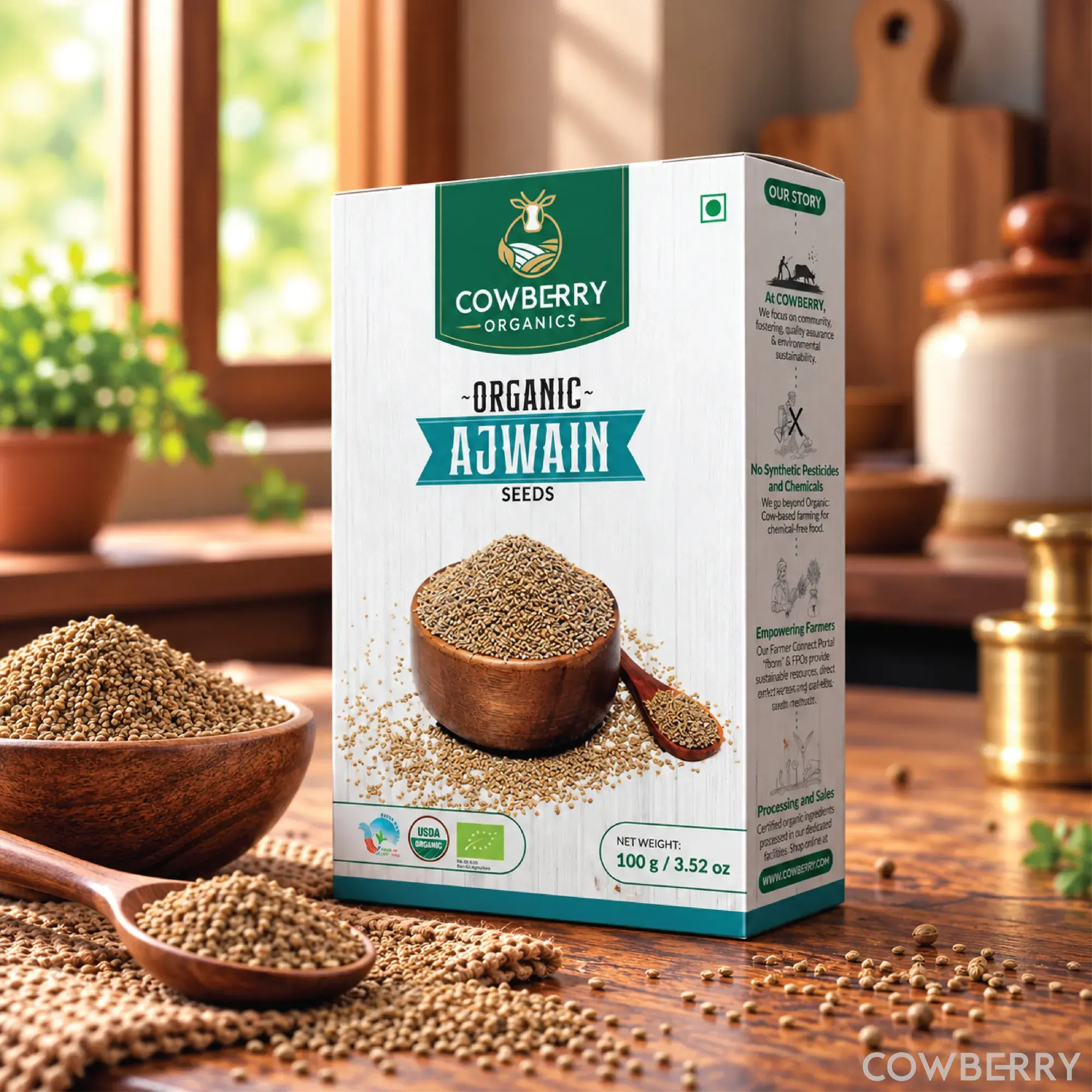
Shop this article
Keep reading
Coriander water benefits: what dhania water actually does
Peanuts in Hindi (moongfali): groundnut names in Indian languages
Coriander vs cilantro: are they the same herb?