by COWBERRY

7 minute read
Moong dal recipe: easy moong dishes from khichdi to laddu

Here is every moong dal recipe on one page, sorted by meal: chilla and porridge for breakfast, khichdi, sabut moong dal and a plain yellow dal for lunch and dinner, kachori for snacks, halwa and laddu for sweets. Seven dishes have full step-by-step pages; the moong dal hub covers the dal itself.
Moong dal recipes for breakfast
Both breakfast dishes start from split dal; one is a tawa pancake, the other a soft bowl.
Moong dal chilla
Soak split moong dal for three hours, grind it with ginger, green chilli and cumin, rest the batter ten minutes, then cook eight thin, lacy pancakes on a hot tawa — no flour, no fermenting. The frying takes about half an hour, and two plain chillas make a serving of about 229 kcal and 11.9 g of protein. Full method: moong dal chilla.
Moong dal porridge
Split green moong simmered to a spoonable softness under a ghee, cumin and ginger tempering; stir jaggery into the hot pot for the sweet version, or keep one bowl plain before sweetening. The pot serves two in about an hour, soak included, each bowl about 208 kcal and 11.9 g of protein. Full method: moong dal porridge.
Moong upma
Moong upma has no step-by-step page of its own; the method fits in two lines. Soak yellow moong dal for 30 minutes and grind it coarse with ginger and green chilli. Temper mustard seeds, urad dal and curry leaves in oil, stir in the dal paste with turmeric and salt, add water to loosen it and simmer covered until the grains cook through and fluff apart; finish with lemon and coriander.
Split green gram recipes for lunch and dinner
Three lunch-and-dinner split green gram recipes: a one-pot khichdi, a whole-bean dal and the plainest dal of all.
Moong dal khichdi
Rice and split green moong pressure cooked together with turmeric over a ghee, cumin and hing tempering, soft enough for a spoon; add chopped vegetables with the grains if you like. One pot, under an hour including the 20-minute soak, serving four at about 283 kcal, 8.9 g of protein and 3.4 g of fibre a plate. Full method: moong dal khichdi.
Sabut moong dal
Whole green moong soaked 8 to 12 hours and pressure cooked for three whistles, then simmered in a ghee, cumin, onion and tomato tadka, with a chilli-ghee finish poured over at the end. Serves four, on the table in about an hour once the beans are soaked; a serving is about 214 kcal with 11.3 g of protein and 8.5 g of fibre. Full method: sabut moong dal.
Plain yellow moong dal
The everyday dal needs no recipe page. Rinse yellow moong, simmer it in plenty of water until a grain crushes between two fingers — about 20 minutes, or pressure cook it in three times its volume of water — and finish with a ghee, cumin and hing tadka, salt and lemon. Cooked dal left over keeps up to two days in the fridge; it thickens there, so loosen it with hot water when you reheat.
Moong dal snacks: kachori
The one snack recipe in the set is a fried one, and the work sits in the filling: dal soaked, ground coarse and dry-roasted before it ever meets the dough.
Moong dal kachori
Split green moong soaked for 30 minutes, ground coarse and roasted dry with fennel, cumin and coriander, then sealed inside sharbati atta dough and deep fried until the shell turns crisp and golden. One batch of dough and filling rolls into sixteen kachoris, and four make a serving at about 703 kcal and 19.9 g of protein; eat them hot with green and tamarind chutney. Full method: moong dal kachori.
Moong dal sweets: halwa and laddu
Both moong sweets are slow-cooked around ghee, and both start from dal rather than flour.
Moong dal halwa
Soaked yellow moong, ground coarse and roasted in ghee until it turns grainy and golden, then finished with jaggery and a spoon of saffron milk. Plan a four-hour soak and an hour at the stove, most of it stirring; the pot serves six, one serving about 404 kcal with 8.3 g of protein. Full method: moong dal halwa.
Moong dal laddu
Split green moong dry-roasted until it smells toasted, ground to a powder and bound with ghee and jaggery into soft, fudgy rounds — no syrup stage, nothing boiled. The batch rolls into twelve laddus, each about 45 g; one laddu is about 203 kcal and 4.3 g of protein, and cooled fully they stay soft for about two weeks in an airtight tin. Full method: moong dal laddu.
The dal behind the dishes: soak times and a katori
Whichever split green gram recipe you choose, the form of the dal decides the wait. Yellow moong dal (dhuli) needs no soak and cooks soft in about 20 minutes, with an optional 30-minute soak when you want it softer; green chilka moong takes 30 minutes, or three hours when it is ground into chilla batter; whole sabut moong soaks 8 to 12 hours and then pressure cooks for three whistles, or simmers 25 to 30 minutes in an open pot — done when a bean crushes between two fingers. The step-by-step version of each wait is on the how to soak moong page.
What the dal carries does not change from dish to dish. Per 100 g raw, IFCT 2017 records 326 kcal, 23.88 g of protein and 9.37 g of fibre for green gram dal. One katori of cooked dal, made from 30 g of dry dal, works out to about 98 kcal, 7.2 g of protein and 2.8 g of fibre before any tadka, and a recipe serving is made from 50 g of dry dal, about 163 kcal and 11.9 g of protein. For the dal's names, benefits and buying notes, see the moong dal hub.
FAQs
How much protein in 100 gm moong dal?
Raw green gram dal has 23.88 g of protein per 100 g in the IFCT 2017 tables. Cooked, a katori made from 30 g of dry dal holds about 7.2 g, and a recipe serving made from 50 g of dry dal holds about 11.9 g — the same figure behind the chilla and porridge servings on this page.
Is moong dal good for health?
Yes, as an everyday pulse in normal portions. IFCT 2017 records 326 kcal, 23.88 g of protein and 9.37 g of fibre per 100 g of raw green gram dal, and a katori of cooked dal carries about 98 kcal with 7.2 g of protein and 2.8 g of fibre before the tadka. The recipes above put those numbers on the plate in different forms.
What is moong dal chilla?
A thin savoury pancake made from split moong dal soaked for three hours and ground with ginger and green chilli, cooked on a tawa; there is no flour and no fermenting. The batter makes eight chillas, and two plain ones are a serving at about 229 kcal and 11.9 g of protein. Full method: moong dal chilla.
Which moong dal recipe takes the least time?
Plain yellow dal: no soak, about 20 minutes of simmering, then a quick ghee and cumin tadka. Among the dishes with full pages, moong dal khichdi is under an hour including its soak, the porridge needs about an hour with its half-hour soak, and the chilla wants three hours of soaking before half an hour at the tawa.
How long does cooked moong dal keep?
Up to two days in the fridge, as the UK Food Standards Agency advises for leftovers; cool it and refrigerate it within an hour or two, then reheat only the portion you need. Cooked dal thickens in the fridge, so loosen it with hot water as you reheat. Dry moong dal keeps for many months in an airtight container.
References
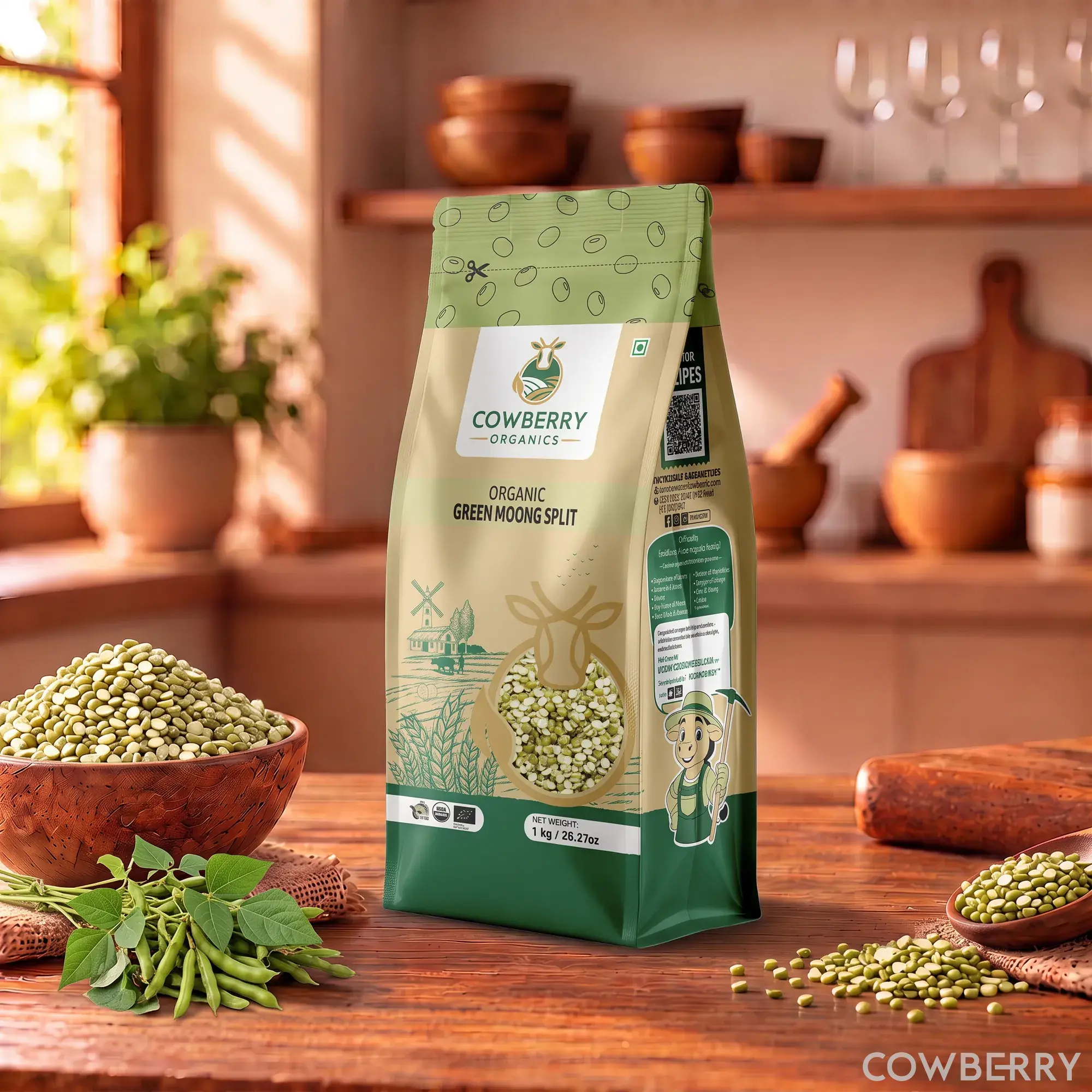
Shop this article
Keep reading
Rajma recipe: 5 ways to cook rajma beans at home
Dalia recipes: 10 easy broken wheat dishes from khichdi to laddu
Amaranth recipes: 8 rajgira dishes from roti to ladoo