
Moong dal halwa
Preparation Time
20 minutes
Cooking Time
60 minutes
Difficulty Level
moderate
Meal Type
Dessert
Serves 6
Key Ingredients
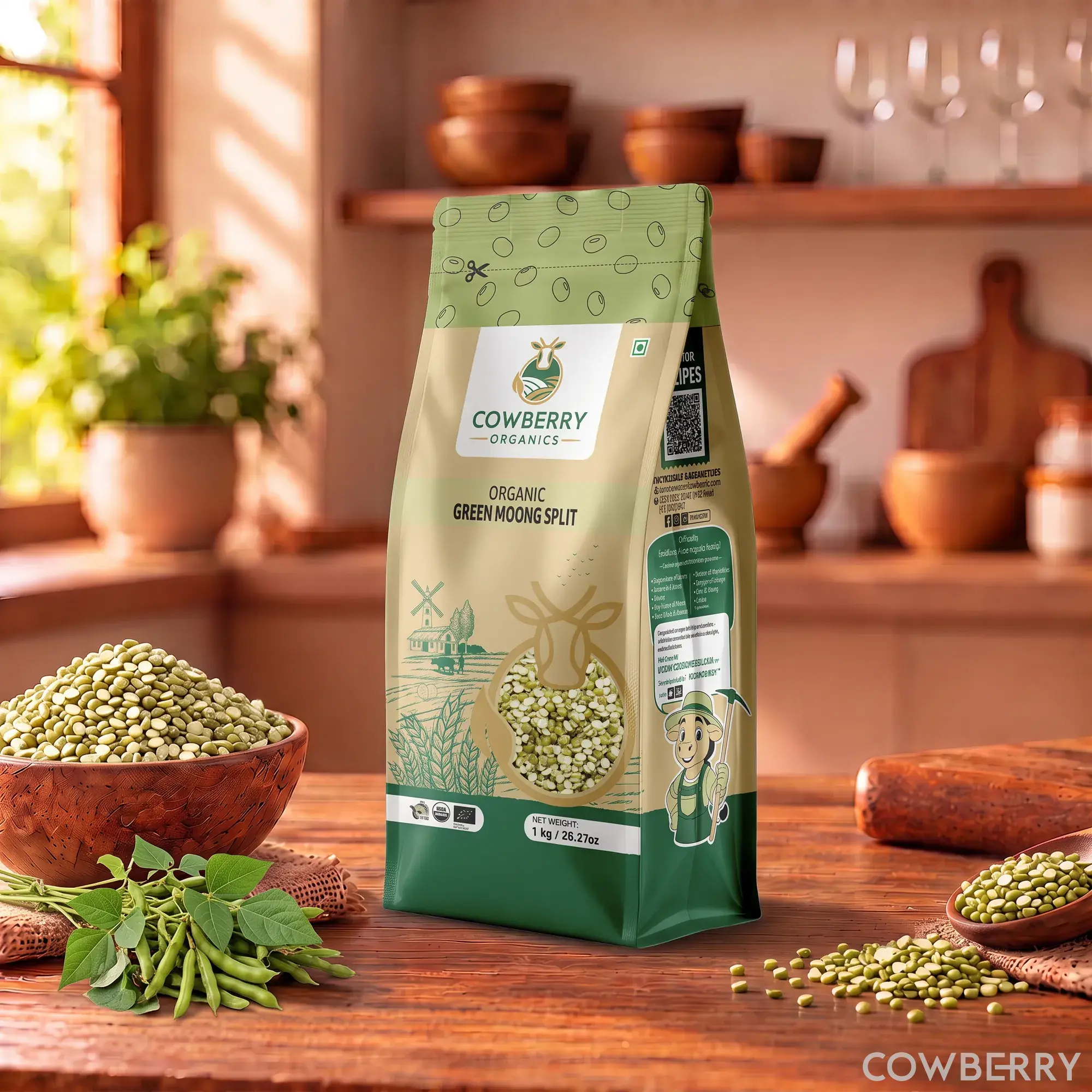
- Yellow moong dal (dhuli), or green moong split with the skins rubbed off
About This Recipe
Moong dal halwa is closely tied to Rajasthan, where it is made through the winter and at weddings, and it is now a familiar sweet across North India. Unlike sooji or gajar halwa it is made from a pulse: soaked moong dal ground to a coarse paste and roasted in ghee until the raw smell goes and the paste breaks into golden grains. That roasting is the whole recipe and there is no shortcut; forty minutes of stirring is normal.
This version sweetens with jaggery powder instead of sugar, which gives a deeper, caramel-edged taste and a darker halwa. Because jaggery can split milk on the boil, the dal is cooked in hot water, and the only milk is the three spoons of saffron milk stirred in at the end. For the classic pale halwa, swap the jaggery for 120 g of sugar, dissolved in one cup of hot water and one of hot milk.
The cue to watch for is grainy and glossy: separate soft grains of dal coated in ghee that pools at the edges of the kadhai, never a smooth paste. A coarse grind, a heavy pan and a low flame get you there. Use dehusked yellow moong dal; with skin-on green split, soak it, rub the skins off between your palms and float them away before grinding.
Ingredient List
Serving Size:
1x
2x
3x
Halwa
- Yellow moong dal (dhuli), or green moong split with the skins rubbed off — 1 cup
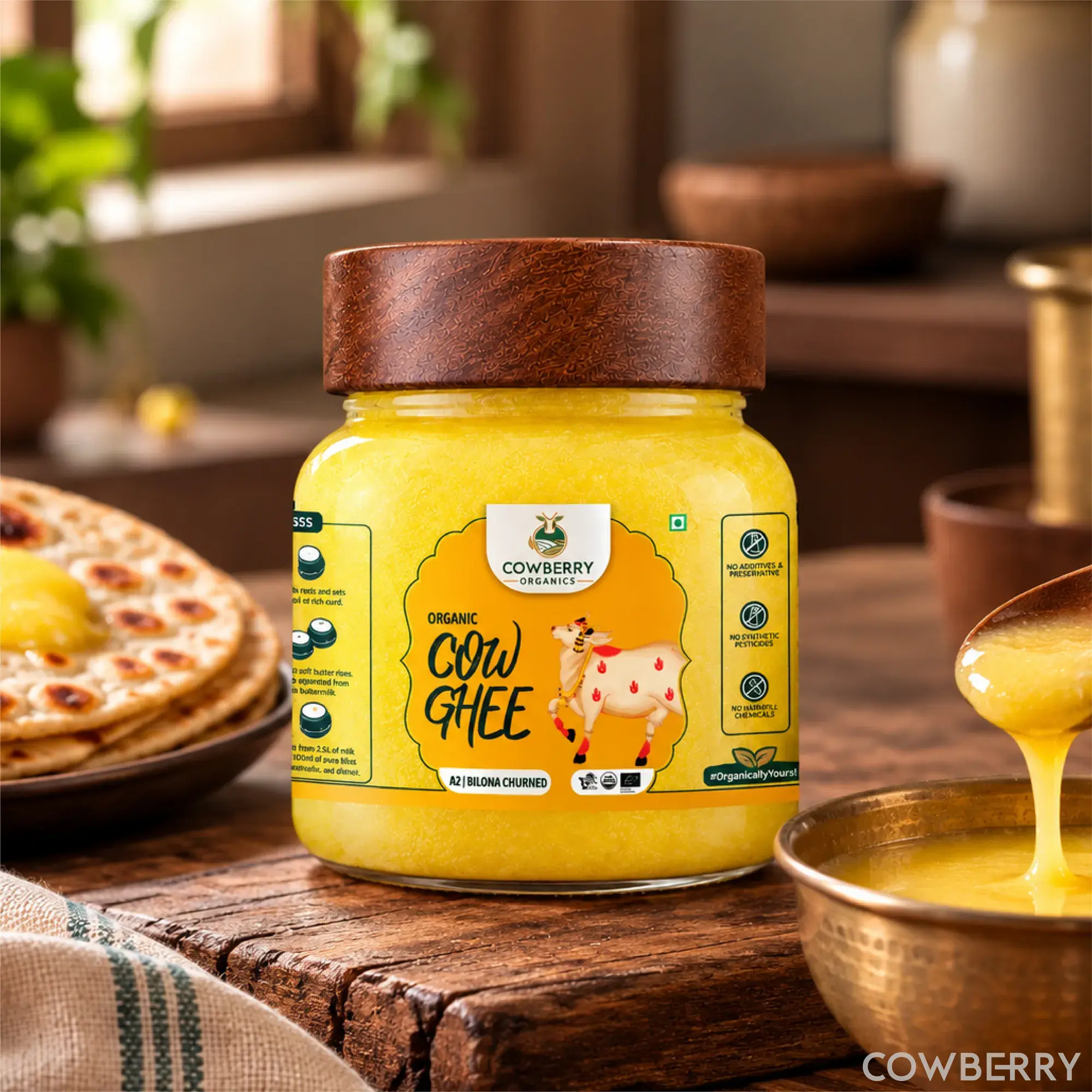
- Ghee (about 2/3 cup) — 150 g
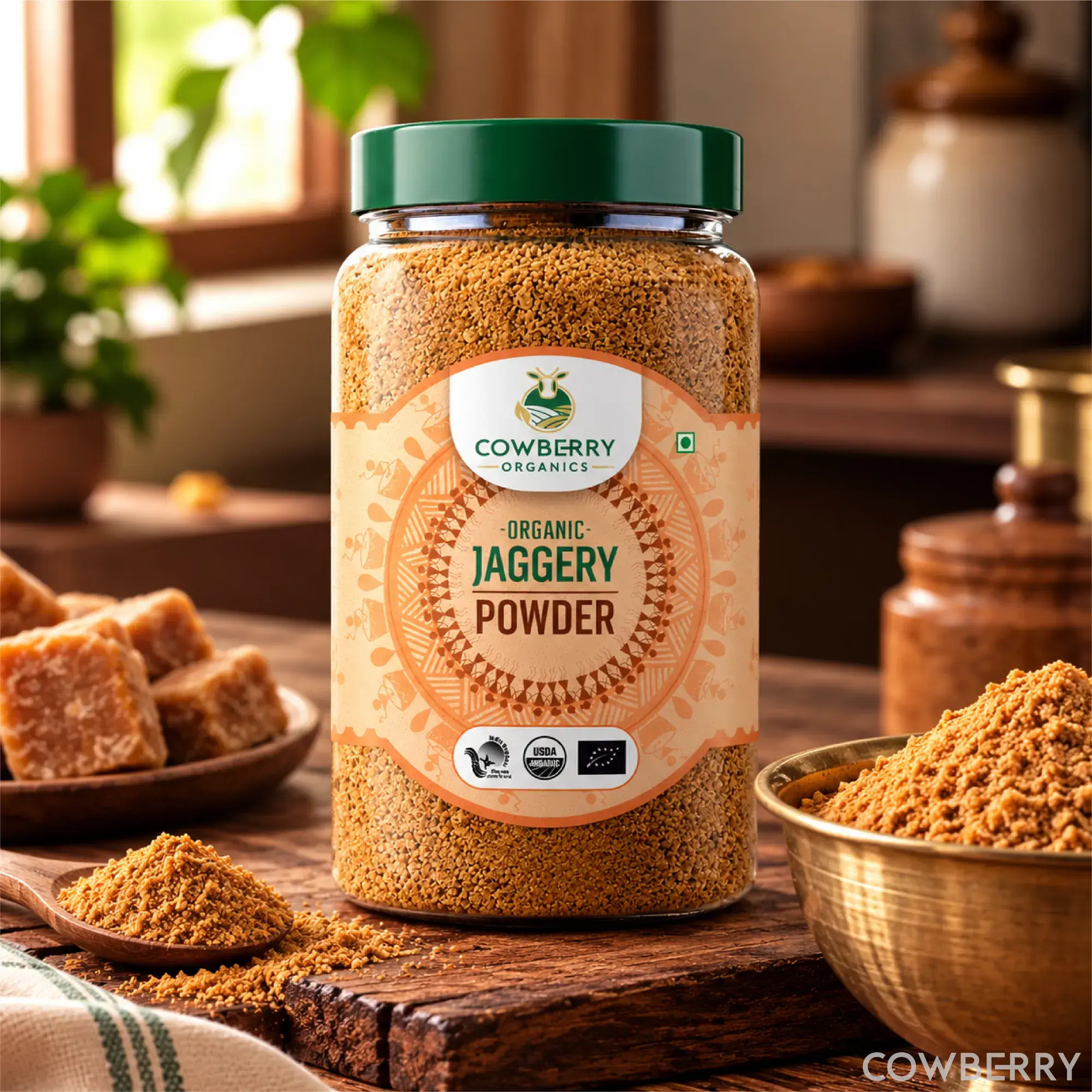
- Jaggery powder (about 3/4 cup), or 120 g sugar — 120 g
- Hot water (sugar version: 1 cup hot water and 1 cup hot milk) — 2 cups

- Cardamom Powder — 1/2 tsp
Saffron milk

- Saffron Strands — 20 nos
- Warm milk — 3 tbsp
Garnish
- Almonds, slivered — 2 tbsp
- Pistachios or cashews, chopped — 1 tbsp
Skip The Store !
Get all you need for the recipe in just a few clicks
Serving Suggestions
Serve warm, in small katoris, topped with the slivered almonds and a few saffron strands; a halwa this rich is a festive portion, not a bowlful. It is the sweet after a Rajasthani dal-baati or a winter dinner, and it goes out on Diwali and wedding plates. Keep leftovers in the fridge and reheat them with a spoon of hot water or milk and a little ghee so the halwa turns glossy again.
Tips for Cooking Moong dal halwa
Grind the dal coarse, like fine rava, with only a few spoons of water; a smooth paste turns gluey and never gets grainy. Use a heavy-bottomed kadhai and keep the flame low; the paste sticks and clumps for the first ten minutes, and constant scraping is normal. Do not add the water until the ghee separates and the halwa smells nutty, or the raw taste stays. Add hot water, never cold, and stand back as you pour.

Chef’s Note
Use fresh yellow moong dal; a dal that has sat for a year takes longer to roast and tastes flat. Jaggery powder that is dark and slightly damp gives a deeper colour; if yours is pale, the halwa will be too, which is fine. One serving, a sixth of the recipe, is about 404 kcal, most of it from the ghee, with 8.3 g protein, nearly all from the dal; it is a sweet, so keep portions small.
Per serving (approx.): 404 kcal, protein 8.3 g, carbs 34 g, fat 26 g, fibre 3.1 g. Computed from IFCT 2017 / USDA values for the listed quantities. Measures: 1 cup = 240 ml, 1 tbsp = 15 ml, 1 tsp = 5 ml.
Happy Cooking !!
!!
ByCOWBERRY
Jul 18, 2026
Recipes You’ll Love
More everyday cooking with COWBERRY organics, from the same kitchen.

Preparation Time
35 Min
Cooking Time
20 Min
Difficulty Level
easy

Preparation Time
20 Min
Cooking Time
15 Min
Difficulty Level
easy

Preparation Time
45 Min
Cooking Time
45 Min
Difficulty Level
moderate