by COWBERRY

6 minute read
How to store ghee: shelf life, jars, fridge and signs it has spoiled

How to store ghee: in a dry steel or glass jar, lidded tight, on a dark shelf in a cool spot, clear of stove and sun, with a dry spoon. That keeps a jar many months, and no fridge is needed. Below: shelf rules, keeping time, why cold turns ghee white, and the signs of a turned jar. All of it applies to bilona ghee and to cream-made ghee alike.
How to store ghee at home: short answer
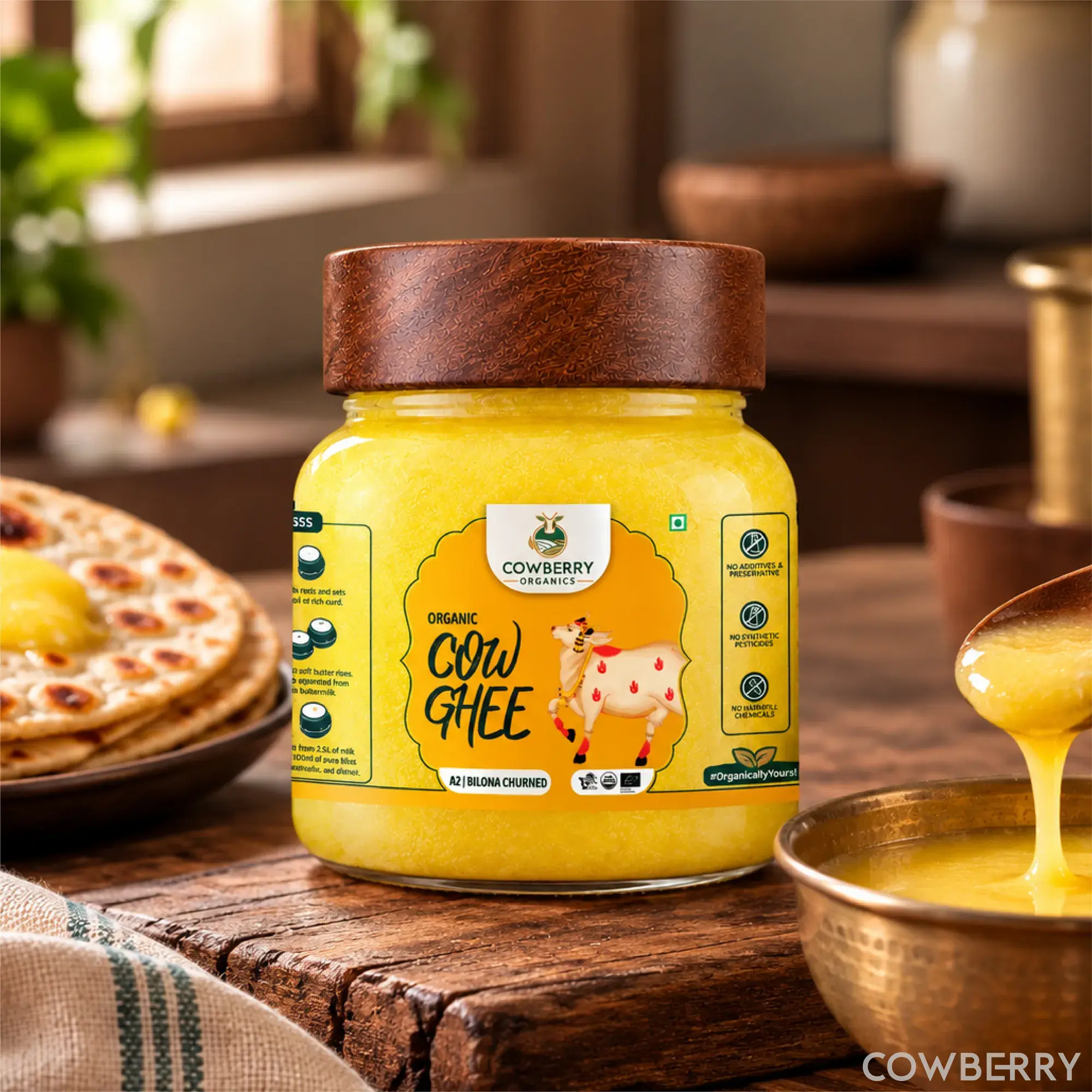
Dry, dark and closed. Ghee is nearly all fat, 100 g per 100 g, and spoilage usually starts with the things that get added later — water, crumbs, a wet spoon, sunlight, heat from the stove. Take ghee out with a dry spoon, put the lid back tight, and the jar stays good for many months. COWBERRY's own advice for its A2 ghee says the same: a cool, dry place, an airtight container, away from direct sunlight. The rules on this page answer how to store ghee and how to store A2 ghee alike, because the jar does not mind which milk the ghee came from.
The jar, the shelf and the spoon
The jar: glass or steel, because both wash dry easily and hold no smells, with a lid that closes tight. Fill it only when it is completely dry.
The shelf: cool, dark and level. Keep the jar away from the stove, the oven and windows; COWBERRY's advice for its ghee names direct sunlight. A closed kitchen shelf or cupboard is the usual place.
The spoon: dry, every time. The wet spoon straight out of the dal, or a jar left open beside a steaming pot, is how water gets in, and water is the one thing a ghee jar cannot afford.
A second, smaller jar for daily use is a small trick worth having: the big jar opens once a week, the small one daily, so most of the ghee never sees a damp kitchen afternoon.
Fridge or cupboard?
The cupboard. Ghee does not need chilling, and the fridge changes it: cold makes the fat set firm, turn pale and go grainy, all of which is normal and disappears once the jar warms up again. A dry, well-shelved jar does not need it. The UK Food Standards Agency sets fridges at 0 to 5 °C for the foods that do need chilling; for ghee, COWBERRY's advice is a cool, dry place. If your kitchen runs very hot in summer, a cool cupboard still beats the fridge. A jar that has been chilled should come back to room temperature before you cook with it, and a cold jar opened in a warm kitchen gathers condensation — wipe it dry before closing.
Why ghee turns white or grainy (and why it is fine)
Cold, not spoilage. Fats crystallise as they cool, so a jar left in a cold room, or kept in the fridge, firms up, turns pale and can look grainy or layered. The same jar can look different from season to season: liquid gold in summer, set and white-topped in a cold winter kitchen. Warm the jar gently and it returns to clear liquid, and the taste usually stays the same. Judge a jar by its smell, not by a white top: a clean, nutty smell with a set, pale texture is simply a cold jar. The signs that do mean trouble are different, and they are in the last section below.
How long does ghee keep?
Many months in a well-kept jar. No month figure for ghee is printed in the guidelines or food tables, because the life of a jar depends on how it was made and how it is handled: homemade ghee usually keeps longest when it was strained clean of milk solids, heated until all the water was gone and jarred dry, while a jar made with water or buttermilk still in it turns sooner. The honest tests are the senses: a good jar smells nutty and clean, and a jar that smells sharp, soapy or rancid, or shows specks of mould, has turned. Water, crumbs and a wet spoon shorten the life of any jar, so the dry-spoon rule matters every day. A jar made right is ready whenever a recipe needs it: desi ghee churi is one classic use.
Signs a jar has gone off
- Smell. Rancid ghee smells sharp, soapy or like old oil. Trust the nose before the eyes.
- Mould. Specks or a fuzz of mould on the surface mean water got in, and the whole jar goes out. Scraping off the top is not a rescue.
- Taste. Do not taste a jar that smells off or shows mould; throw it out.
- Colour alone proves nothing. Pale and set from the cold is fine; only judge colour together with smell.
- Throw away, do not reheat. Warming a turned jar does not bring it back; it only spreads the smell through the kitchen.
And start from a good jar: ICMR-NIN advises that butter, ghee and khoa be purchased from reliable sources only. For making a jar from scratch, see turning butter into ghee; the bilona ghee guide covers the rest of the ghee story.
FAQs
Does desi ghee expire?
Ghee does not go off as fast as milk does. An unopened, well-made jar kept dry, dark and closed lasts for many months; what shortens it is handling — water, crumbs and a wet spoon. The useful test is the smell: rancid or sharp means the jar is over, even before any printed date.
Can desi ghee get fungus?
Yes, if water gets in. A drop of water or a crumb carried in on a spoon can sit on the surface, and mould can grow there as specks or a light fuzz. That is why the spoon must be dry and the lid tight. A jar that shows mould should be thrown out whole.
Why desi ghee turns white?
Cold. Fats set and crystallise as they cool, so a jar in a cold room or the fridge turns pale, firm and grainy, and a cold winter kitchen does the same thing. It is the same ghee, and warmth brings it back to clear gold. Judge by smell, not by the white top; a clean nutty smell with a set texture is simply a cold jar.
What is the best way to store ghee?
A dry steel or glass jar, lidded tight, on a dark shelf in a cool spot, clear of the stove and of direct sunlight, served only with a dry spoon. That is the whole method, and it matches what COWBERRY prints for its A2 ghee: cool and dry, in an airtight container, out of direct sunlight. The fridge is optional.
How to store homemade desi ghee?
By the same three rules, with two extras at the making stage: heat the ghee until all the water is gone before you strain it, and strain it into a jar that is completely dry. Homemade ghee that keeps buttermilk or moisture inside may turn sooner than a dry jar does. Cool it uncovered first, close the lid, and store it like any other ghee.
References
Shop this article
Keep reading
Cold pressed oil benefits: why they survive processing better
Mustard oil vs refined oil: nutrition, cooking and which to choose
Mustard oil omega 3: nutrition, calories and fat per 100g