by COWBERRY

7 minute read
How to store cumin seeds and powder for months

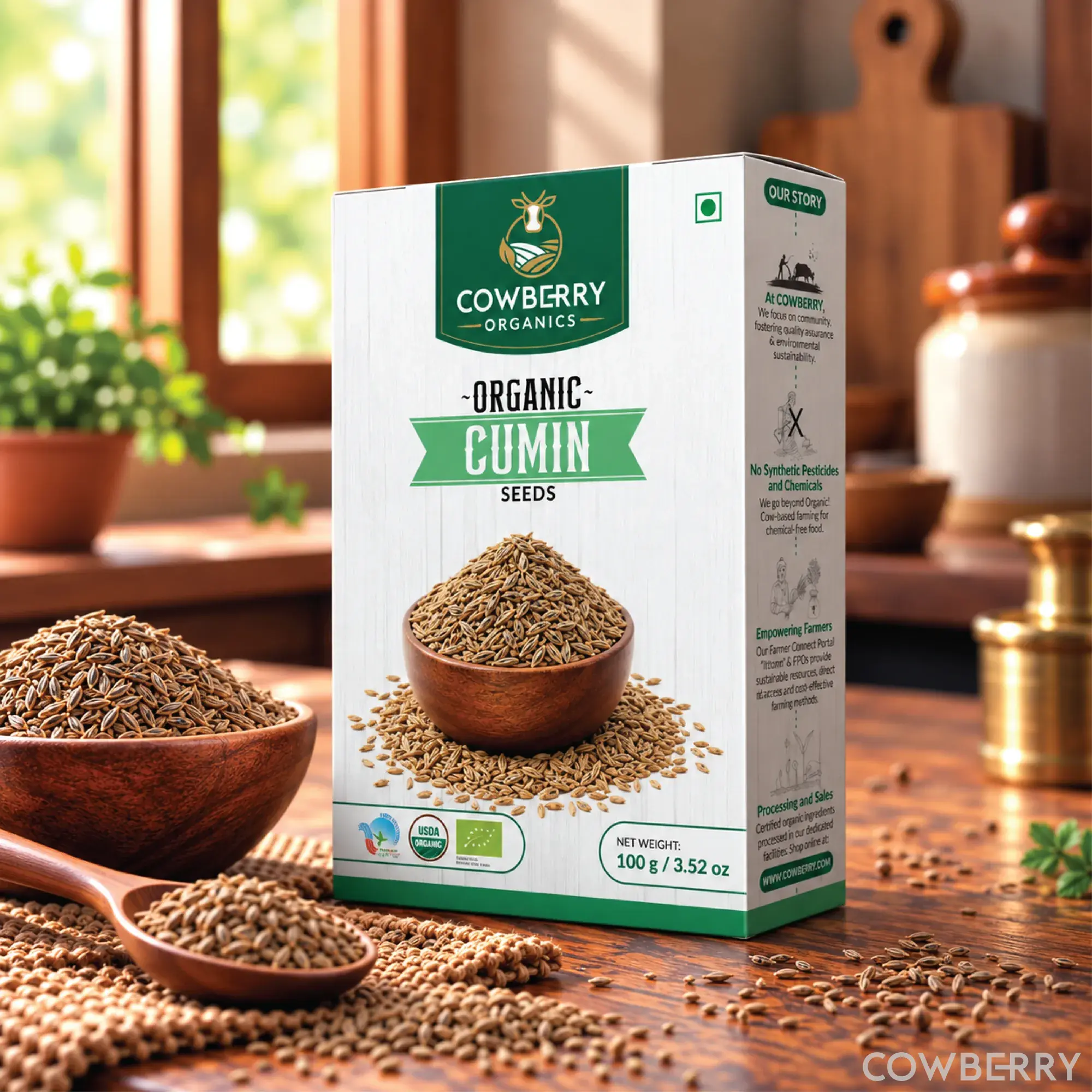
How to store cumin seeds: keep them whole, in a sealed glass or steel jar, in a cool dry cupboard away from the stove, and take them out with a dry spoon. Stored that way, whole seeds stay good for months, while powder fades within weeks of grinding. The seed's names, nutrition and uses are on the cumin seeds guide.
Short answer: the cumin seeds storage rules
Three things ruin jeera: air, moisture and heat, and the storage rules are built against all three. Keep the seeds whole, and buy them whole — grinding is what starts the clock on powder. Move them into a clean, dry, airtight jar of glass or steel, not the opened pack, stand the jar in a cool, dry cupboard far from the stove and the window, and close it straight after every use, with a dry spoon. Nothing more is needed: no fridge, no freezer, no rinsing.
Cumin seeds are 16.64 g of fat per 100 g (IFCT 2017), and that fat carries the aroma oils the seed is loved for; exposed to air and warmth, those oils fade first, taking the smoky smell with them. A sealed jar slows exactly that, and the same rule keeps the powder's pack fresh.
Whole seeds vs powder: how long each keeps
IFCT 2017 prints no shelf-life figure for cumin, so this page gives none. The kitchen rule is simple and holds across brands: whole seeds, sealed and dry, stay good for months, often for a whole season of cooking, while powder fades within weeks once the seed is ground, because grinding spreads the oils across a far larger surface for the air to reach. That is why whole jeera smells stronger than a jar of powder of the same age, and why the cumin seeds tea and jeera water pages start with seeds.
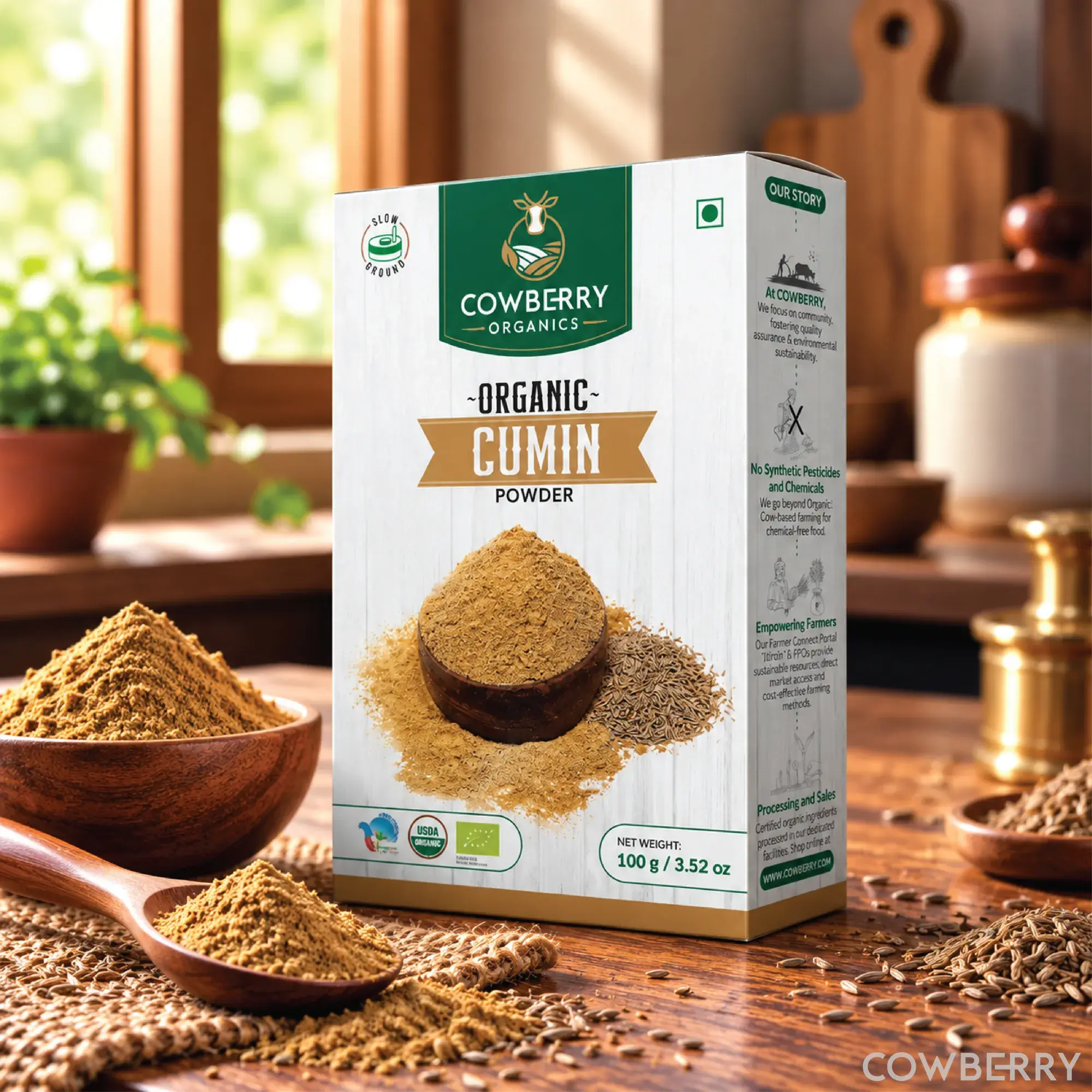
Handle powder like a fresh ingredient: buy the pack size you will finish soon, and top it up rather than hoarding. If you grind your own, grind small lots. COWBERRY's cumin powder is slowly ground from whole Rajasthan and Gujarat jeera, and it answers to the same rule: sealed jar, cool dry place, dry spoon.
The jar, the place and the spoon: step by step
- Choose the jar. A clean, dry, airtight jar of glass or steel with a tight lid; the pack's own bag, once opened, is not airtight enough for months.
- Choose the place. A cool, dry cupboard or shelf, away from the stove, the kettle and direct sunlight; the masala shelf right above the hob is the worst spot.
- Fill and close. Tip the seeds in, close the lid fully, and write the month of opening on the jar if you like.
- Use a dry spoon. Steam from a cooking pot, or a wet spoon, carries moisture into the jar; keep the jar's spoon dry and its lid closed between uses.
- Don't mix old and new. Finish a jar before refilling it; a spoonful of old, flat seeds dulls the fresh batch.
When to discard stale jeera
Jeera past its best announces itself in the smell and the taste, because aroma and flavour are the whole point of the spice. Rub a few seeds hard between your palms, then smell: no aroma, or a dusty, flat one, means the oils are gone. Taste one seed; if it is woody and dull rather than pungent, the jar is done. Greyish, faded colour is the same verdict. Any sign of insects, webbing or moisture clumps means the jar goes straight out — do not pick around it.
Discard the stale batch and buy fresh; one fresh pack of whole seeds outlasts the powder and saves the dish. For a pantry that survives the whole season, whole seeds stored as above are the answer.
Where it does not belong: the fridge, the freezer and the stove shelf
The fridge is not needed for dry seeds and can do harm: every open-and-close of a cold jar on a warm kitchen day beads moisture inside, and moisture is what jeera must never meet. The freezer holds no advantage for a spice you reach for daily. The shelf directly above the stove is the other extreme, where every pot steams into the jar. The plain cupboard wins on all counts, and that is where the cumin seeds guide's other staples belong too.
Stored this way, the seeds stay ready for the whole range of their uses: crackled in ghee for jeera aloo and jeera rice, steeped for jeera water, or dry-roasted for the tea.
Storage cheat table
One glance, before the jar goes on the shelf.
| Where and how | What to expect |
|---|---|
| Whole seeds, airtight jar, cool dry cupboard | Stays good for months (no shelf-life figure is printed) |
| Powder, airtight jar, same cupboard | Fades within weeks of grinding; buy small packs |
| Near the stove or the window | Shortest life of all; move the jar |
| In the fridge or freezer | Not needed; condensation risk |
| Discard when | No aroma when rubbed, flat taste, dull colour, insects, webbing or moisture clumps |
One sentence to take away: airtight, cool, dry, whole — and the seeds will still crackle in the tadka months from now.
FAQs
How to store cumin seeds for long time?
Whole seeds, in a sealed glass or steel jar, in a cool dry cupboard away from the stove, with a dry spoon every time. That is the whole method, and it carries whole jeera through months of cooking. No fridge or freezer is needed. Keep the jar closed between uses, and the seeds keep their smoky smell far longer than any open pack.
How long does cumin last?
IFCT 2017 prints no expiry figure for jeera, so this page gives none. As a working rule, whole seeds in a sealed jar stay good for months, and ground cumin fades within weeks of grinding because the air reaches its oils. Judge the jar by smell and taste: no aroma when rubbed, or a flat taste, means it is time to buy fresh.
Can I store cumin seeds in the fridge?
You can, but there is no reason to. Every open-and-close of a cold jar on a warm kitchen day can bead moisture inside the jar, and moisture shortens the seeds' life. A cool dry cupboard does the job without the condensation. Only in a truly damp, hot kitchen is a tightly sealed fridge jar the fallback, and even then it is second best.
Is cumin powder's storage different from the seeds'?
Only in how fast it fades. The jar, the place and the dry spoon are identical for powder and seeds. The difference is the clock: powder loses its punch within weeks of grinding, so buy or grind the amounts you will finish quickly, and never pour old powder into a fresh jar.
How do I know jeera has gone stale?
Smell it first: rub a few seeds between your palms, and if no aroma rises, the oils have faded. A flat or dusty taste and a dull greyish colour confirm it. Insects, webbing or moisture clumps in the jar mean throw the batch out without picking around. Stale jeera will not carry a dish; fresh whole seeds will.
Why do whole cumin seeds last longer than powder?
Because the seed is its own package. The aroma oils sit inside the whole seed, protected; grinding breaks that shell and spreads the oils over a large surface where air and warmth reach them. That is why the seed's fat (16.64 g per 100 g, IFCT 2017) keeps its smoky smell for months, and powder of the same age smells faint.
References
Shop this article
Keep reading
Coriander water benefits: what dhania water actually does
Peanuts in Hindi (moongfali): groundnut names in Indian languages
Coriander vs cilantro: are they the same herb?