by COWBERRY

6 minute read
How to grow dhania (coriander) at home from seeds

Here is how to grow dhania at home from seeds: split the round dhania seeds lightly, sow them about a centimetre deep in a pot of loose soil, keep the soil damp and the pot in part sun, and the first leaves are ready to cut in about three to four weeks. The coriander seeds hub has the spice's names and cooking; this page is the balcony-to-kitchen method.
Short answer: how to grow dhania at home
The whole method fits in one paragraph. Start with whole dhania seeds from a fresh pack. Rub or lightly crush them to split the husk, fill a wide pot that has a drainage hole with loose potting mix, press the seeds about 1 cm deep, and water gently. Keep the soil damp, not soggy, and give the pot morning sun or bright shade. In about seven to ten days the seedlings come up, and three to four weeks after sowing you can cut the first leaves. Dhania kaise ugaye comes down to those three needs: loose soil, steady water, gentle sun.
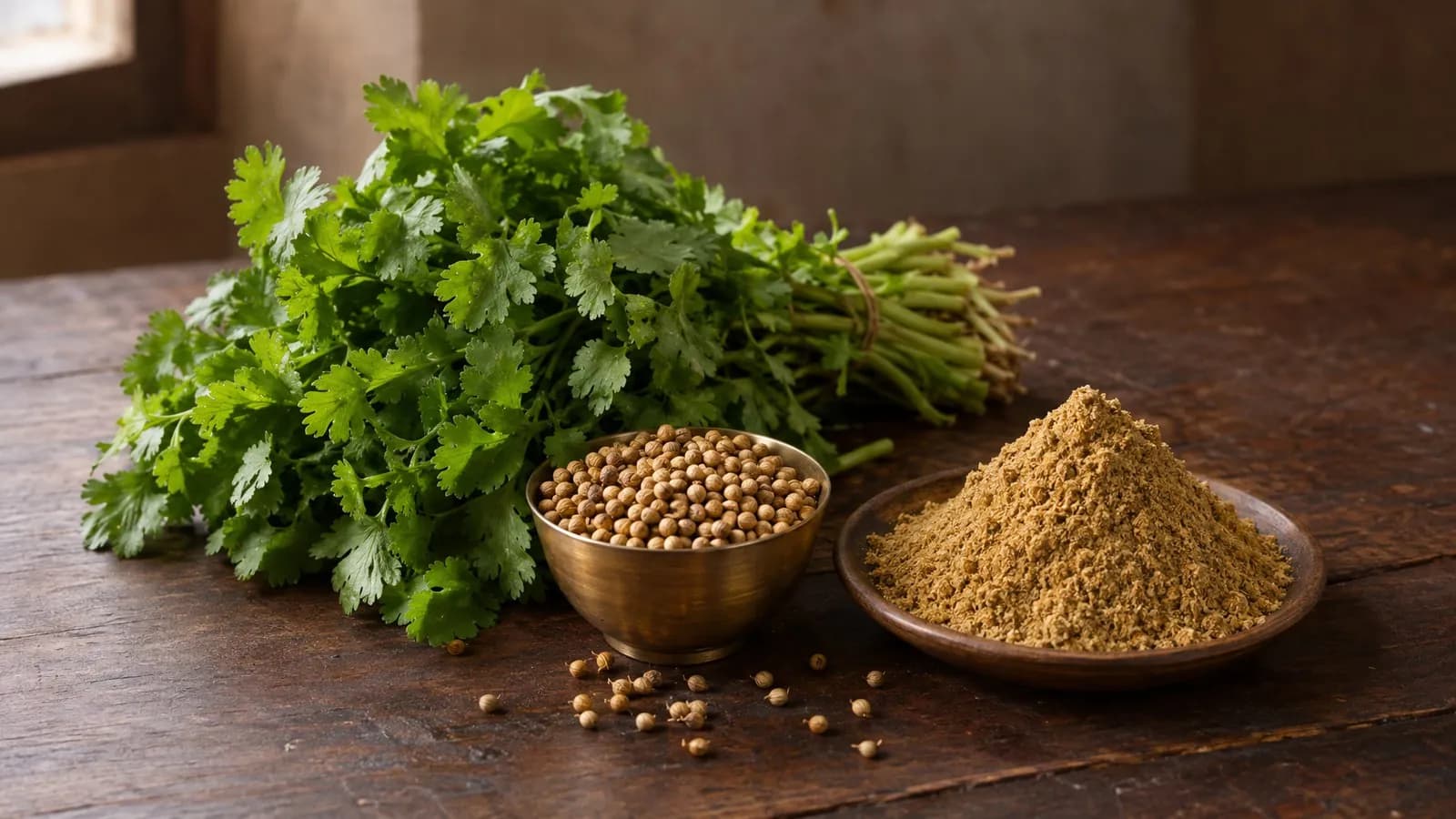
What you are growing is Coriandrum sativum, the plant whose seeds sit in most Indian spice racks. A 2015 review in Fitoterapia places it in the Apiaceae family, and IFCT 2017 lists coriander seeds among Indian foods. The fresh leaves and the seeds come from this same plant.
How to plant dhania seeds: pot, soil and depth
The steps, in order:
- Pick seeds that sprout. Use whole dhania seeds from a fresh packet; stale seeds germinate poorly. One teaspoon of seeds sows one wide pot.
- Split the husk. Rub a handful between your palms or press with a rolling pin until some split open; water then gets in and sprouting is quicker.
- Fill the pot. A pot about 20 cm across and 20 cm deep, with a drainage hole, filled with loose potting mix or garden soil mixed with compost.
- Sow shallow. Scatter the seeds over the surface, press them about 1 cm deep and cover lightly. Sowing too deep is a common reason nothing comes up.
- Water gently. Water right after sowing with a light shower, then keep the soil damp every day. Stop before water stands on the surface.
- Give gentle sun. Morning sun or bright shade suits coriander best; in hot weather keep the pot out of the strong afternoon sun.
- Thin the seedlings. Once the seedlings are a few centimetres tall, pull out the crowded ones so each plant has room to make wide leaves.
Water, sunlight and the coriander plant's needs
Watering, sunlight and soil decide whether the pot gives leaves or flowers. Coriander is shallow-rooted, so the top of the soil must never dry out while the plants are small; when the surface looks dry, water until it runs out of the drainage hole. A pot that sits in standing water rots the roots, and that shows up as yellowing leaves lower down.
Sun is the same bargain. In gentle morning sun the plant puts its energy into leaves; in strong heat it hurries to flower and set seed, after which the leaves thin out. A balcony that gets morning light is ideal, and in peak summer a bright but shaded spot keeps the pot leafy longer. The coriander plant wants steady, mild conditions, and each of the classic mistakes below is a break in one of those.
Common mistakes and the fix
The usual failures, with the fix for each:
- Nothing came up. The seeds were sown too deep, or the packet was old. Split fresh seeds and keep them about 1 cm deep.
- Seedlings came up and flopped. Usually a hot afternoon and dry soil; move the pot out of strong sun and water more often.
- Leaves turn yellow. Usually overwatering; let the top of the soil dry a little between waterings. Yellowing is also the normal look of a plant that has finished its life and is setting seed.
- The plant shot up thin and flowered early. Too much heat and not enough water; coriander rushes to seed under stress, so shade it and water steadily.
- The harvest never lasts. Coriander is a short-lived plant, and cutting all the leaves at once ends the pot. Harvest outer leaves only, and sow a fresh pot every two to three weeks so one pot is always at its best.
Time and quantity table for a balcony pot
The timings below are the ones home gardeners work to; they are method numbers, not scientific constants, and your pot will move a little on either side.
| Step | Time or quantity |
|---|---|
| Sowing depth | about 1 cm |
| Seedlings appear | about 7 to 10 days |
| First cut of leaves | about 3 to 4 weeks from sowing |
| Flowers and seed | from about 2 months |
| Watering | once a day; twice in hot weather |
| Sunlight | morning sun or bright shade |
| Fresh sowings | a new pot every 2 to 3 weeks |
After the harvest: cutting leaves and saving seeds
Start cutting when the plants are about 10 cm tall. Take the outer stems with scissors and leave the inner growing point, and the pot keeps producing for several more cuttings. Once flowers appear the leaves stop coming; let a few plants flower and dry on the stem, then rub the seeds off into a bowl. Those home-grown seeds go straight back into the kitchen: roast and grind them into sambar powder, or save them for the next pot. The fresh leaves are what a rasam finishes with, scattered on at the end. For everything else the seed does in Indian cooking, the coriander seeds hub is the map.
FAQs
How long does dhania take to grow?
Seed to first cut takes about three to four weeks in a warm spot, with seedlings up in seven to ten days. The plant keeps giving leaves for a few more weeks, then flowers and sets seed from about two months after sowing. Sowing a fresh pot every two to three weeks keeps the kitchen supply unbroken.
How long does dhania seeds take to germinate?
About seven to ten days, and faster when the soil stays warm and damp. Splitting the husk of each seed with a light rub or crush speeds this up, and soaking the split seeds in water overnight can cut a day or two. Old seeds are the usual reason a pot stays empty.
Does coriander plant need sunlight?
Yes, but gentle sun. Morning sun or bright shade grows the fullest leaves. Strong afternoon sun, especially in summer, pushes the plant to flower early and stop making leaves, so in hot months move the pot to a bright spot out of direct sun.
Why coriander leaves turn yellow?
Usually overwatering: coriander's shallow roots sit in soggy soil and the lower leaves yellow. Water only when the top of the soil feels dry, and keep the pot draining. Yellowing is also the normal end of a plant that has flowered and is setting seed.
Can coriander grow in water?
Not as a crop. Coriander grows in soil, and a cutting in a glass of water only stays fresh briefly. For a kitchen supply, sow seeds in a pot of loose soil, using the steps above. Once the leaves are cut, the how to store coriander page covers keeping them fresh.
How to grow coriander at home from coriander leaves?
You cannot grow a coriander plant from leaves; they do not root. Grow from seeds instead, and use the leaves in the kitchen the day you cut them. If a bought bunch still has roots attached, it can be planted shallowly in a pot and watered, though sowing seeds gives a steadier crop.
References
Shop this article
Keep reading
Coriander water benefits: what dhania water actually does
Peanuts in Hindi (moongfali): groundnut names in Indian languages
Coriander vs cilantro: are they the same herb?