by COWBERRY

7 minute read
Peanut oil uses: how to cook, fry and bake with groundnut oil

Peanut oil uses in an Indian kitchen span the first tempering of a dal to the last bhajia out of the kadhai: groundnut oil suits sauteing, shallow and deep frying, baking and raw dressings, and its product notes describe a high smoke point. Here is how to use each method, how much to pour and the common mistakes. The groundnut oil hub guide has the oil's names and nutrition.
Short answer
Groundnut oil is an all-round cooking fat: use it to temper dal, saute vegetables, shallow-fry cutlets, deep-fry bhajias, bake, and even use it raw in dressings, where its mild, nutty taste carries the lemon and salt. The product notes list a high smoke point and name frying, sauteing and deep frying among the uses the oil suits, though no smoke point temperature is printed for groundnut oil, so none is given. It remains 100 g of fat per 100 g at 884 kcal, so the method matters as much as the oil.
Cooking with peanut oil: the methods, step by step
Tadka (tempering)
Warm a teaspoon of oil in a small pan over medium heat, drop in the mustard or cumin seeds, and when they pop add the chillies, curry leaves and hing; pour the whole sizzling spoon over dal or sabzi. A teaspoon (5 g) is plenty for a family dal.
Sauteing vegetables
Coat the pan with a spoon of oil, add the vegetables once it shimmers and keep them moving over medium-high heat. The product notes call the oil ideal for sauteing vegetables because of its mild flavour and heat stability; a short saute keeps the crunch.
Shallow frying
Pour just enough oil to film the base of the pan, lay the food in with space between the pieces and flip it once, when the underside is golden. Thin pieces cook through quickly, so the second side needs less time than the first.
Deep frying
The product notes name deep frying among the uses a high smoke point suits. Heat the oil gradually in a heavy kadhai, fry in small batches so the temperature holds, and lift the food out with a slotted spoon. What happens to the oil afterwards is in the mistakes section: never a second fry.
Baking
Groundnut oil goes into cake, muffin and biscuit batters in place of the usual fat, and it greases tins without adding butter. Its mild, nutty note suits spiced bakes; spoon it in exactly as the recipe says.
Raw: dressings and chutneys
The product notes describe a mild, nutty flavour that works in salad dressings and cold preparations, so whisk a spoon of the oil with lemon juice, salt and a crushed green chilli over cucumber or sprouts, or finish a groundnut chutney with it.
How much groundnut oil to use
India's guidelines cap visible fat, the oils and fats you add while cooking, at 20 to 50 g per person a day, four to ten teaspoons depending on activity. A teaspoon (5 g) carries about 44 kcal and a tablespoon (15 g) about 133 kcal, so a tadka teaspoon, a shallow-fry tablespoon and a curry spoon add up fast. Measure from the spoon, not the bottle, and reserve deep frying for occasional meals: gram for gram, fat gives nine kcal, and the guidelines call the extra fat the food takes on the main drawback of frequent frying. The groundnut oil guide has the oil's names, nutrition and benefits.
Common mistakes with groundnut oil
- Reusing frying oil for a second fry. The guidelines say repeated heating generates harmful oxidative (polar) compounds, and a 2019 review associates repeatedly heated oils with polycyclic aromatic hydrocarbons, some of them reported as carcinogenic, and with higher risks of several cancers in the studies it collected. Their household rule is to filter oil used for frying, use it only for a curry and consume it in a day or two, never putting it through a second fry.
- Storing used oil for later. The same guidelines warn that the rate of deterioration is high in used oils, which is why the day-or-two window exists; if the leftover oil cannot finish a curry that quickly, do not store it for the next frying day.
- Heating the oil hard and long. Extended exposure of oil to high temperatures and air can generate highly oxidized, potentially toxic products, the guidelines note, so heat the pan gradually, add the food soon after, and lift the oil off the flame once the food is out.
- Keeping the bottle by the stove or in the light. The product advice for COWBERRY's oil is a cool, dark place away from direct sunlight, and the guidelines tell buyers to follow the storage instructions printed on the pack.
- Pouring straight from the bottle. Free pouring overshoots the visible-fat allowance quietly; spoon it, and count the spoon.
Time and quantity table
The table collects the numbers and rules this page uses; where the sources print no figure, the cell says so.
| Task | Amount or rule |
|---|---|
| Tadka for a dal or sabzi | About a teaspoon (5 g) per dish |
| Sauteing vegetables | A teaspoon to a tablespoon, enough to coat the pan |
| Shallow frying | A thin film of oil; flip the food once |
| Deep frying | Occasional; never reuse the oil for a second fry |
| Daily ceiling | 20 to 50 g of visible fat, four to ten teaspoons per person |
| Energy per spoon | A teaspoon (5 g) about 44 kcal; a tablespoon (15 g) about 133 kcal |
| Used frying oil | Filter, use only in a curry, consume in a day or two |
| Storing used oil longer | Avoid; the rate of deterioration is high in used oils |
| Smoke point | No temperature printed; the product notes describe it as high |
| Storage | Cool, dark place, away from direct sunlight |
The frying rules repeat because they are the ones that matter: the oil itself suits high heat, and what limits a second fry is what repeated heating does to any oil, not what groundnut oil lacks.
FAQs
Can groundnut oil be used for deep frying?
Yes. The product notes list a high smoke point and name deep frying among the uses the oil suits, although no smoke point temperature is printed for the oil, so none is given. What matters after the fry: the dietary guidelines' household rule is to filter oil used for frying, use it only for a curry and consume it in a day or two, never putting it through a second fry.
Can groundnut oil be used for baking?
Yes. Its mild, nutty taste works in cakes, muffins and biscuits in place of the usual fat. Measure it as you would any baking fat, spoon for spoon, and remember it is still 100 g of fat per 100 g at 884 kcal, so the recipe's amount is the amount.
How to use groundnut oil for cooking?
Begin with what the dish needs: a teaspoon for a tadka, a coat of the pan for sauteing or shallow frying, enough to submerge for a rare deep fry, and a whisk into dressings, where its nutty flavour carries the lemon and salt. Heat it gradually, keep the day's total inside 20 to 50 g of visible fat, and never fry in oil that has already been fried in.
What is the smoke point of groundnut oil?
No smoke point temperature is printed for groundnut oil in IFCT 2017, the USDA record or the product notes, so this page gives none. The product notes describe the oil's smoke point as high and list frying, sauteing and deep frying among the uses that suit it. In practice, heat matters more: the guidelines say repeated heating generates harmful oxidative (polar) compounds and must be avoided, so heat gradually and never let the oil sit smoking on the flame.
Is peanut oil good for health?
For cooking, the answer is yes in measured amounts: the guidelines put sauteing, steaming, grilling, boiling and baking ahead of frying, and the oil's product notes list a high smoke point that makes it workable across those methods. It is still pure fat at 884 kcal per 100 g, so the health reading comes from how much you use and how often you fry. The fuller case is on the is peanut oil good for health page.
References
- Indian Food Composition Tables (IFCT) 2017, ICMR-National Institute of Nutrition
- Dietary Guidelines for Indians, ICMR-National Institute of Nutrition
- Ganesan K, Sukalingam K, Xu B. Impact of consumption of repeatedly heated cooking oils on the incidence of various cancers- A critical review. Crit Rev Food Sci Nutr, 2019
- USDA FoodData Central (SR Legacy): Oil, peanut, salad or cooking, FDC ID 171410
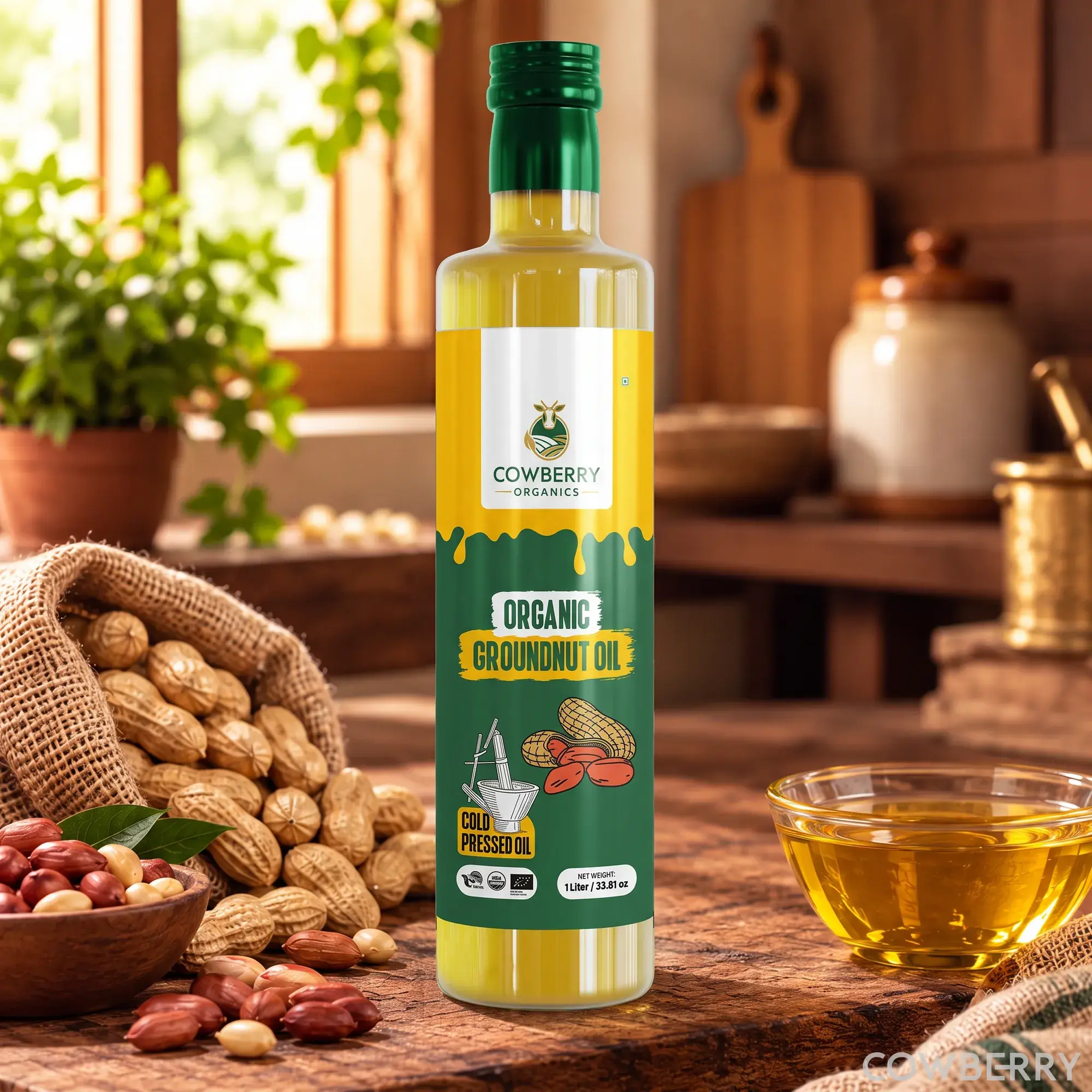
Shop this article
Keep reading
Cold pressed oil benefits: why they survive processing better
Mustard oil vs refined oil: nutrition, cooking and which to choose
Mustard oil omega 3: nutrition, calories and fat per 100g