by COWBERRY

7 minute read
Brown Sugar Substitute: What to Use When You Have None

The most useful brown sugar substitute in an Indian kitchen is jaggery powder, teaspoon for teaspoon; plain white sugar with a little jaggery works too, and honey suits drinks. Each swap below gives the ratio, what changes in the dish, and the calories you save or spend. The food itself, brown sugar, gets a page of its own.
Why jaggery powder is the natural first choice
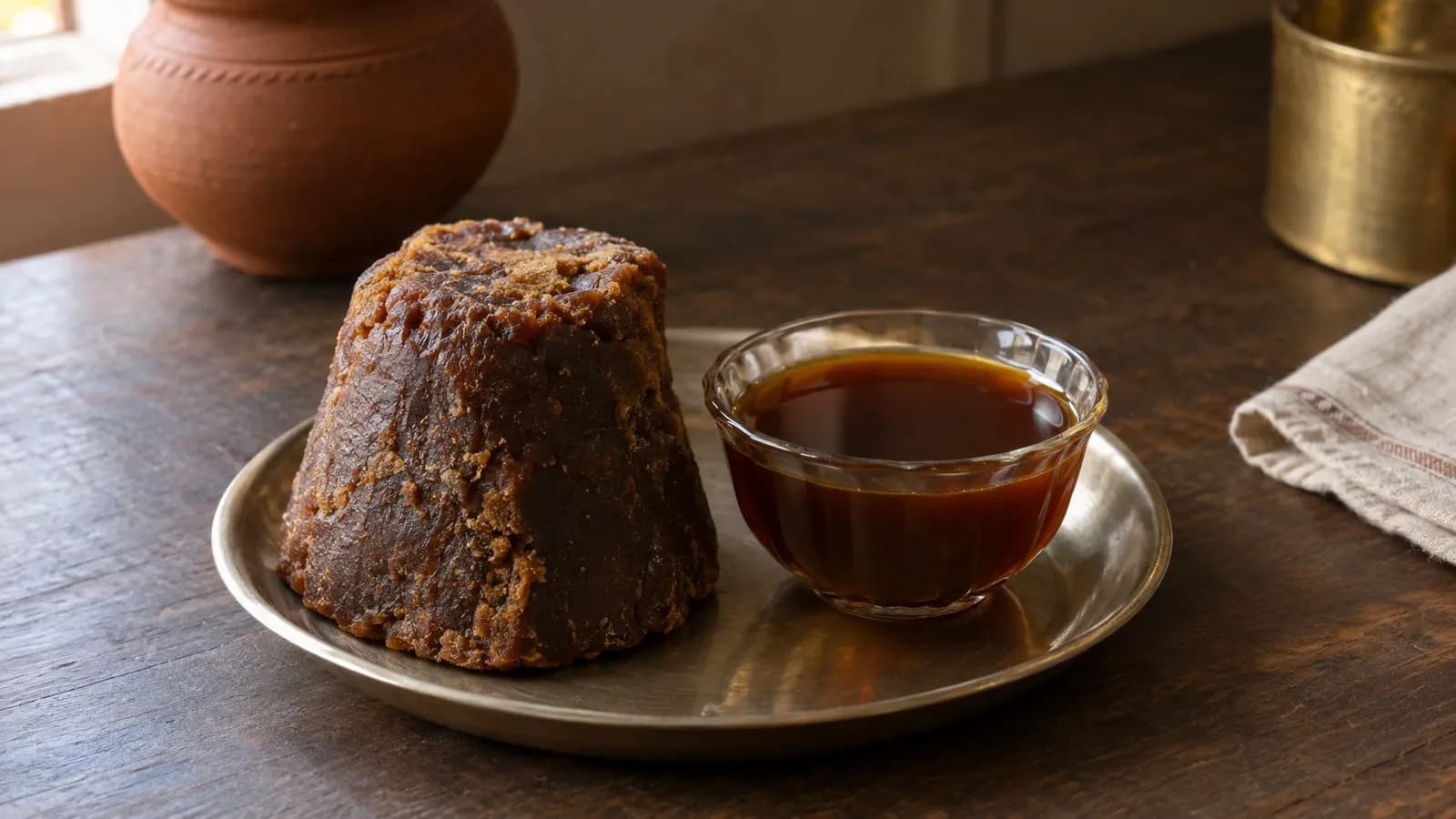
Brown sugar is white sugar with some of the cane's molasses left in, and that molasses carries its colour and caramel taste. Jaggery is the whole cane concentrate, so it brings the same deep caramel sweetness from the same plant, and jaggery powder measures much like sugar; this page takes a level teaspoon of either as 5 g. That makes the swap simple, the same number of teaspoons or the same gram weight.
A 2022 review in Sugar Tech describes jaggery as a substitute for white sugar, pointing to its minerals such as calcium, phosphorus and iron. Per 100 g, jaggery gives 354 kcal against brown sugar's 380 kcal, with 4.63 mg of iron where brown sugar has 0.71 mg. The catch, for anyone counting, is that jaggery is still 84.87 g of carbohydrate per 100 g: the swap changes the sweetener, not the day's sugar total.
Brown sugar substitute jaggery: how to use it dish by dish
Chai: stir in one level teaspoon of jaggery powder per cup and taste; it dissolves in hot tea the way brown sugar does, with the same caramel note. The brown sugar tea recipe shows the brown-sugar version.
Kheer and phirni: stir jaggery powder in off the heat, once the milk has cooked, so it melts without making the milk grainy.
Cookies and cakes: use the same weight of jaggery powder as brown sugar; jaggery powder is dry like sugar, so cream it into the butter exactly as the recipe creams sugar.
Sweets and halwa: gud-based halwas already use jaggery, so the swap is the recipe's own tradition; where a recipe asks for brown sugar, the same weight of jaggery powder stands in directly.
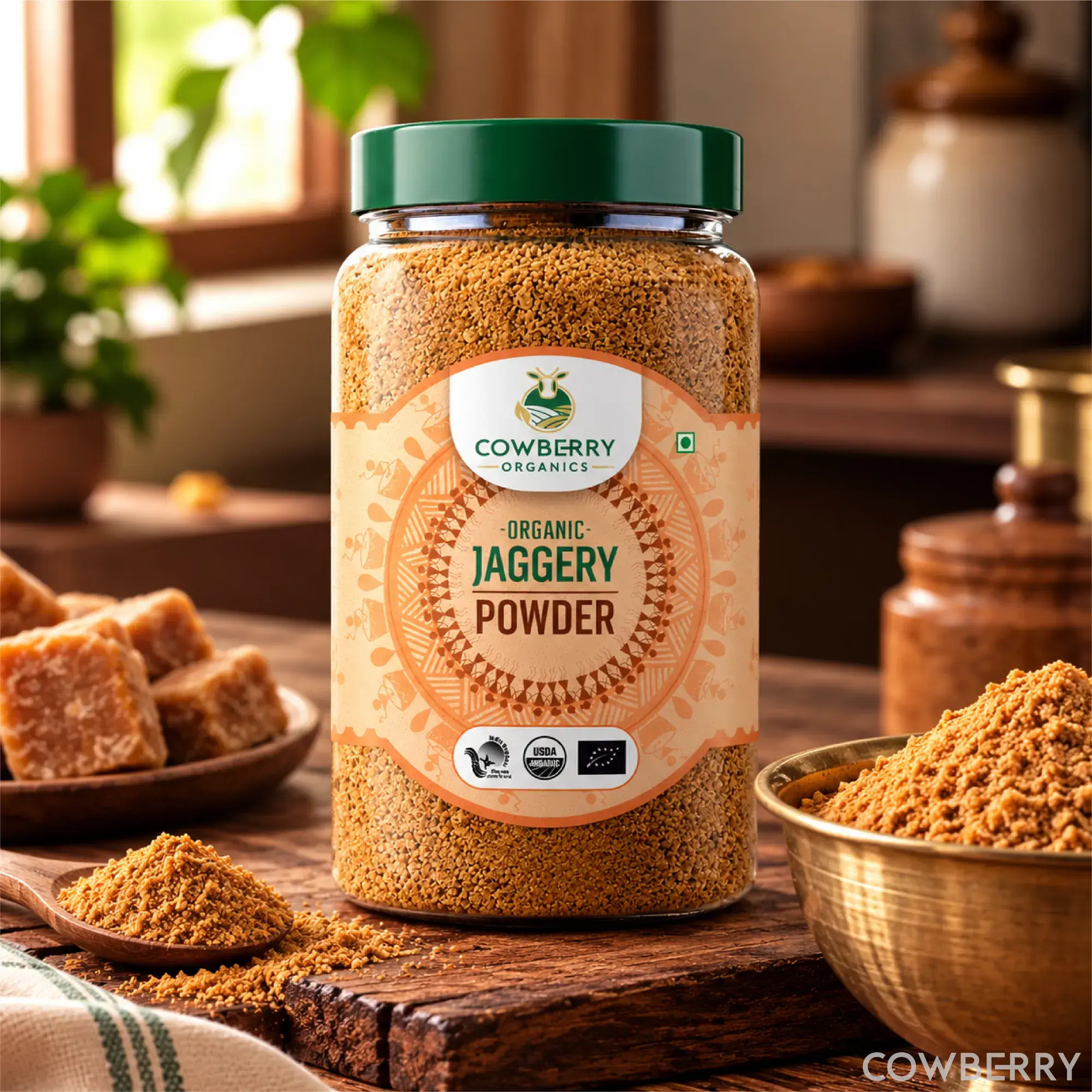
COWBERRY's organic jaggery powder is milled fine for exactly this job, made from organically grown Kolhapur cane, cooked slow and milled without chemical clarifying agents.
White sugar with a little jaggery: the demerara sugar substitute
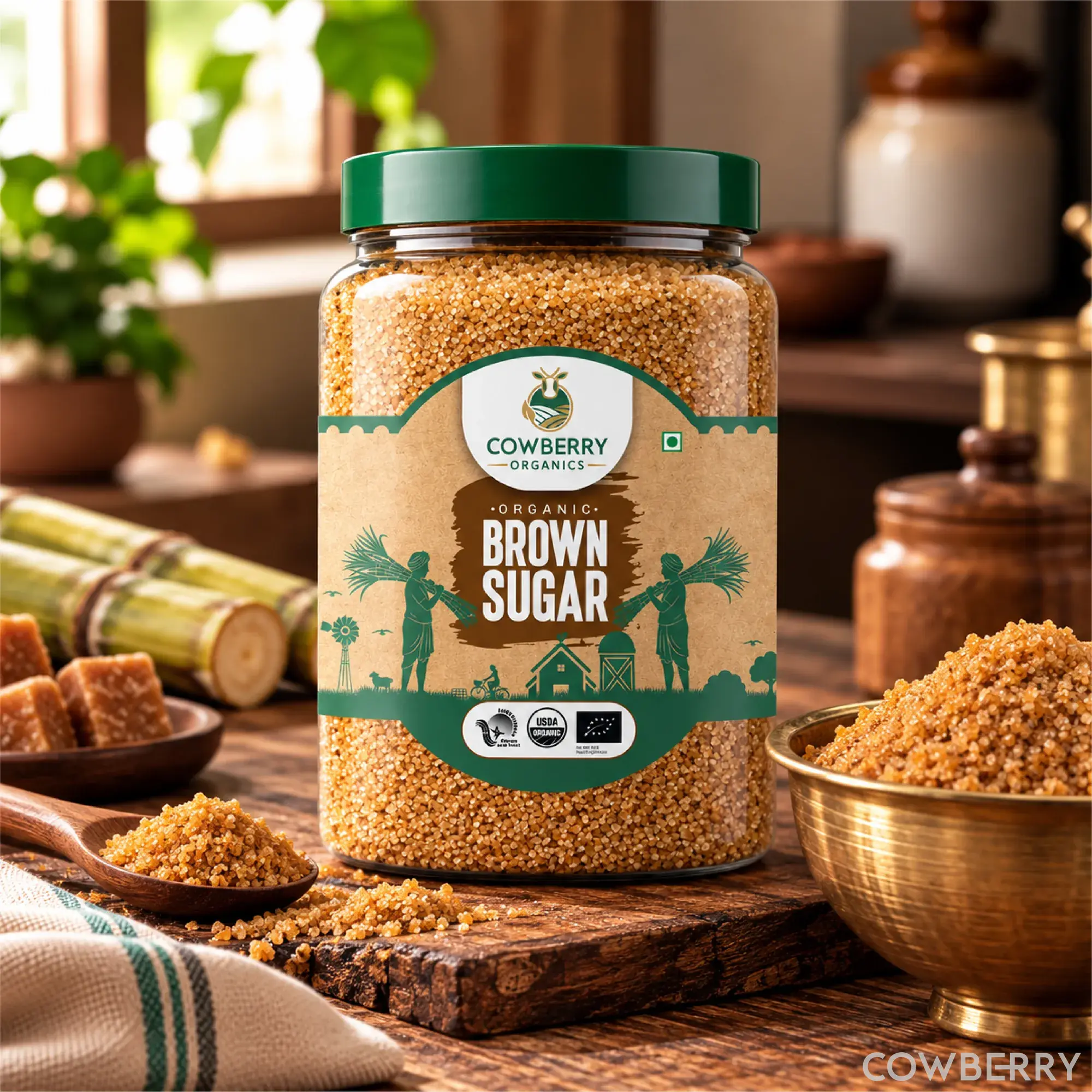
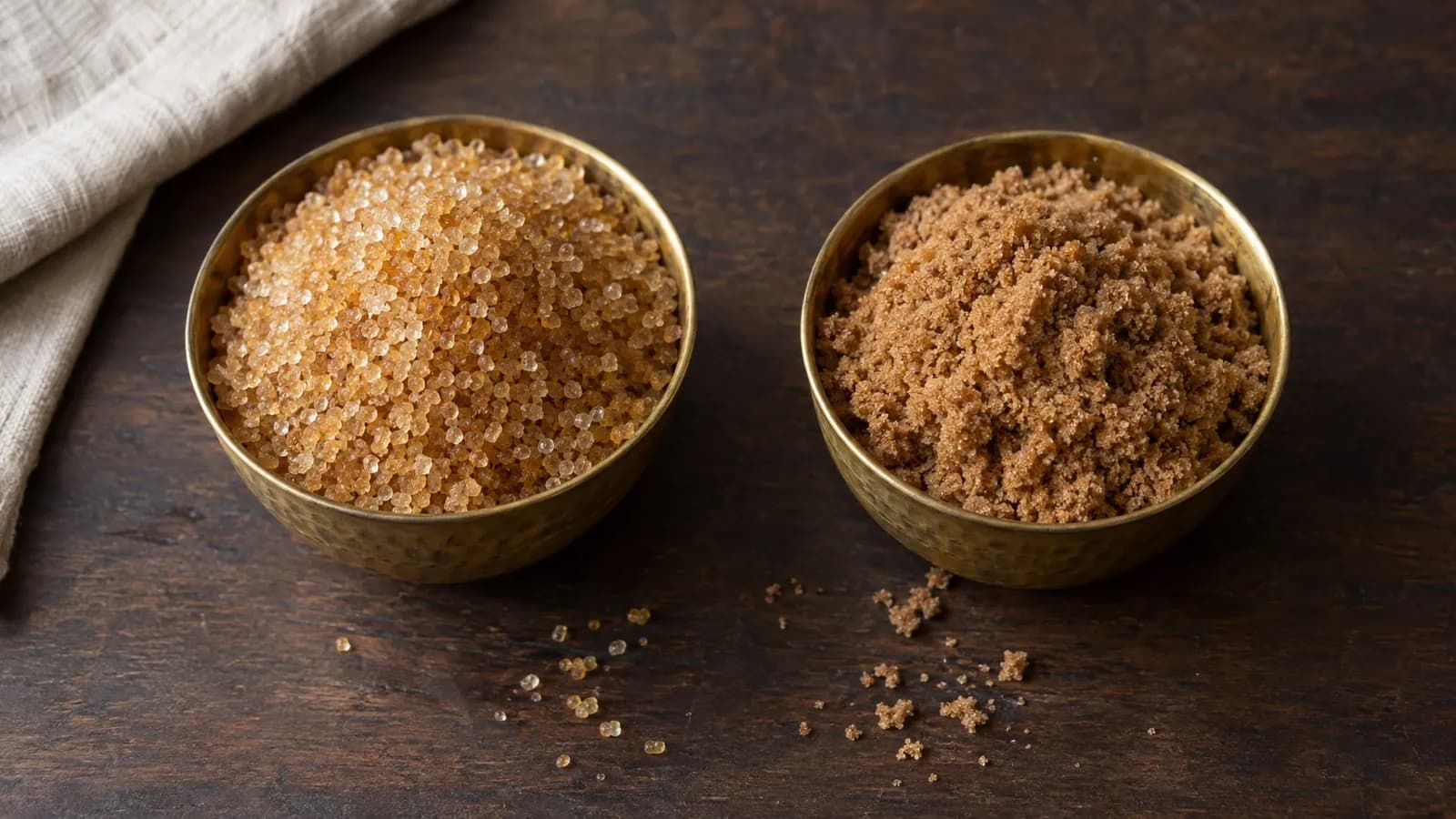
If the pantry holds white sugar but no jaggery powder, build the substitute: as a rule of thumb, for every 100 g of white sugar stir in 10 to 15 g of jaggery powder, and you have a light brown sugar stand-in with a faint caramel taste. This is also the answer when a recipe wants a demerara sugar substitute but you keep only plain sugar: demerara is brown sugar with coarse golden crystals, so white sugar plus a little jaggery covers both the sweetness and the colour.
For baking that calls for packed brown sugar, expect the baked goods a shade drier and paler than usual, since white sugar carries none of the molasses moisture; the jaggery powder replaces the flavour but not all the softness.
Honey as a brown sugar substitute in drinks
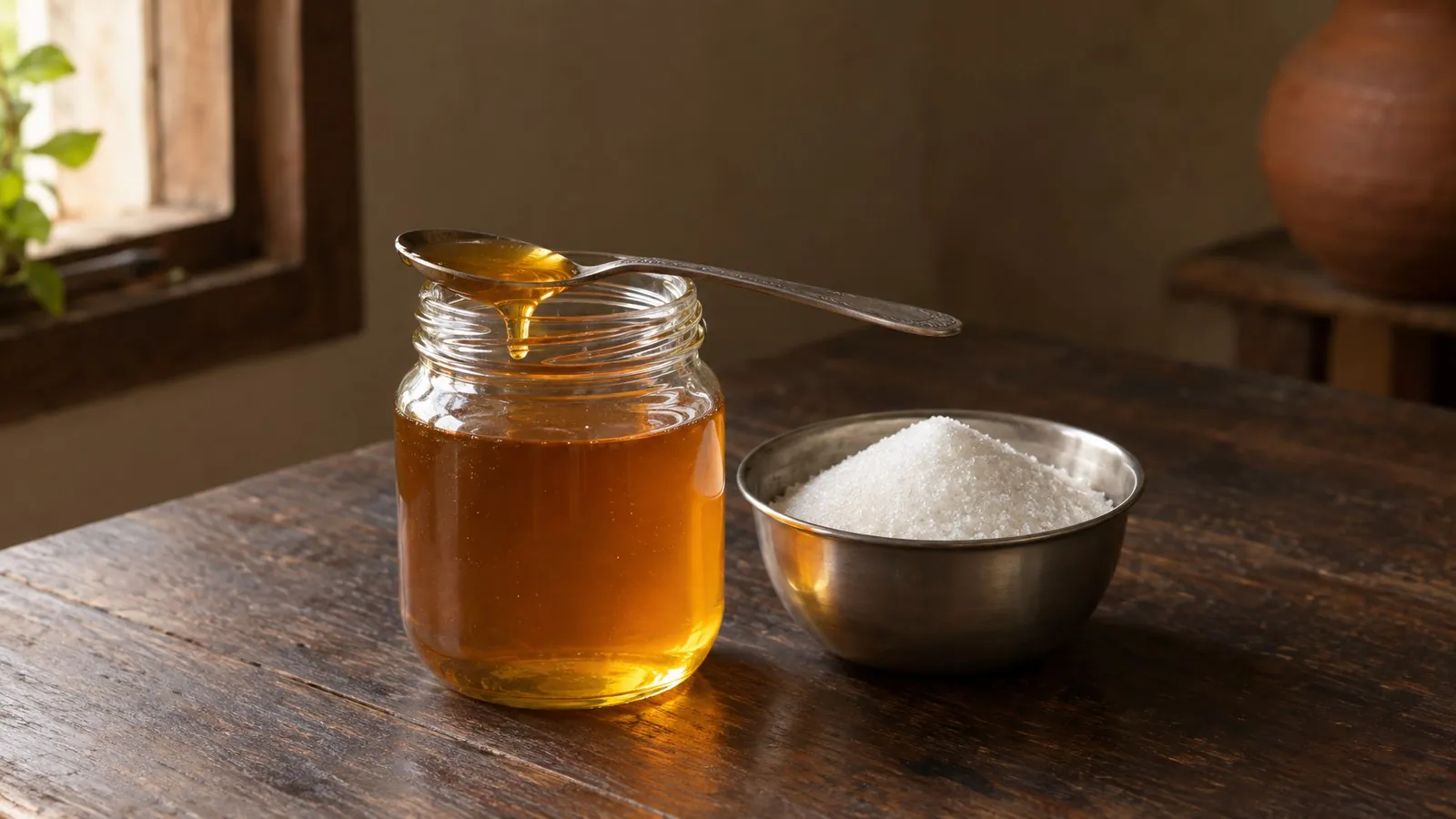
In tea, coffee, warm milk or lemon water, honey is the easiest liquid swap: one teaspoon of honey (7 g) sweetens a cup where a teaspoon of brown sugar would. Honey brings 304 kcal per 100 g against brown sugar's 380 kcal, but the teaspoon is heavier, so the cup gets about 21 kcal of honey versus 19 kcal of brown sugar, nearly a wash. Taste is the real difference: honey's floral notes ride on top of chai spices, where brown sugar's caramel sits behind them.
In baking, honey is the harder swap. It is liquid and brings its own flavour, so use a little less than the sugar weight the recipe names, cut back other liquids slightly, and expect a softer, honey-scented bake; for cookies that should snap, stick to jaggery powder.
Swap table: what to use when the recipe says brown sugar
One table for the shelf, with the measures each swap takes:
| Recipe calls for | Use | Measure |
|---|---|---|
| Brown sugar in chai or coffee | Jaggery powder, or honey | 1 tsp per cup (jaggery powder 5 g, honey 7 g), stirred in hot |
| Brown sugar in cookies and cakes | Jaggery powder | Same gram weight; 1 tsp = 5 g |
| Light brown sugar | White sugar plus jaggery powder | 100 g white sugar to 10 to 15 g jaggery powder |
| Brown sugar for simple syrup | Jaggery powder | Same weight as the sugar, simmered with an equal volume of water, then strained |
| Brown sugar in kheer or halwa | Jaggery powder | Stirred in off the heat, to taste |
What the swap changes, and what it never does
Across the four sweeteners, energy per 100 g reads 354 kcal (jaggery), 380 kcal (brown sugar), 387 kcal (white sugar) and 304 kcal (honey). Per teaspoon the differences are pennies: 17.7 kcal for jaggery powder, 19 kcal for brown sugar, 19.4 kcal for white sugar, and 21 kcal for honey at its heavier 7 g spoon. The swap is about flavour, colour and texture, not about eating less sugar.
That last point is the one the guidelines insist on. ICMR-NIN counts jaggery and honey as added sugars alongside table sugar, and WHO's free-sugar recommendation, below 10% of energy with a suggested 5%, includes honey and syrups by definition. Swapping brown sugar for jaggery or honey does not move the day's sugar total; it only moves the taste. A 2012 meta-analysis found that, in adults eating freely, eating less sugar was associated with lower body weight and more sugar with higher; swapping sugars for other carbohydrates at the same calories showed no change in weight.
| Nutrient | Brown sugar (USDA) | White sugar (USDA) | Jaggery (IFCT 2017) |
|---|---|---|---|
| Energy (kcal) | 380 | 387 | 354 |
| Protein (g) | 0.1 | 0 | 1.9 |
| Fat (g) | 0 | 0 | 0.2 |
| Carbohydrates (g) | 98 | 100 | 85 |
| Dietary fibre (g) | 0 | 0 | — |
| Iron (mg) | 0.7 | 0.1 | 4.6 |
| Calcium (mg) | 83 | 1 | 107 |
| Magnesium (mg) | 9 | 0 | 115 |
| Potassium (mg) | 133 | 2 | 488 |
| Sodium (mg) | 28 | 1 | 25 |
| Zinc (mg) | 0 | 0 | 0.5 |
| Folate (mcg) | 1 | 0 | 14 |
| Vitamin C (mg) | 0 | 0 | — |
| Glycemic index (GI) | 71 | 70 | — |
Per 100 g raw, edible portion. Composition: USDA FoodData Central (SR Legacy), FDC ID 168833, NDB 19334; USDA FoodData Central (SR Legacy), FDC ID 169655, NDB 19335; IFCT 2017 (ICMR-NIN). GI: University of Sydney GI database. — means not reported. These are average values for the food; the label on a pack gives the values for that product.
FAQs
Can brown sugar be substituted with jaggery?
Yes, and it is the closest match. Use the same measure, a level teaspoon of jaggery powder for a teaspoon of brown sugar, both taken as 5 g. The flavour lands close, caramel for caramel, and jaggery shows more iron per 100 g in the tables above; it stays sugar, so the swap barely moves the calories.
Can demerara sugar replace light brown sugar?
Yes. Demerara is brown sugar with large golden crystals, so it stands in for light brown sugar measure for measure; the main difference in the bake is a little more crunch from the coarser grains. If the recipe creams the sugar into butter, give it an extra minute to break down.
Can demerara sugar replace caster sugar?
Mostly. Caster sugar is fine white sugar, so demerara brings molasses colour and caramel notes where caster brings none, and its larger crystals take longer to dissolve in a whisked batter. For plain sponges, caster is the cleaner choice; for biscuits and crumbles, demerara's caramel suits them.
Can demerara sugar be used instead of muscovado?
Yes, the same weight works. Muscovado is usually a dark brown sugar, so swapping in demerara gives a paler, milder result; if the dish depends on a deep molasses taste, add a little jaggery powder to the demerara first.
What is brown sugar?
Brown sugar is plain sugar with some of the cane's molasses kept in, and that molasses gives the brown colour, the moist texture and the caramel flavour; demerara is one kind. Its numbers are 380 kcal and 98.1 g of carbohydrate per 100 g. Substitutes stand in for the sweetness and the caramel, not for anything else.
Can I use honey instead of brown sugar in baking?
It will work, with two adjustments. Honey weighs about 7 g a teaspoon and is liquid, so use a little less than the recipe's sugar weight and cut the other liquids slightly. The bake comes out softer and honey-flavoured; for cookies that should snap, stick to jaggery powder.
References
- Indian Food Composition Tables (IFCT) 2017, ICMR-National Institute of Nutrition
- Dietary Guidelines for Indians, ICMR-National Institute of Nutrition
- Rao GP, Singh P. Value addition and fortification in non-centrifugal sugar (jaggery): a potential source of functional and nutraceutical foods. Sugar Tech, 2022
- WHO guideline: sugars intake for adults and children (2015)
- USDA FoodData Central (SR Legacy): Sugars, granulated, FDC ID 169655
- USDA FoodData Central (SR Legacy): Sugars, brown, FDC ID 168833
- USDA FoodData Central (SR Legacy): Honey, FDC ID 169640
- Te Morenga L, Mallard S, Mann J. Dietary sugars and body weight: systematic review and meta-analyses of randomised controlled trials and cohort studies. BMJ, 2012
Shop this article
Keep reading
Raw Sugar vs Brown Sugar: Is Demerara the Same Thing?
Does honey contain sugar? Carbs per 100g and the WHO sugar limit
Date Jaggery (Khejur Gur in English): Types, Forms and How to Use It