by COWBERRY

7 minute read
Curry leaves powder how to make: dry, roast and grind kadi patta

Curry leaves powder, how to make it at home: wash and dry the leaves completely, roast them in a dry pan until crisp, cool them, grind to a fine powder and keep the jar airtight. The powder goes a pinch at a time over rice, dal, chutneys and buttermilk, and keeps in a sealed jar. The curry leaves hub covers the leaf itself; the steps are below.
Short answer
Dry, roast, grind. Drying takes the water out of the leaf; roasting gives the powder its toasted aroma and makes the leaves brittle enough to grind; grinding turns them into a sprinkle that disappears into the dish. Fresh leaves wilt and darken within days, which is why the powder exists: it is the no-fridge way to keep curry leaves. If you want to keep the leaves whole instead, the fridge and freezer methods are on how to store kadi patta for long time.
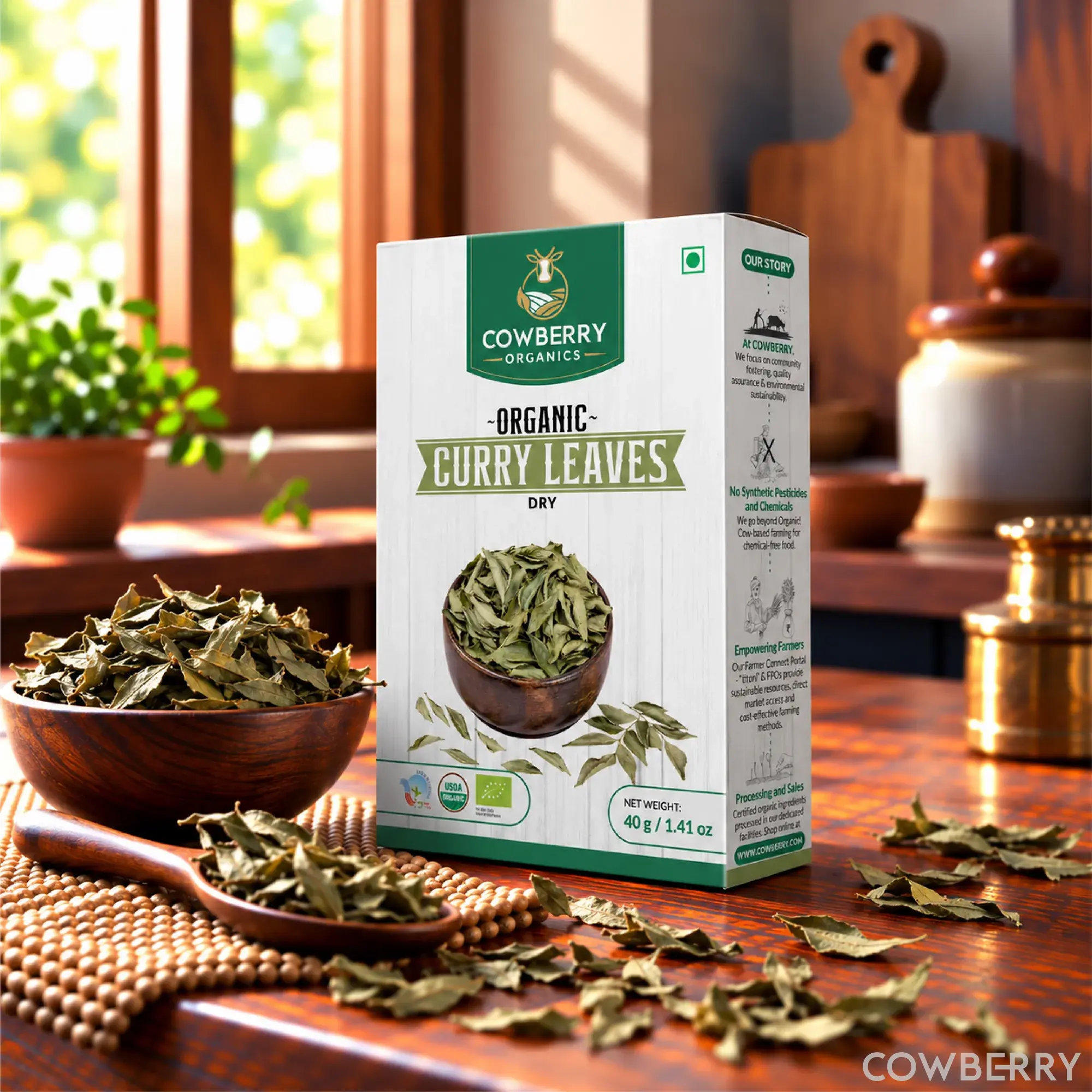
The finished powder keeps in a sealed glass jar in a cool, dry spot away from damp and sunlight, the same storage advice COWBERRY prints for its dried curry leaves, and it needs no refrigeration. One big bunch of leaves shrinks to a small jar that seasons many meals.
Step by step: curry leaves powder recipe
- Pick the leaves. Choose bright green leaves and strip them from the stems. Set aside any yellow, brown or spotted leaves; they roast bitter and dull the powder.
- Wash and dry completely. Rinse in a colander, shake off the water and spread the leaves in one layer over a clean kitchen towel in a shaded, airy corner for a few hours. Any water left on the leaf will steam during the roast instead of crisping it.
- Roast in a dry pan. Use a wide pan on a low flame and add the leaves in a single layer. Stir continuously for 3 to 5 minutes until they turn a shade darker and feel crisp; a leaf pressed between your fingers should crumble.
- Cool completely. Spread the roasted leaves on a plate for 10 minutes. Warm leaves steam inside the grinder and the powder clumps.
- Grind. Use the dry jar of a mixer grinder and pulse in short bursts, a minute or two in all, until the powder is fine. Stop if the jar feels warm, and let it cool before the next burst.
- Sieve, if you like. For a very fine powder, pass it through a sieve and grind the bits that stay behind once more.
- Store airtight. Fill a clean, dry glass jar, close it tight and keep it in a cool, dry cupboard away from moisture and direct sunlight. Use a dry spoon every time.
Common mistakes (and the fix)
- Leaves not fully dry. The roast steams instead of crisping, and the powder clumps and can spoil. Spread the leaves thinner, wait longer, and start the pan only when they feel dry to the touch.
- Too high a flame. The leaves burn in seconds and the powder turns bitter and dark brown. Keep the flame low, stir without stopping, and pull the pan off at 3 to 5 minutes.
- Grinding warm leaves. Steam from the warm leaves makes the powder cake in the jar. Cool them for a full 10 minutes first.
- One crowded grind. A full jar grinds unevenly, with coarse flecks left under the blades. Grind in two small batches and pulse, rather than running the machine continuously.
- A wet spoon or an open jar. Moisture makes the powder cake and dulls its aroma. Keep the jar airtight, spoon the powder out dry, and if it ever smells musty, throw it out and make a fresh batch.
- Grinding with the stems. Stems leave hard, woody flecks in the powder. Strip the leaves from the stems before washing.
Time and quantity table
The timings below are for one big market bunch of fresh curry leaves in an ordinary Indian kitchen; a humid day stretches the drying step more than any other.
| Step | Time or quantity |
|---|---|
| Stripping and washing | 10 minutes |
| Air drying | 3 to 4 hours on a clean cloth in a shaded, airy spot; overnight if the kitchen is humid |
| Roasting on a low flame | 3 to 5 minutes, stirring continuously |
| Cooling | 10 minutes |
| Grinding in pulses | 1 to 2 minutes |
| Total hands-on time | About 15 minutes, plus the drying and cooling waits |
| Yield | One big bunch dries down to a small jar of powder, because drying removes the leaf's water |
| Keeping | Sealed glass jar in a cool, dry cupboard; no refrigeration; smell it before use |
For the nutrition side, the honest note is that IFCT 2017 measured the fresh leaf only, at 64 kcal per 100 g, and prints no figures for dried leaves or powder, so no numbers are given for the powder. What drying does is plain: it removes the water, and the flavour and everything else in the leaf stay behind in a smaller, lighter form.
How to eat curry leaves powder
The powder is a sprinkle, not a spoonful. A pinch goes over curd rice, buttermilk, upma and poha; half a teaspoon to a teaspoon seasons a bowl of rice or dal; a spoonful stirred into coconut or tomato chutney spreads the aroma through the whole jar. In lemon rice, a pinch at the end stands in for the tempering when fresh leaves are not at hand.
One job it does not do is the tadka's opening crackle: the powder is already roasted, so frying it in hot oil can burn it. Fresh leaves give hot oil their aroma at the start of cooking, and the powder gives finished dishes theirs at the end. Kept side by side, the fresh sprig serves the start of cooking and the jar the end; the full set of storage methods, fridge and freezer included, is on how to store kadi patta for long time, and everything else about the leaf starts at the curry leaves hub.
FAQs
Is kadi patta good for health?
For the fresh leaf, IFCT 2017 records 16.83 g of fibre, 8.67 mg of iron and 659 mg of calcium per 100 g. Eaten by the pinch, those amounts shrink to almost nothing, and a 2014 review notes that the true health benefit of culinary herbs and spices is hard to establish.
How to make curry leaves powder without roasting?
Air-dry the washed leaves on a clean cloth somewhere shaded and airy, for two or three days, until they are brittle, then grind them as they are. The powder usually comes out greener and milder than the roasted kind. It wants the same airtight jar in a cool, dry place.
Can I make curry leaves powder in a mixer grinder?
Yes. Use the dry jar, cool the roasted leaves completely first, and pulse in short bursts so the blades do not heat them; a minute or two is enough. Grind in two small batches rather than one full jar, then sieve if you want a fine, even powder.
How long does curry leaves powder last?
No keeping time is printed for homemade powder, so go by your nose. Keep it in a sealed glass jar in a cool, dry cupboard, the storage advice COWBERRY prints for its dried curry leaves, with no refrigeration. Throw it out if it smells musty.
How to make kadi patta chutney?
Roast a handful of fresh curry leaves with a dried red chilli until crisp, then grind them with grated coconut, a spoon of roasted chana dal, tamarind and salt, loosened with a splash of water. The chutney goes with dosa, idli and rice.
References
Shop this article
Keep reading
Coriander water benefits: what dhania water actually does
Peanuts in Hindi (moongfali): groundnut names in Indian languages
Coriander vs cilantro: are they the same herb?