by COWBERRY

6 minute read
How to check black pepper purity: the papaya-seed adulteration test

How to check black pepper purity at home: FSSAI's black pepper adulteration test drops the peppercorns into a glass of water, where pure berries sink and papaya seeds float. This black pepper guide walks through that test, the other simple checks from the same manual, and what none of them can promise.
Why black pepper adulteration happens
ICMR-NIN's Dietary Guidelines name spices among the foods frequently adulterated in India, and the adulterants it lists for the class include extraneous matter like husk, sand and sawdust. Black pepper has a look-alike problem on top of that: papaya seeds, greenish brown or blackish brown with a smooth oval shape, are easy to pass off beside dark peppercorns.
Kali mirch adulteration usually rides on exactly this resemblance, because a handful of mixed berries looks innocent. The FSSAI DART manual, written for households, collects the checks below so that a shopper can spot the difference at the kitchen counter. Its own stated scope is awareness among consumers, not a laboratory verdict.
Black pepper adulteration test: the papaya-seed water test
The water test is FSSAI's method for finding the papaya seeds mixed into a batch. Fill a glass with water, drop in some black pepper, and read what happens.
- Fill a glass with plain water.
- Add some amount of black pepper, enough to see each berry.
- Watch where the berries settle.
What you see:
- Pure black pepper settles at the bottom of the glass.
- In adulterated black pepper, papaya seeds float on the surface of the water.
- Any floating seeds mean papaya seeds are present, however full the bottom looks.
The test is written for whole peppercorns, so it is the first check to run on a new pack before grinding anything.
Kali mirch adulteration: the other home tests
The magnifying-glass test
Spread the spice on a white paper and look at it through a magnifying glass. Black pepper is brown with a wrinkled surface and has a characteristic smell and pungent taste. Papaya seeds have a shrunken, smooth surface and an oval shape; they are greenish brown or blackish brown and carry a repulsive flavour.
The light-berry test, by finger and in alcohol
Press the berries between your fingers: light berries will break easily, while black pepper berries will not. A second version floats the sample in alcohol (rectified spirit), where mature black pepper berries sink and the light black pepper floats.
The mineral-oil smell test
Black pepper coated with mineral oil gives a kerosene-like smell, and that smell is the warning sign FSSAI names for this trick.
The powder test for sawdust and bran
For powdered spices the manual turns to water again: sprinkle the powder on the surface. Pure spices will not leave any sawdust or powdered bran on the surface of the water, while an adulterated lot leaves those bits floating.
Lab tests and the FSSAI standard
The DART manual is deliberately a home manual: its scope is the household, to build awareness about food safety, so it prints rapid checks rather than laboratory methods. For black pepper it sets no numerical limits, and it does not cover every possible adulterant, only the ones named above: papaya seeds, light berries, a mineral-oil coating, and sawdust or bran in the powder.
That is the honest boundary of these tests. If a batch passes all of them, it is free of those adulterants; if you need certainty beyond that list, a food-testing laboratory is the place that can analyse the sample. The black pepper hub carries the buying side of this.
What to read on the label
Before any water test, read the pack. ICMR-NIN's checklist for what a pack must show: the food's name and its ingredients, the brand and net weight, the maker's name and address, when it was made, the use-by or expiry date, how to store it, the allergens it carries and its shelf-life. The FSSAI mark with its licence number identifies a manufacturer licensed by the regulator, and AGMARK turns up on some agricultural products, spices among them.
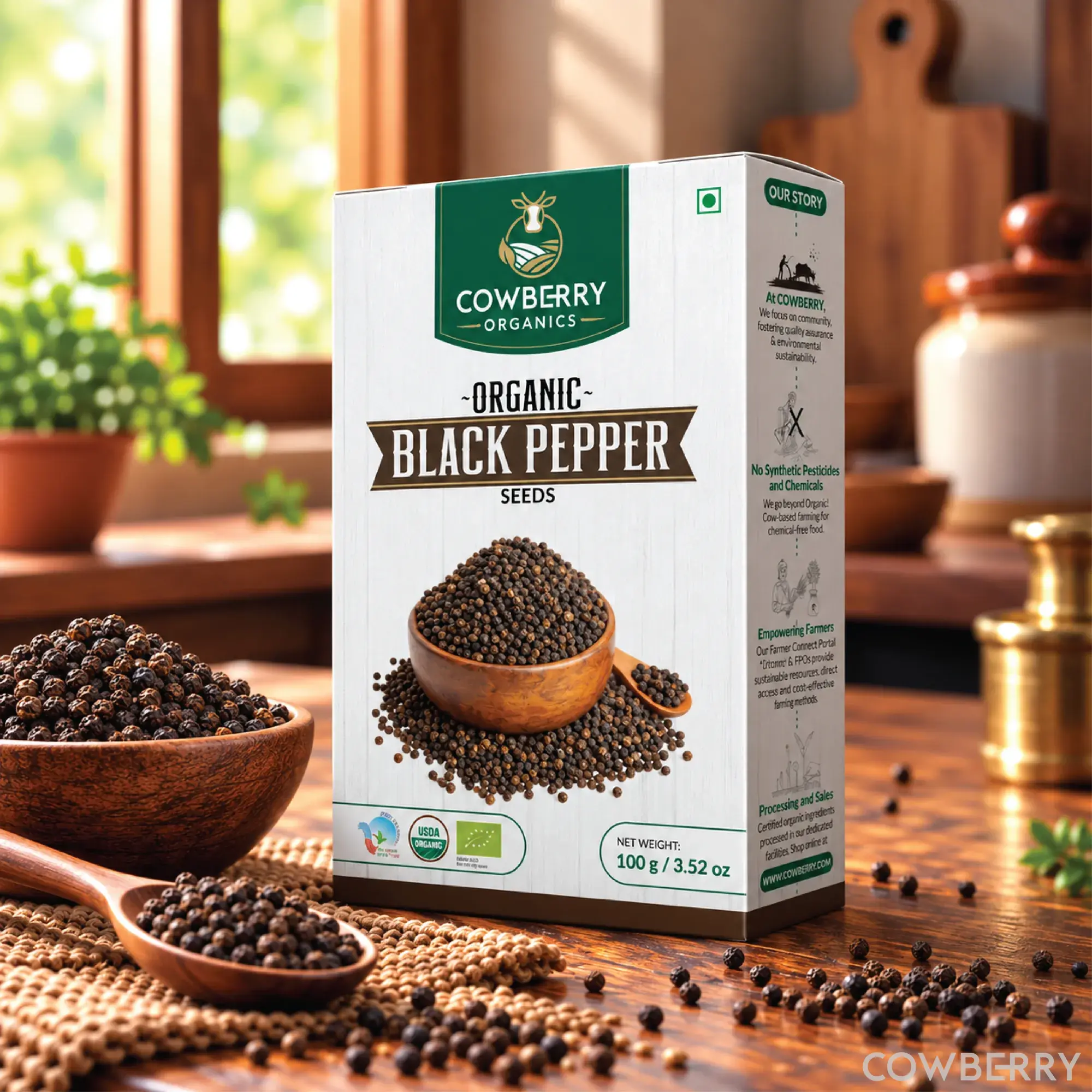
Then the buying rules from the same guidelines: ground spice is the easier target for adulteration, so prefer whole berries that match in colour, size and shape, and choose certified packs. COWBERRY's pack is India Organic, USDA & EU certified whole black pepper, so the water test can run as soon as it opens. Store them in a sealed jar, somewhere cool and dry, out of direct sunlight, and grind just before cooking so the jar stays whole and easy to check; a rasam powder recipe is a good home for freshly ground pepper.
FAQs
What can black pepper be adulterated with?
The FSSAI home-test manual names four: papaya seeds, which look like small dark peppercorns; light, immature berries that break under the fingers; a mineral-oil coating that smells of kerosene; and, in the powder, sawdust or powdered bran. The water test catches the papaya seeds, and each of the other tests targets one of the rest.
How is black pepper made?
Black pepper is the dried berry of Piper nigrum. COWBERRY grows its berries in the Western Ghats of Kerala and dries them carefully to hold the essential oils, packing the whole peppercorns at their freshest; grinding is the step that turns them into black pepper powder.
Which black pepper is best?
The manual's own answer is not a variety but a set of checks: berries that sink in water, do not break under the fingers, look brown and wrinkled through a magnifying glass, and smell pungent rather than kerosene-like. ICMR-NIN adds the shopping rule that counts most: whole, uniform, certified spices.
Does the water test work on black pepper powder?
No. The water test is written for whole peppercorns, so papaya-seed adulteration is judged on the berries themselves. Powder gets its own test: sprinkle it on water and look for sawdust or powdered bran floating on the surface, which pure spices do not leave behind.
Is the water test enough to prove black pepper is pure?
It proves one thing: that the berries you tested are not papaya seeds. Run the finger and alcohol tests for light berries, smell for a kerosene-like mineral-oil coating, and use the sprinkle test on any powder. Beyond the adulterants the manual lists, only a food-testing laboratory can confirm a sample.
What should I do if black pepper smells like kerosene?
Do not use it. A kerosene-like smell is the sign FSSAI gives for black pepper coated with mineral oil. Set that batch aside and buy whole, uniform peppercorns from a licensed pack instead.
References
Shop this article
Keep reading
Coriander water benefits: what dhania water actually does
Peanuts in Hindi (moongfali): groundnut names in Indian languages
Coriander vs cilantro: are they the same herb?