by COWBERRY

8 minute read
Is coriander good for weight loss? What research says

Is coriander good for weight loss? The research reviewed here has no trial in people showing that eating dhania brings weight loss. What coriander offers is real but small: about 15 kcal and 2.1 g of fibre in a teaspoon of powder, plus the flavour to make light meals good. The coriander seeds hub covers the spice itself; this page answers the weight-loss question.
Short answer: is coriander good for weight loss?
The honest answer is no, not by itself. The research reviewed here includes no human study showing that eating coriander seeds, coriander powder or fresh dhania leaves makes a person lose weight, and any claim that the spice melts fat goes well past the evidence. What coriander does bring to a weight-loss kitchen is small but real: an easy way to add flavour, a little fibre in every teaspoon, and a reason to keep cooking at home.
One teaspoon of coriander powder is about 15 kcal, and one teaspoon of whole seeds about 13 kcal. On a plan where the plate's calories matter, that is a seasoning you can use without counting. But dhania is not a slimming food, and there is no weight-loss dose of it; the food plan does the work, and the spice makes the plan easier to keep.
What the research says about coriander and obesity
A 2023 review in the journal Molecules looked at coriander polyphenols as candidates against obesity and metabolic syndrome. The authors call coriander extract a possible functional food against obesity, metabolic syndrome and diabetes, but the evidence is preclinical and the abstract reports no human weight-loss result. The review also notes that the polyphenol profile of an extract depends on the plant part and the method of extraction, so one extract's result may not carry over to the spoon of powder in your kitchen.
A 2015 review in Fitoterapia describes the same plant chemistry: coriander's essential oil and its polyphenols show antioxidant and antimicrobial activity, mostly in laboratory settings. A 2014 review by Opara and Chohan makes the practical point: spices add polyphenols to the diet, but because they are eaten in small amounts alongside other foods, their true health benefit is hard to establish. That is where coriander sits: interesting preclinical science, and no human weight-loss result in the sources reviewed.
Calories and fibre in one teaspoon of dhania
Per 100 g, coriander seeds give 269 kcal, 10.7 g of protein and 44.8 g of fibre (IFCT 2017, ICMR-NIN). The USDA FoodData Central record for coriander seed, the nearest match for the ground spice, prints 298 kcal, 12.4 g of protein and 41.9 g of fibre. Cooking happens by the teaspoon, so the numbers that matter are smaller: about 15 kcal and 2.1 g of fibre in a 5 g teaspoon of powder, about 13 kcal and 2.2 g of fibre in a 5 g teaspoon of seeds. No glycemic index is printed for either form.
The fibre is the part worth noticing on a weight-loss plan. Per the Dietary Guidelines for Indians, fibre slows the uptake of carbohydrate and fat and adds to the satiety of a meal. A teaspoon of dhania adds only about 2.1 g of fibre. The guidelines' own list of satiating foods runs to pulses, nuts, chia and flax seeds, whole grains, vegetables and fruits, and it does not put spices on that list. For the full nutrition table, see the coriander seeds hub.
| Nutrient | Coriander seeds | Coriander powder |
|---|---|---|
| Energy (kcal) | 269 | 298 |
| Protein (g) | 11 | 12 |
| Fat (g) | 17 | 18 |
| Carbohydrates (g) | 13 | 55 |
| Dietary fibre (g) | 45 | 42 |
| Iron (mg) | 18 | 16 |
| Calcium (mg) | 718 | 709 |
| Magnesium (mg) | 343 | 330 |
| Potassium (mg) | 1473 | 1270 |
| Sodium (mg) | 34 | 35 |
| Zinc (mg) | 3.9 | 4.7 |
| Folate (mcg) | 22 | 0 |
| Vitamin C (mg) | — | 21 |
Per 100 g raw, edible portion. Composition: IFCT 2017 (ICMR-NIN); USDA FoodData Central (SR Legacy), FDC ID 170922, NDB 2013. — means not reported. These are average values for the food; the label on a pack gives the values for that product.
Dhaniya for weight loss: how much and how
There is no weight-loss dose of dhania, and no honest page gives one. It is a seasoning, and the sensible amounts are culinary: a teaspoon of powder in a curry, a pinch of roasted seeds in a tadka, a handful of fresh leaves to finish a dal. The ICMR-NIN's My Plate lists spices and herbs, coriander (dhania) among them, as one of its ten food groups.
Two kitchen habits are worth more than any coriander ritual. First, cook with it, and measure the oil or ghee yourself; the fat is the calorie item, not the spice. Second, use the chutney trick from the Dietary Guidelines for Indians: a coriander and green chilli chutney eaten as part of a regular meal improves iron absorption from the plant foods in it. The same guidelines put the real levers for weight loss in plain words: cut down calories from refined carbohydrates and cooking oils, and be physically active on a regular basis.
Better and worse ways to use dhania
Better ways to fit dhania into a calorie plan:
- Dry-roast whole seeds with dal and curry leaves for a tadka, then finish the dish with fresh leaves.
- Roast and grind a batch of sambar powder, in which coriander seeds are the key ingredient.
- Stir a teaspoon of powder into curries and dals near the end of cooking.
- Blend fresh leaves into a coriander-and-green-chilli chutney and eat it with the meal.
Worse ways: frying coriander-heavy snacks and counting the spice as the healthy part; buying capsules or weight-loss blends instead of changing the plate; adding extra ghee or oil to a tadka because the spice is healthy (the fat is the calorie item to watch, not the spice); and expecting a morning spoon of dhania to do what a food plan does.
What to avoid on a weight-loss plan
Skip the three things that do not work:
- Swapping real changes for a spice. The guidelines' advice for reducing weight is to cut calories from refined carbs and cooking oils and to be physically active regularly.
- Buying the promise. The research reviewed here shows no human weight-loss evidence for a coriander capsule, tea or drink; the lab findings sellers quote often come from extracts, not from the amounts people eat. The coriander water page covers that drink.
- Cutting flavour along with calories. Dhania adds flavour for about 15 kcal a teaspoon.
Talk to your doctor or dietitian
Weight loss often sits next to a health condition and a medicine list, and that is where this page stops being about teaspoons. If you live with diabetes, heart trouble or thyroid issues, or take medicines regularly, plan your weight loss with your doctor or dietitian, not around a spice. Lab work on coriander polyphenols is not a reason to change what you eat, and no spice or supplement replaces the care your doctor gives you. Start there, and talk to your doctor or dietitian before beginning any weight-loss plan.
FAQs
How to use dhaniya for weight loss?
As a seasoning, not as a supplement. A teaspoon of coriander powder in a curry or dal adds about 15 kcal and 2.1 g of fibre, so use it freely while the plate itself stays the plan: fewer refined carbs, less cooking oil, regular activity. No special method, drink or dose of dhania is proven for weight loss.
Does coriander have iron?
Yes. IFCT 2017 prints 17.6 mg of iron per 100 g of coriander seeds, and the USDA record for the ground spice prints 16.3 mg. A 5 g teaspoon of seeds works out to about 0.9 mg. The Dietary Guidelines for Indians also name coriander and green chilli chutneys among the foods that improve iron absorption from plant foods at a regular meal.
Is dhania coriander?
Yes. IFCT 2017 lists dhania as the Hindi name of coriander seeds, and dhaniya is the same word spelled another way. The fresh leaves, the whole seeds and the ground powder are parts of one plant, Coriandrum sativum. The page on coriander names in Indian languages carries the regional names IFCT 2017 prints.
What is coriander powder?
Coriander powder is the whole dried seed, ground. The USDA record for the spice prints 298 kcal, 55 g of carbohydrates and 16.3 mg of iron per 100 g. In Indian cooking it goes into curry bases and into blends such as sambar powder.
Why coriander chutney is bitter?
Two common kitchen causes. Blending for long can heat the chutney and make it bitter, so blend briefly, in short pulses, with cold water. Older leaves can also taste harsher, so pick young ones. Taste as you go; a little salt, lemon juice or jaggery can balance the flavour.
What is dhaniya good for?
Mostly for flavour at almost no calorie cost, which is its real job in a weight-loss kitchen. IFCT 2017 prints the seeds at 269 kcal per 100 g with 44.8 g of fibre, 17.6 mg of iron and 718 mg of calcium, but in practice coriander is eaten by the teaspoon. Research interest in its polyphenols is covered above; on the plate, what dhaniya is good for is making lighter food worth eating.
References
- Indian Food Composition Tables (IFCT) 2017, ICMR-National Institute of Nutrition
- Dietary Guidelines for Indians, ICMR-National Institute of Nutrition
- USDA FoodData Central
- Laribi B, Kouki K, M'Hamdi M et al. Coriander (Coriandrum sativum L.) and its bioactive constituents. Fitoterapia, 2015
- Scandar S, Zadra C, Marcotullio MC. Coriander (Coriandrum sativum) Polyphenols and Their Nutraceutical Value against Obesity and Metabolic Syndrome. Molecules, 2023
- Opara EI, Chohan M. Culinary herbs and spices: their bioactive properties, the contribution of polyphenols and the challenges in deducing their true health benefits. Int J Mol Sci, 2014
Shop this article
Keep reading
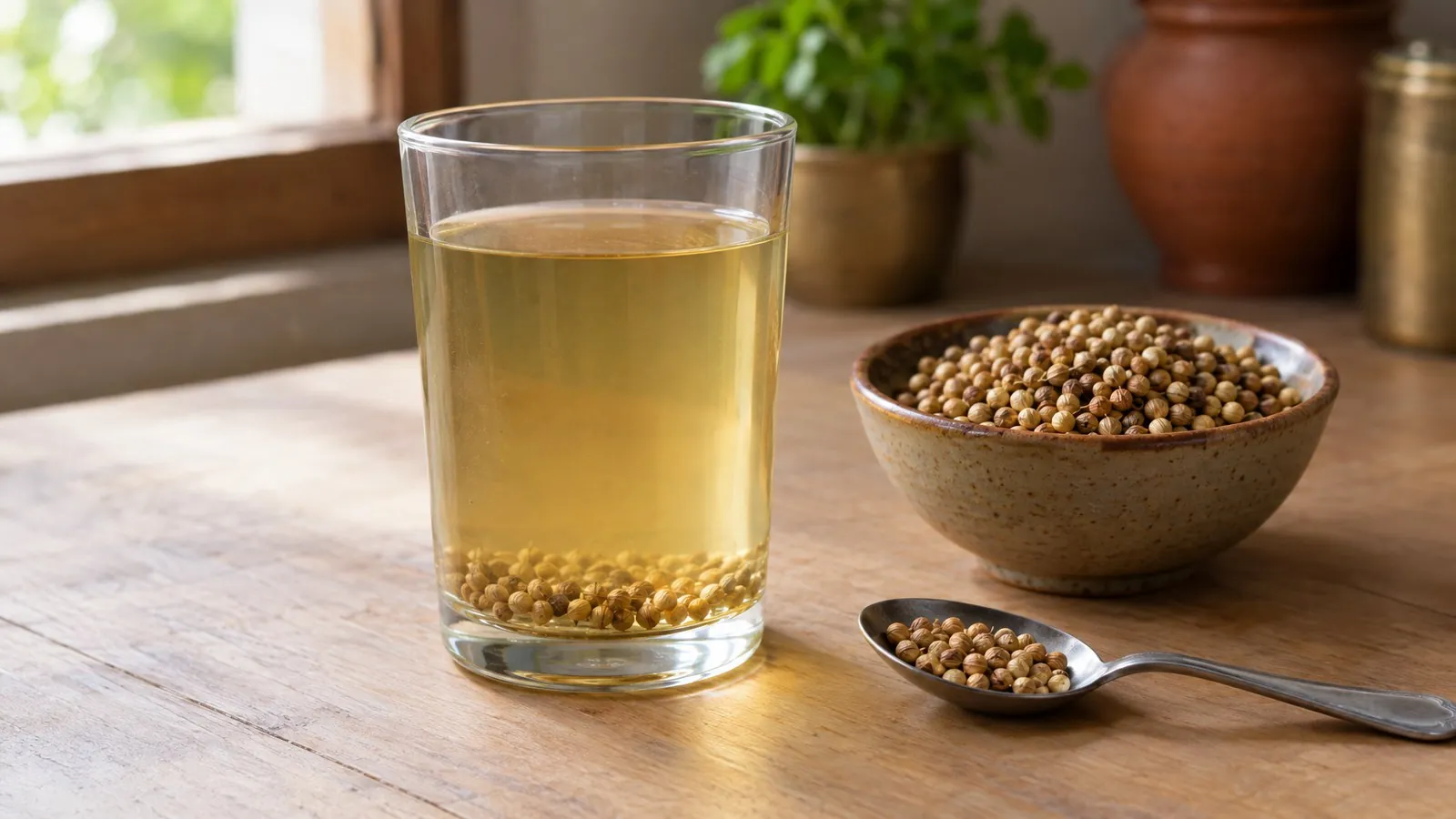
Coriander water benefits: what dhania water actually does
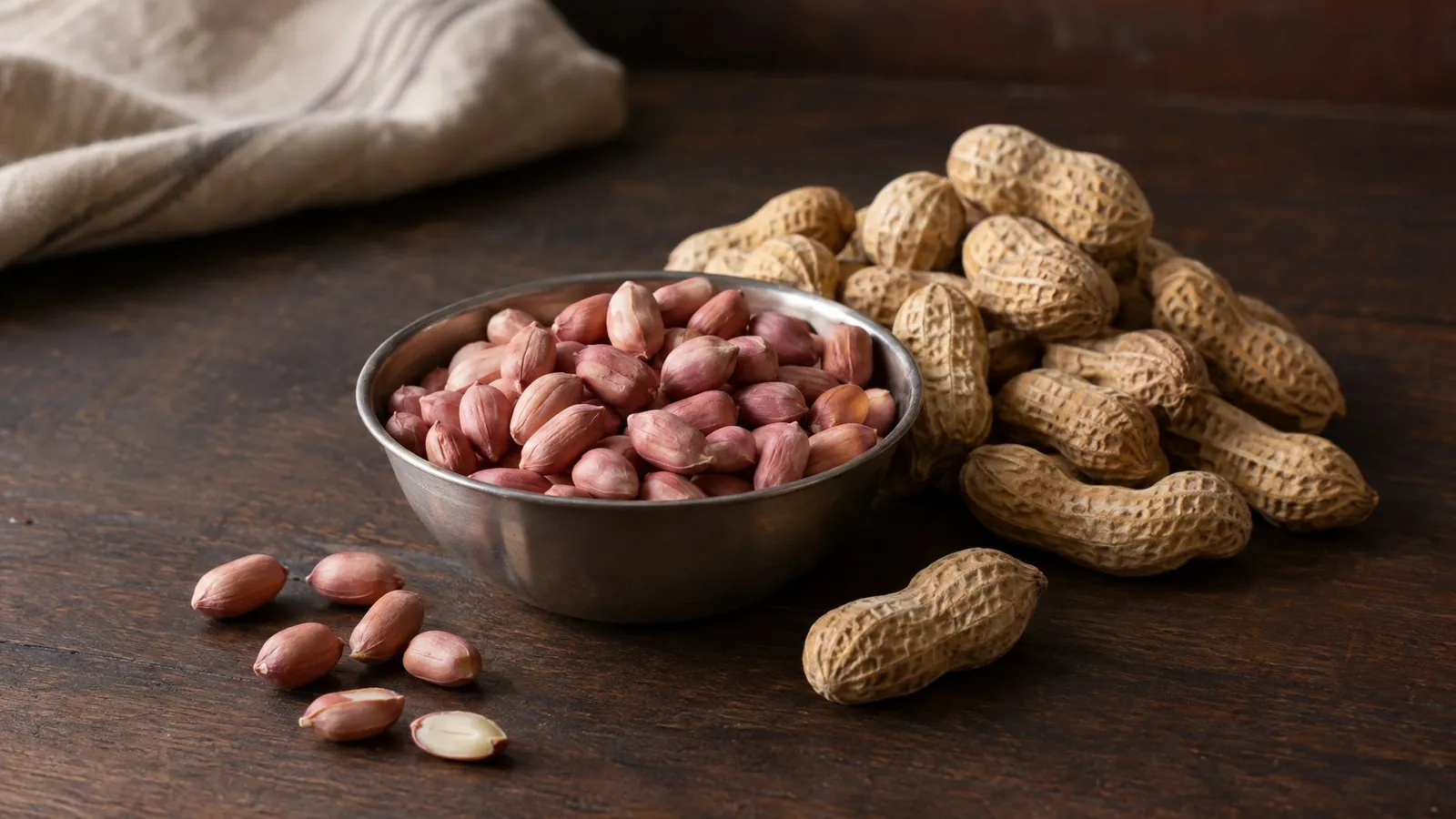
Peanuts in Hindi (moongfali): groundnut names in Indian languages
Coriander vs cilantro: are they the same herb?