10 Sept 2026

15 minute read
Organic Farming Techniques
The environment has always been the main factor in maintaining a healthy and happy life. In this emerging world, organic farming is becoming a powerful solution for sustainable agriculture. It's an environmental process that underlines sustainability and natural processes.

Nowadays, more and more people are moving towards organic farming, keeping the environment and health in mind. Hereby, having high-quality organic food that is grown and cultivated without toxic chemicals is more beneficial than other harmful food products.
What does the word ORGANIC mean?
The term ORGANIC refers to products that are grown or made without the use of artificial or harmful chemicals. It describes things that are natural or related to nature. In common usage, "organic" is often associated with being healthful or close to nature. Additionally, it can describe farming products that are cultivated without harmful pesticides or fertilizers.
What is Organic Farming?
Organic farming involves growing crops using natural processes instead of chemical-based pesticides and fertilizers. The main goal is to promote sustainable and eco-friendly practices. In this farming, any farm-related products, including chemicals, pesticides (pest control), and manure, are prepared on-farm, which is termed organic farming.
Methods of Organic Farming
Organic farming focuses on growing crops and caring for the land using natural methods and organic waste. This approach helps to enhance the health and quality of the soil. As a result, it leads to the production of highly nutritious crops.
Cow-based farming
Cow-based farming plays a very significant role in keeping the environment safe. It's a traditional way of agriculture that farmers have used for a long time. In this method, the cow and the farmer are kept at the center of the agricultural ecosystem. This ancient technique prioritizes maintaining agroecology to ensure sustainable quality crop production.
Soil Management
Soil management is an essential part of organic farming, as it's the primary requirement for the cultivation of crops. The soil loses some of its qualities after the cultivation of one crop, so maintaining the fertility of the soil and managing its nutrition level are essential. While performing organic farming, it's essential to increase the quality of the soil by doing natural processes.
This is the reason why organic farming focuses on beneficial bacteria found in animal waste to enhance soil fertility and increase nutrient levels for greater productivity.
Crop Rotation
In simple terms, crop rotation means growing alternative crops on the same field over time. Crop rotation is a must in organic farming as it improves soil health, breaks disease and pest cycles, and also reduces the demand for synthetic inputs.
To encourage biodiversity, stabilize the ecosystem strengthen it, and control crop failure due to pests or any other environmental effects, diversification involves planting a variety of crops in a particular area.
Cover Cropping
Cover cropping is an interval between growing regular crops and cover crops. In organic farming, cover crops are planted to cover the soil rather than to be harvested. Cover crops are one of the best ways to maintain soil erosion, soil fertility, biodiversity, diseases, pests, weeds, and wildlife in the agrosystem (the ecological system that is formed and managed by humans).
Green Manure
Green manure means green plants that are uprooted (removed from their roots) and mixed into the soil. The mixing of these plants improves the soil quality with its organic elements and nitrogen, in particular. It also maintains the moisture level and increases the nutrition level of the microorganisms. Thus, this process improves the quality of the soil while also maintaining its moisture.
Mulching
Covering the soil surface with organic materials such as compost or crop residues is called mulching. It protects the soil by maintaining the layer of organic materials, this method reduces soil erosion, retains moisture, and improves soil quality. Gradually, organic materials decompose, enriching the soil with nutrients, and promoting a healthier soil ecosystem that supports beneficial microorganisms and enhances plant growth.
Tillage
Tillage refers to the preparation of the soil for planting and cultivation for crop production. This method contains various techniques such as digging, mixing, and overturning the soil to form a suitable environment for planting. This method is necessary for preparing a seedbed, incorporating organic ingredients like compost or manure, and controlling weeds. Tillage is a crucial practice in organic farming, requiring careful management to improve soil health, boost crop productivity, and minimize environmental impact.
Benefits of Organic Farming
- The fertility of the soil and its health are maintained very well by using such methods as crop rotation, cover crops, etc.
- Organic farming maintains biodiversity as it contributes to a healthier and more balanced environment.
- Synthetic pesticides, herbicides, and fertilizers are not used in organic farming, due to which chemical pollution has been reduced.
- The nutritional quality of organic produce is higher than that of other non-organic produce.
- Organic farming is a cost-saving process as it can save money by using natural techniques like crop rotation and biological pest control rather than synthetic ones, which has a favorable economic impact.
Conclusion
Making the move to organic farming is among the greatest agricultural practices available to modern farmers. Organic farming is becoming more and more important for both obtaining healthy food and protecting the environment. Farmers who follow organic farming principles, such as protecting biodiversity, maintaining healthy soil, and avoiding synthetic inputs, are more likely to create a balanced ecosystem.
Organic farming does come with additional challenges, though, such as controlling pests, diseases, nutrients, weeds, and market accessibility. Thus, by adopting this innovative strategy and allowing organic farming to play a crucial role in creating a more resilient and sustainable food system for future generations, these challenges can be lessened or even overcome.
Keep reading

Carbendazim in Your Kitchen: Hidden Fungicide in Spices
Carbendazim is a hidden fungicide often found in spices and grains through illegal chemical use. Research connects it to hormone disruption, liver damage, and reproductive health issues. Since it leaves no visible trace, consumers cannot identify contamination without testing. The blog emphasises the importance of transparency, certified organic farming, and residue-free food. COWBERRY protects consumers by testing every batch for 252+ banned chemicals and sharing reports through QR codes.
27 May 2026
10 minute read
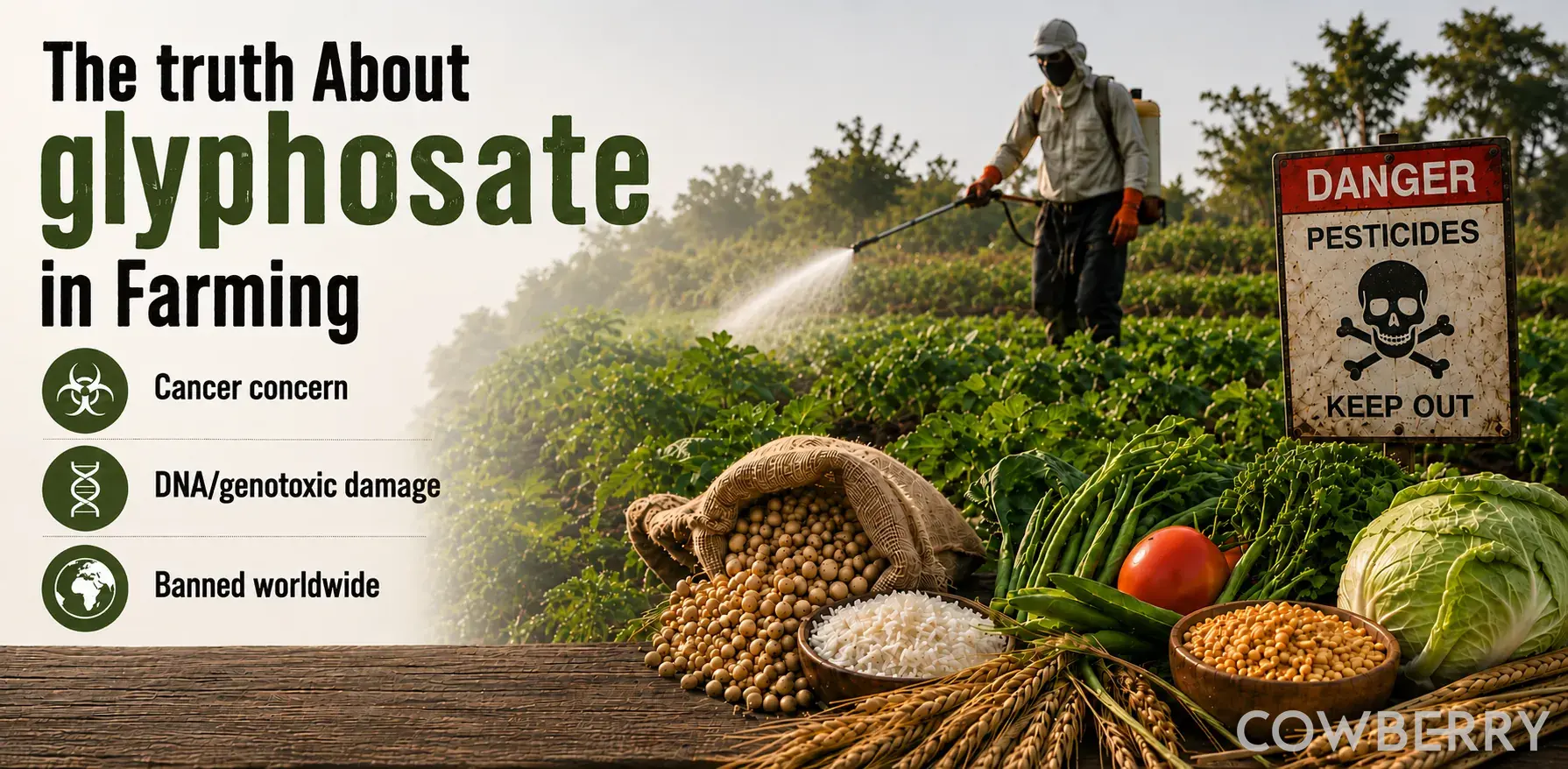
Glyphosate in Your Food: Why It Matters to Your Health
Glyphosate is a widely used herbicide that may leave harmful residues in food and water. Studies link it to cancer risks, DNA damage, and long-term health concerns. Despite restrictions in India, it is still used illegally on many crops. The blog explains how contaminated food can affect consumers silently over time. It also highlights how COWBERRY ensures clean, glyphosate-free products through organic farming and lab testing.
27 May 2026
20 minute read
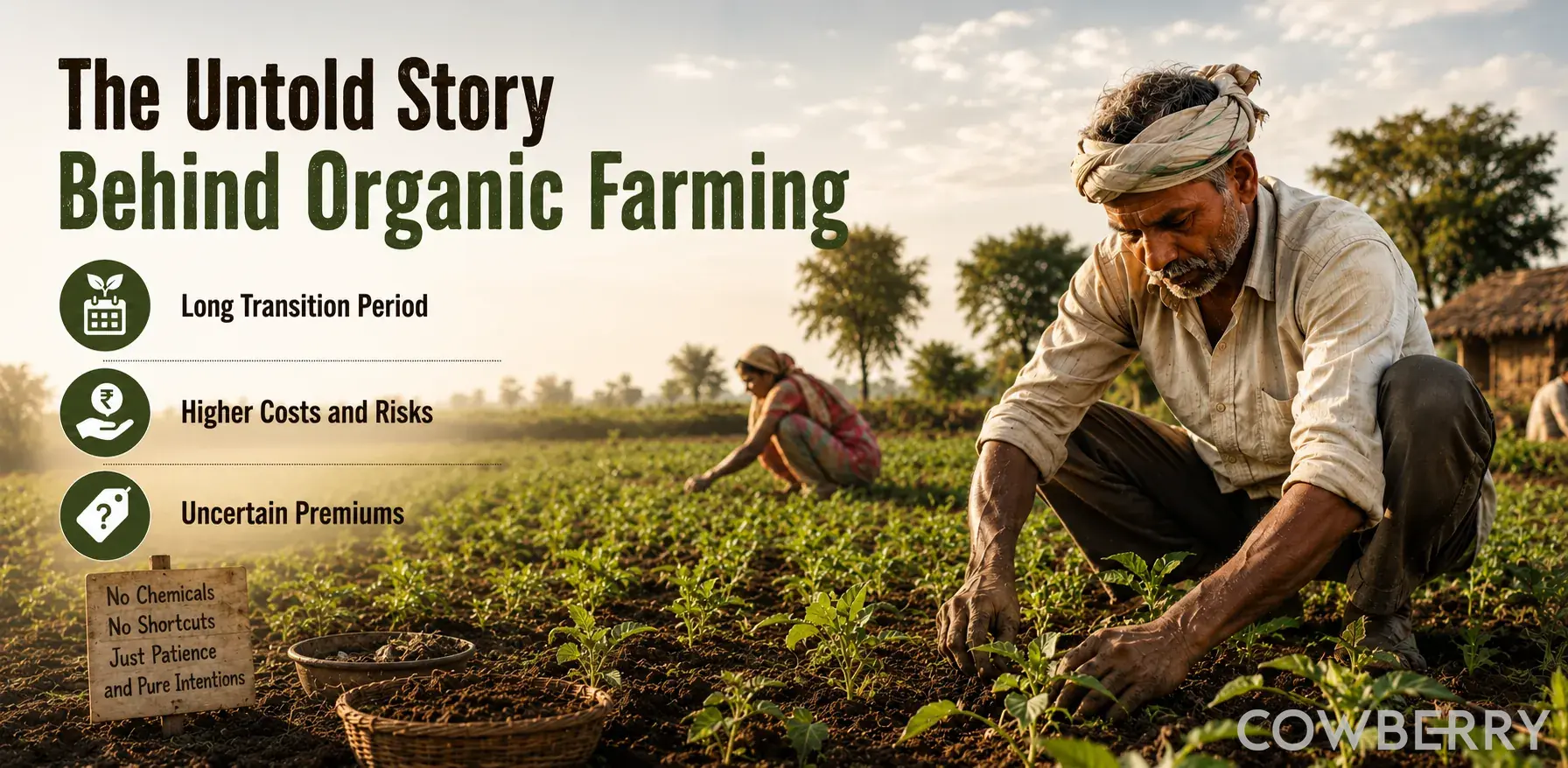
Meet the Farmers: The Hard Work Behind Every Clean Product
Behind every organic product is a farmer who chose the harder path — one built on patience, soil health, and long-term sustainability. This blog explores the real challenges organic farmers face, from the 3-year certification journey to higher labor and input costs, while highlighting how COWBERRY supports them through fair pricing, organic training, and traditional natural farming practices. It’s a story of resilience, trust, and farming that works with nature, not against it.
26 May 2026
20 minute read