
10 minute read
Designing a Profitable 100-Acre Organic Farm: What Most Plans Get Wrong

1. Treating Organic as Input
Substitution, Not System Redesign
Many farms simply replace synthetic fertilizers with organic inputs. That
is not organic farming; it is costlier conventional farming. A 100-acre system
must be redesigned around crop rotations, biological nutrient cycling,
livestock integration, and soil carbon management. Without ecological
architecture, input costs escalate while yields stagnate.
2. Ignoring the Transition Cash
Flow Gap
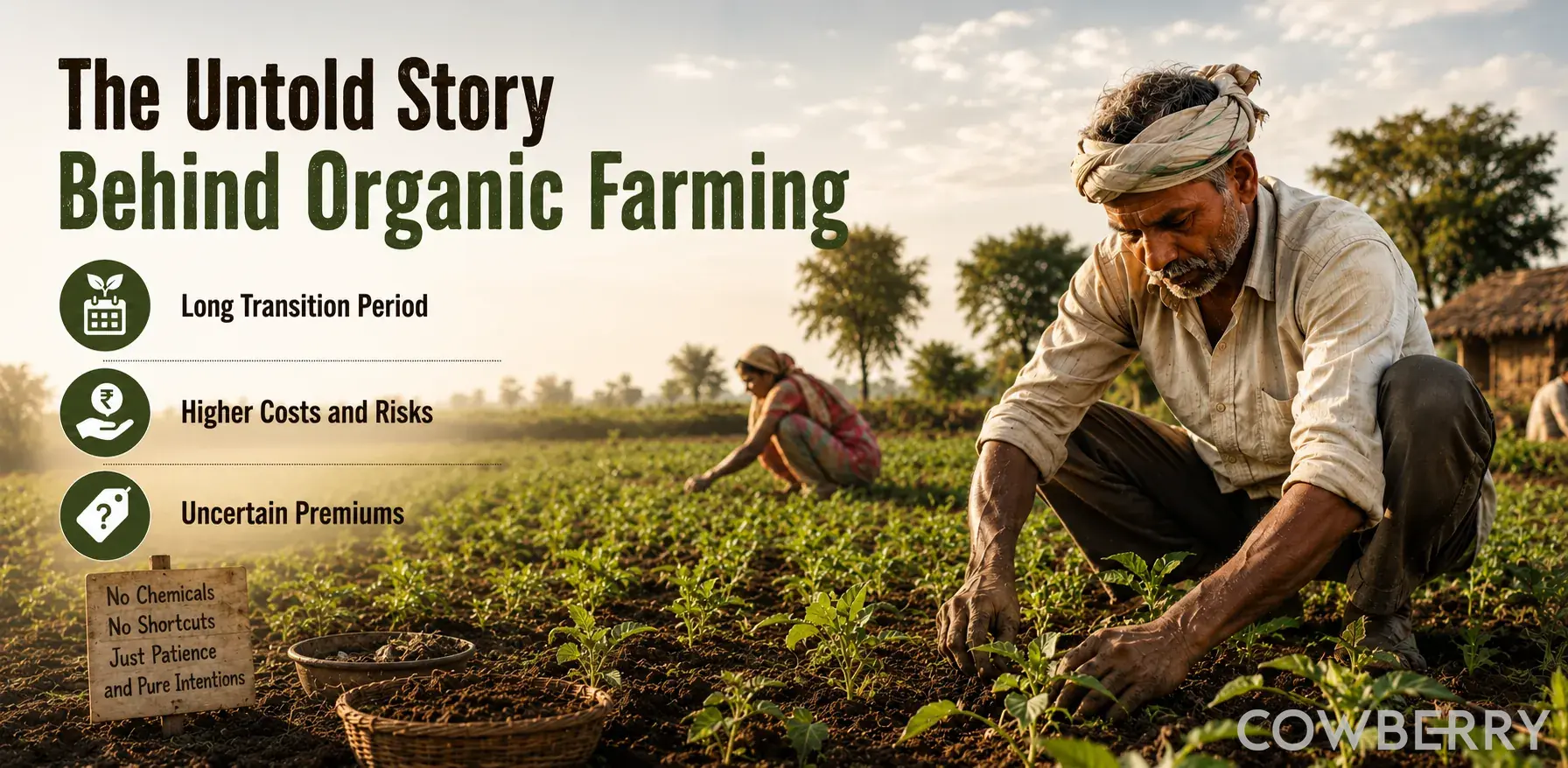
The 2–3 year conversion period is financially brutal. Yields may decline,
certification costs rise, and premium markets are not yet accessible. Most
plans underestimate working capital requirements. A serious financial model
must account for:
- Reduced productivity during transition
- Certification and compliance costs
- Separate marketing channels
- Inventory holding capacity
Without liquidity planning, farms
fail before maturity.
3. Monocropping at Scale
Scaling organic monoculture defeats resilience. Pest pressure, nutrient
imbalance, and market risk multiply. A profitable 100-acre model requires:
- Multi-tier cropping
- Intercropping (cereals + pulses + oilseeds)
- Fodder blocks for internal nutrient cycling
- Staggered sowing for staggered cash flow
Diversity is not ideology—it is
risk management.
4. No Livestock Integration
Organic systems without livestock struggle with nutrient sustainability.
On-farm composting, bio-input preparation, and residue recycling reduce
external input dependency. Livestock converts crop waste into fertility
capital. Ignoring this link increases recurring costs.
5. Production Without Market
Strategy
Many farms plan crops first and markets later. This is backward. Premium
organic markets demand consistency, traceability, and volume commitment.
Forward contracts, direct-to-consumer channels, institutional tie-ups, and
aggregation models must be structured before sowing decisions.
6. Overlooking Mechanization
and Labour Economics
Organic farms often rely heavily on manual labour. At 100 acres, labour
inefficiency destroys margins. Precision planters, mechanical weeders, and
optimized irrigation scheduling improve cost control.
What Actually Works
A profitable 100-acre organic farm
combines:
- Ecological design
- Financial modeling
- Diversified cropping
- Livestock integration
- Market alignment
- Data-based decision making
Organic farming at scale is not
about eliminating chemicals; it is about designing a resilient agro-ecosystem
with economic discipline.
Profitability is possible—but only
when biology, economics, and strategy work together.
Keep reading

Carbendazim in Your Kitchen: Hidden Fungicide in Spices

Glyphosate in Your Food: Why It Matters to Your Health
Meet the Farmers: The Hard Work Behind Every Clean Product